Navarese Eliano Pio, Kowalewski Mariusz, Kandzari David, Lansky Alexandra, Górny Bartosz, Kołtowski Lukasz, Waksman Ron, Berti Sergio, Musumeci Giuseppe, Limbruno Ugo, van der Schaaf Rene J, Kelm Malte, Kubica Jacek, Suryapranata Harry
Invasive Cardiology, National Research Council Institute of Clinical Physiology (CNR-IFC), Pisa , Italy ; Department of Internal Medicine, Division of Cardiology, Pulmonology and Vascular Medicine, Heinrich-Heine-University, Düsseldorf , Germany ; Systematic Investigation and Research on Interventions and Outcomes (SIRIO) MEDICINE Research Network.
10th Military Research Hospital and Polyclinic, Bydgoszcz , Poland ; Systematic Investigation and Research on Interventions and Outcomes (SIRIO) MEDICINE Research Network.
Open Heart. 2014 Aug 21;1(1):e000064. doi: 10.1136/openhrt-2014-000064. eCollection 2014.
First-generation drug-eluting stents (DES) have become the most widely used devices worldwide for management of coronary artery disease. As remote follow-up data were becoming available, concerns emerged in regard to their long-term safety. Second-generation DES were designed to overcome safety issues, but the results of randomised clinical trials remain conflicting.
We compared the safety and efficacy of first-generation versus second-generation Food and Drug Administration approved DES; the following devices were included: first-generation sirolimus-eluting stent (SES) and paclitaxel-eluting stents (PES); second-generation everolimus-eluting stent (EES), zotarolimus-eluting stent Endeavor and ZES-Resolute (ZES-R). Prespecified safety end points comprised ≤1 and >1 year: overall and cardiac mortality, myocardial infarction (MI), definite/definite or probable ST; efficacy end points were target lesion revascularisation and target vessel revascularisation. Composite end points were analysed as well.
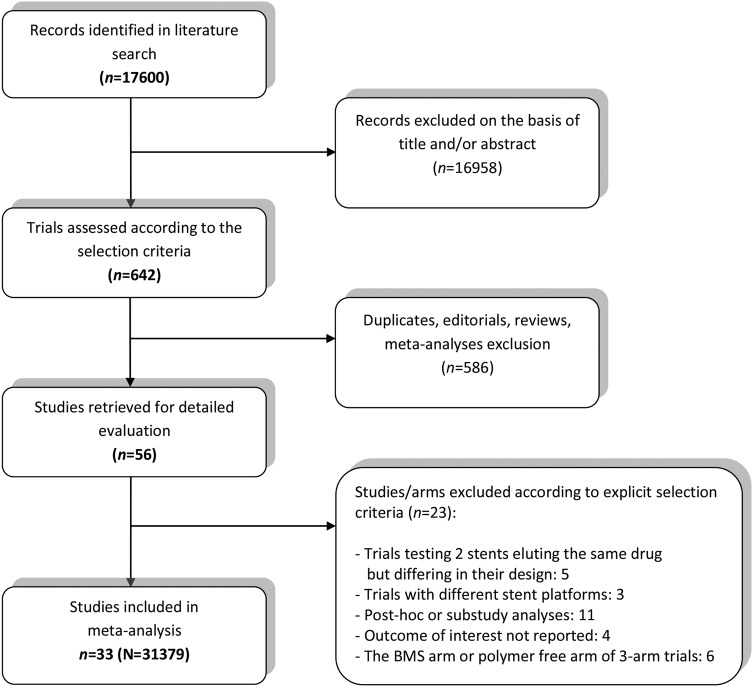
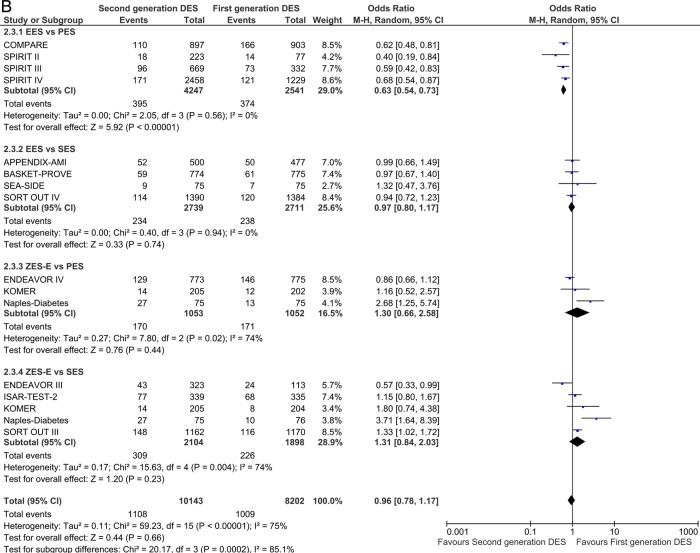
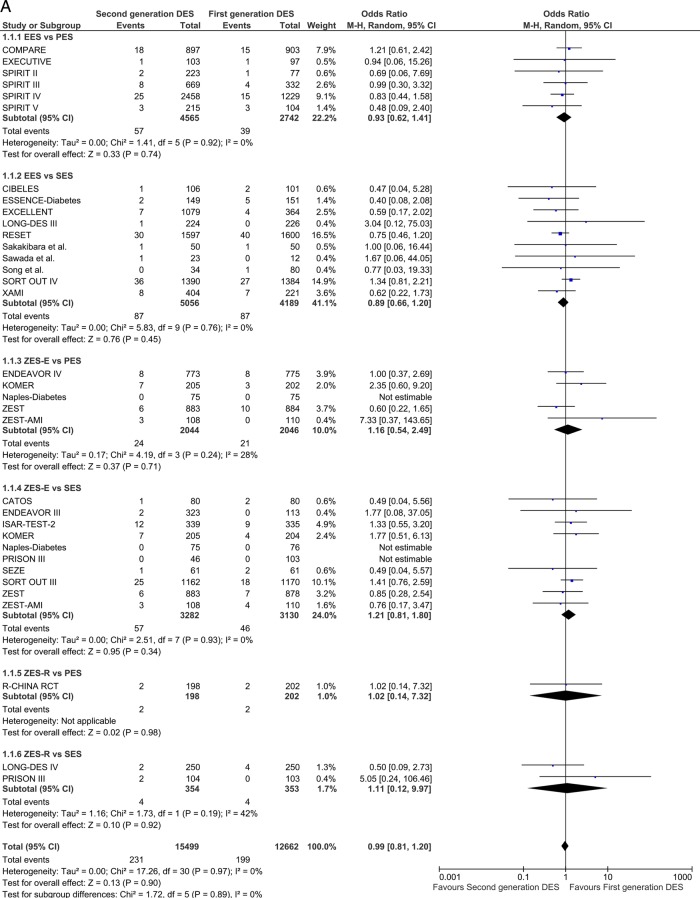
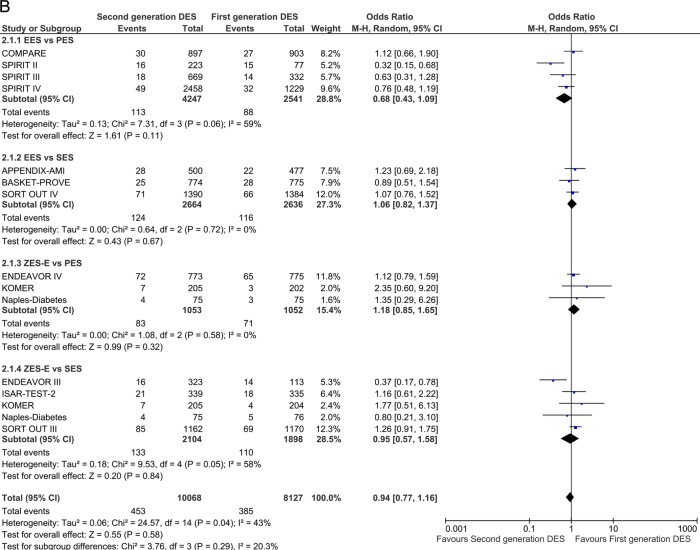
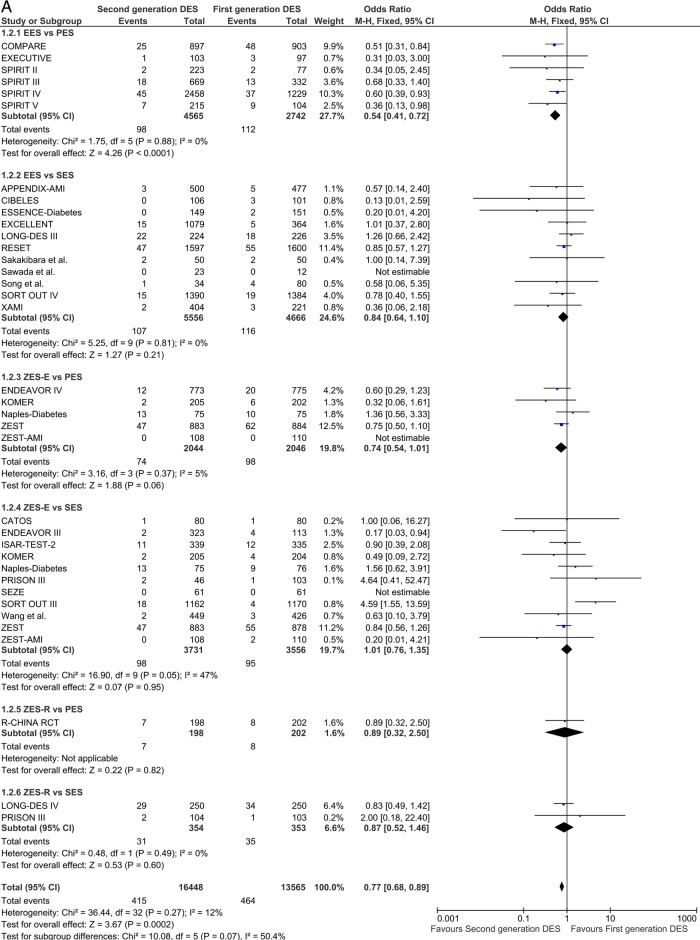
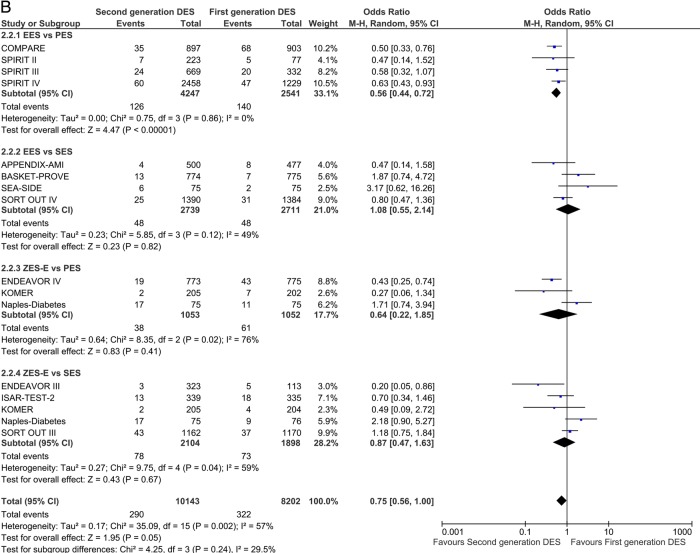
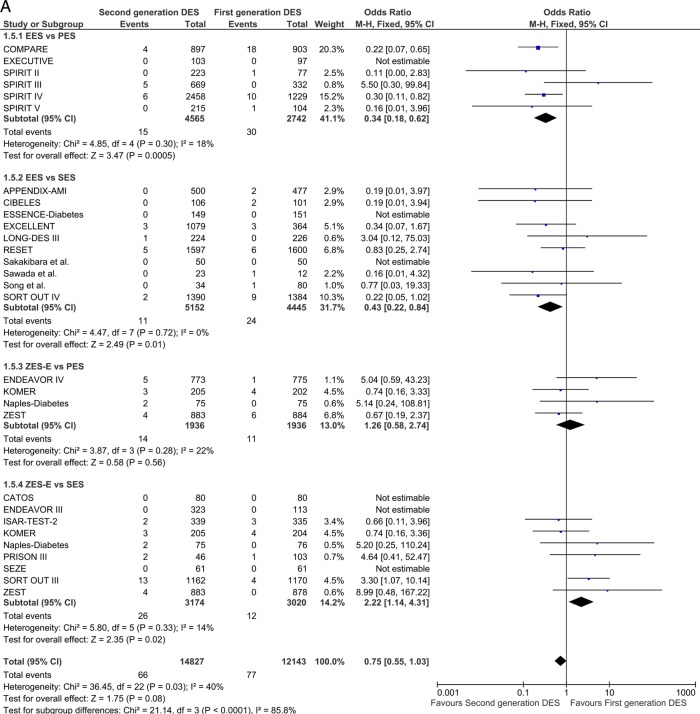
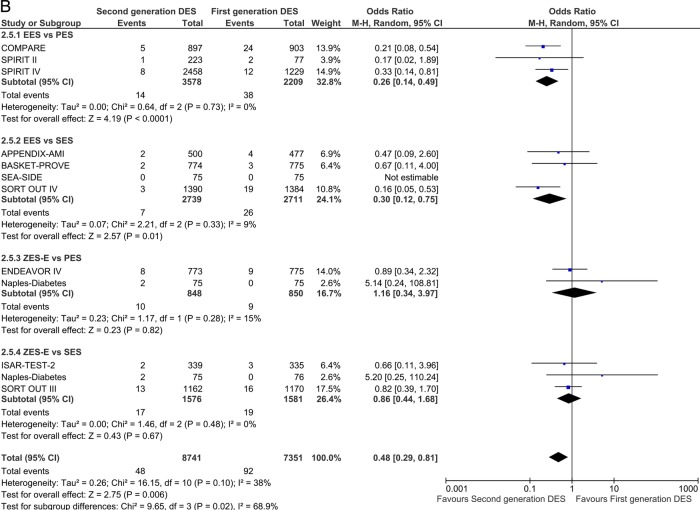
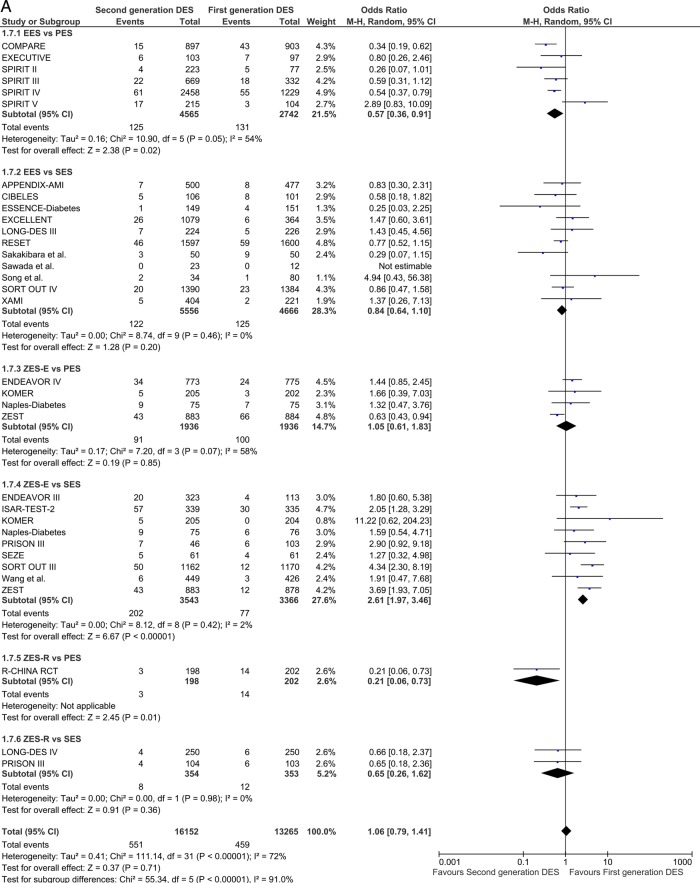
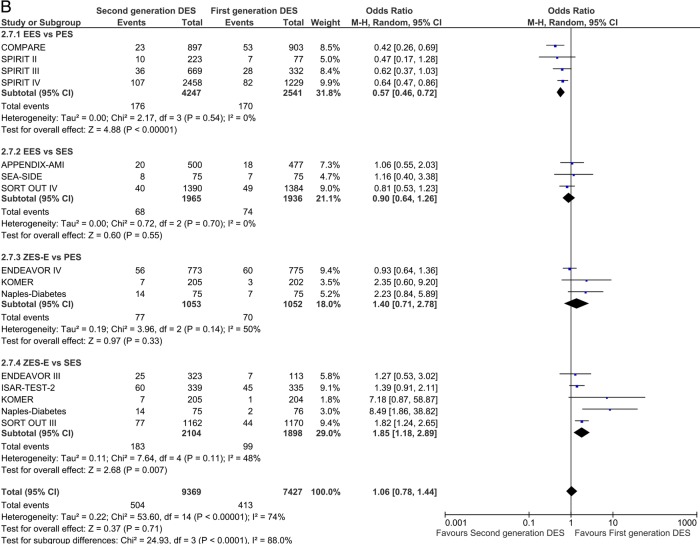
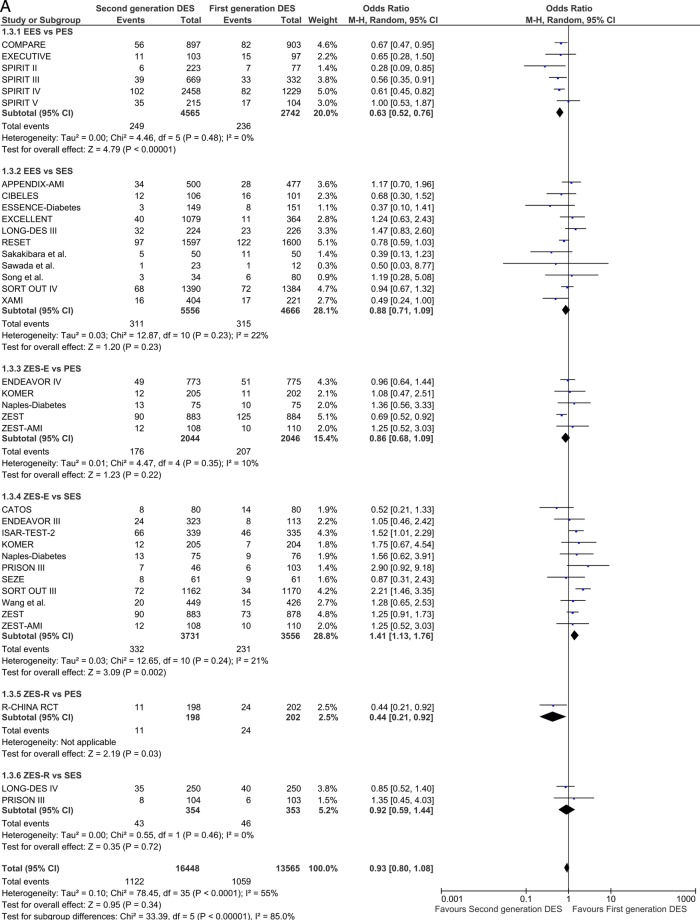
33 randomised controlled trials involving 31 379 patients with stable coronary artery disease or acute coronary syndrome undergoing DES implantation were retrieved. No differences in mortality among devices were found. In the overall class comparison, second-generation DES were associated with a 22% reduction of odds of MI at short-term OR 0.77 (95% CI 0.68 to 0.89) p=0.0002; EES reduced the odds of definite-probable ST compared with PES: OR 0.33 (95% CI 0.15 to 0.73) p=0.006; First-generation SES along with second-generation EES and ZES-R showed similar efficacy in decreasing the odds of repeat revascularisation.
Second-generation EES and ZES-R offer similar levels of efficacy compared with first-generation SES, but are more effective than PES; however, only second-generation EES significantly reduced the incidence of MI and ST, and therefore should be perceived as the safest DES to date.
第一代药物洗脱支架(DES)已成为全球范围内治疗冠状动脉疾病应用最广泛的器械。随着远期随访数据的可得,人们对其长期安全性产生了担忧。第二代DES旨在克服安全性问题,但随机临床试验的结果仍相互矛盾。
我们比较了美国食品药品监督管理局批准的第一代与第二代DES的安全性和有效性;纳入了以下器械:第一代西罗莫司洗脱支架(SES)和紫杉醇洗脱支架(PES);第二代依维莫司洗脱支架(EES)、佐他莫司洗脱支架Endeavor和ZES-Resolute(ZES-R)。预先设定的安全性终点包括≤1年和>1年:全因死亡率和心源性死亡率、心肌梗死(MI)、明确/明确或可能的支架血栓形成(ST);有效性终点为靶病变血运重建和靶血管血运重建。还分析了复合终点。
检索到33项随机对照试验,涉及31379例接受DES植入的稳定型冠状动脉疾病或急性冠状动脉综合征患者。未发现器械之间在死亡率方面存在差异。在总体类别比较中,第二代DES在短期使MI发生几率降低22%,比值比(OR)为0.77(95%置信区间[CI]0.68至0.89),p=0.0002;与PES相比,EES降低了明确-可能ST的发生几率:OR为0.33(95%CI0.15至0.73),p=0.006;第一代SES以及第二代EES和ZES-R在降低重复血运重建几率方面显示出相似的有效性。
与第一代SES相比,第二代EES和ZES-R具有相似的有效性水平,但比PES更有效;然而,只有第二代EES显著降低了MI和ST的发生率,因此应被视为迄今为止最安全的DES。