Shim Duk-Sun, Yang Cheol-Kwan, Kim Jae Hwan, Han Joo Pyo, Cho Yong Soo
School of Electrical and Electronic Engineering, Chung-Ang University, Seoul 156-756, Korea.
Sensors (Basel). 2014 Oct 20;14(10):19622-38. doi: 10.3390/s141019622.
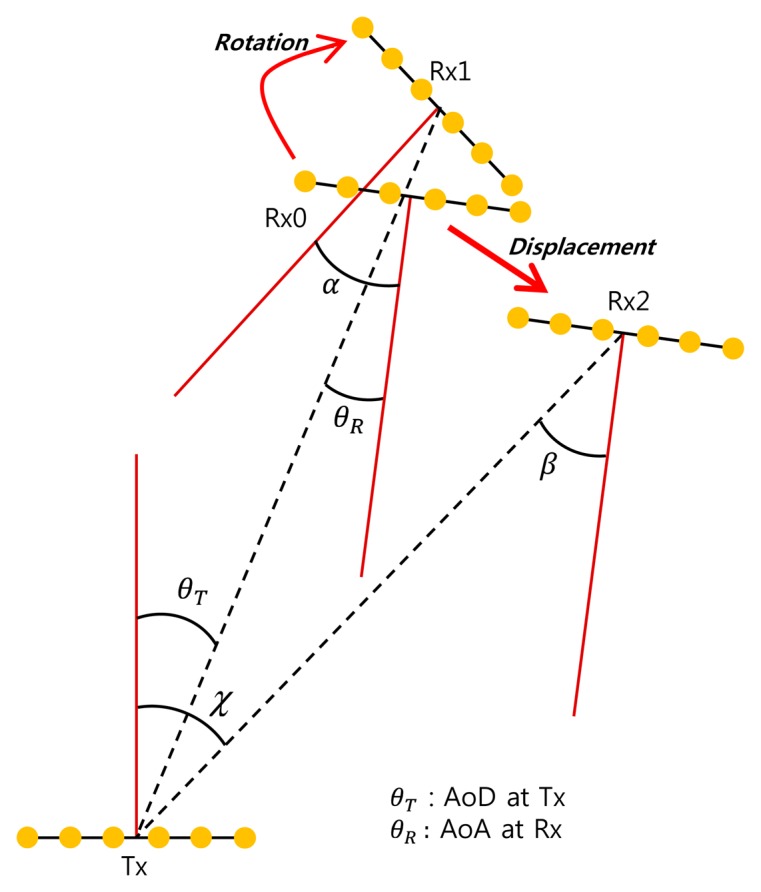
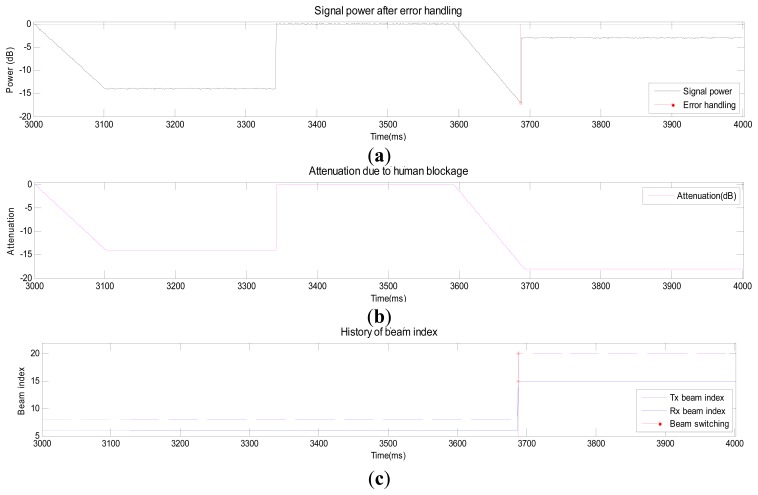
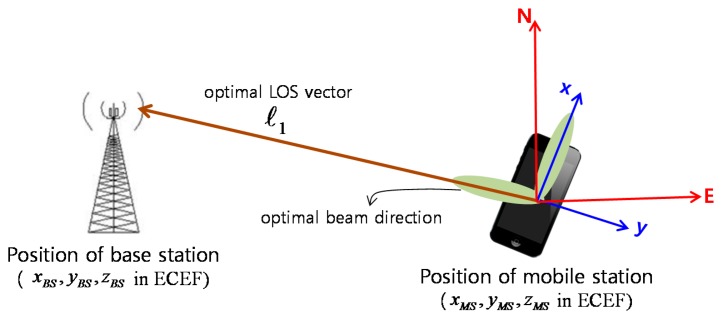
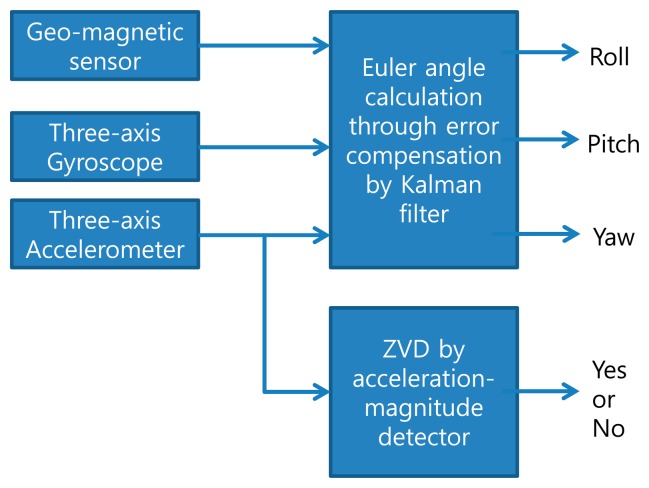
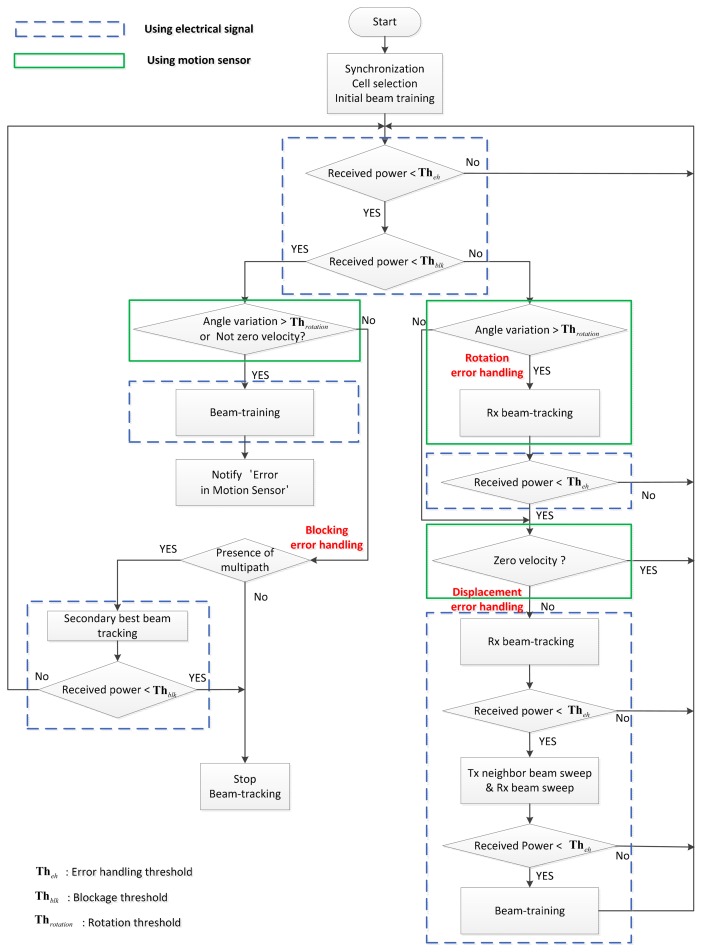
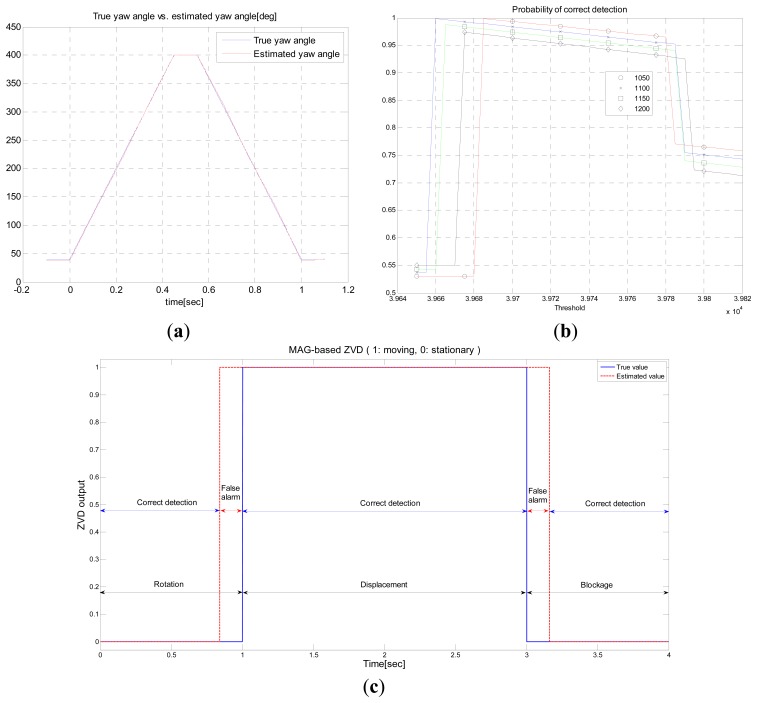
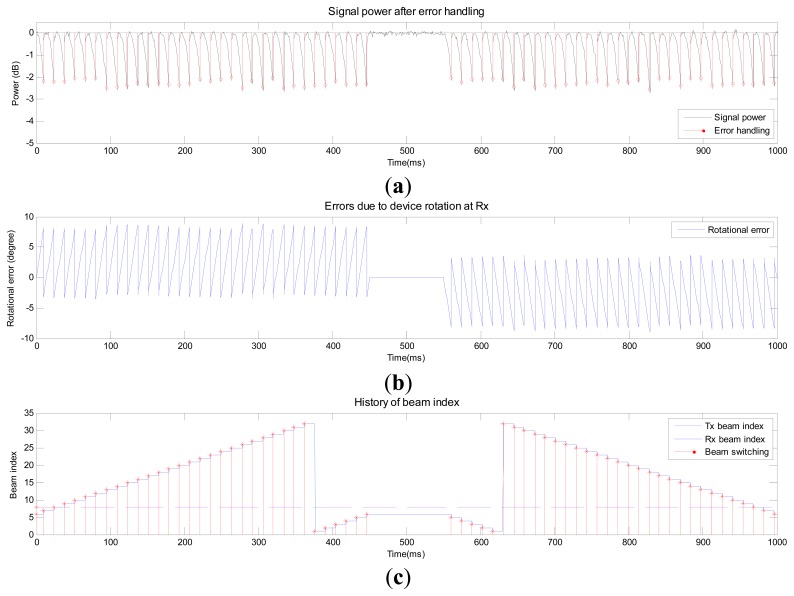
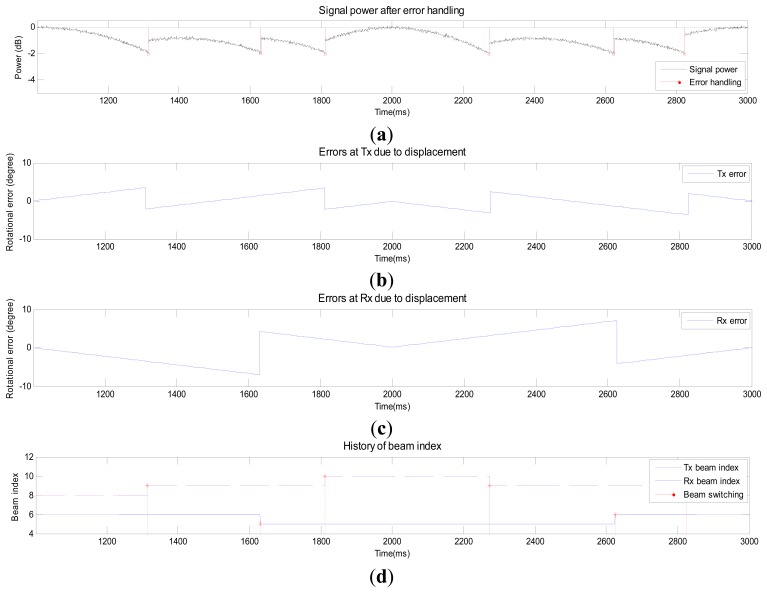
In a millimeter wave (mmWave) communication system with transmit/receive (Tx/Rx) beamforming antennas, small variation in device behavior or an environmental change can destroy beam alignment, resulting in power loss in the received signal. In this situation, the beam-tracking technique purely based on the received signal is not effective because both behavioral changes (rotation, displacement) and environmental changes (blockage) result in power loss in the received signal. In this paper, a motion sensor based on microelectromechanical systems (MEMS) as well as an electrical signal is used for beam tracking to identify the cause of beam error, and an efficient beam-tracking technique is proposed. The motion sensors such as accelerometers, gyroscopes, and geo-magnetic sensor are composed of an attitude heading reference system (AHRS) and a zero-velocity detector (ZVD). The AHRS estimates the rotation angle and the ZVD detects whether the device moves. The proposed technique tracks a beam by handling the specific situation depending on the cause of beam error, minimizing the tracking overhead. The performance of the proposed beam-tracking technique is evaluated by simulations in three typical scenarios.
在具有发射/接收(Tx/Rx)波束赋形天线的毫米波(mmWave)通信系统中,设备行为的微小变化或环境变化会破坏波束对准,导致接收信号出现功率损耗。在这种情况下,单纯基于接收信号的波束跟踪技术并不有效,因为行为变化(旋转、位移)和环境变化(阻塞)都会导致接收信号出现功率损耗。本文中,一种基于微机电系统(MEMS)的运动传感器以及电信号被用于波束跟踪,以识别波束误差的原因,并提出了一种高效的波束跟踪技术。诸如加速度计、陀螺仪和地磁传感器等运动传感器由姿态航向参考系统(AHRS)和零速度检测器(ZVD)组成。AHRS估计旋转角度,ZVD检测设备是否移动。所提出的技术通过根据波束误差的原因处理特定情况来跟踪波束,从而将跟踪开销降至最低。通过在三种典型场景下进行仿真,对所提出的波束跟踪技术的性能进行了评估。