Sherley Richard B, Waller Lauren J, Strauss Venessa, Geldenhuys Deon, Underhill Les G, Parsons Nola J
Animal Demography Unit and Marine Research Institute, University of Cape Town, Rondebosch, Western Cape, South Africa; Bristol Zoological Society, Bristol Zoo Gardens, Bristol, United Kingdom.
Animal Demography Unit and Marine Research Institute, University of Cape Town, Rondebosch, Western Cape, South Africa; CapeNature, Hermanus, Western Cape, South Africa.
PLoS One. 2014 Oct 22;9(10):e110794. doi: 10.1371/journal.pone.0110794. eCollection 2014.
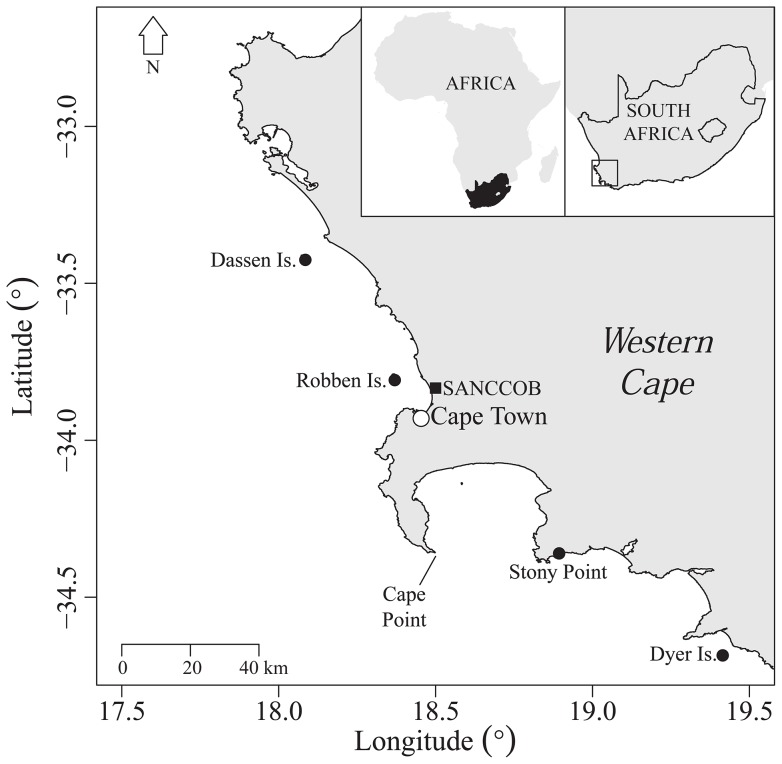
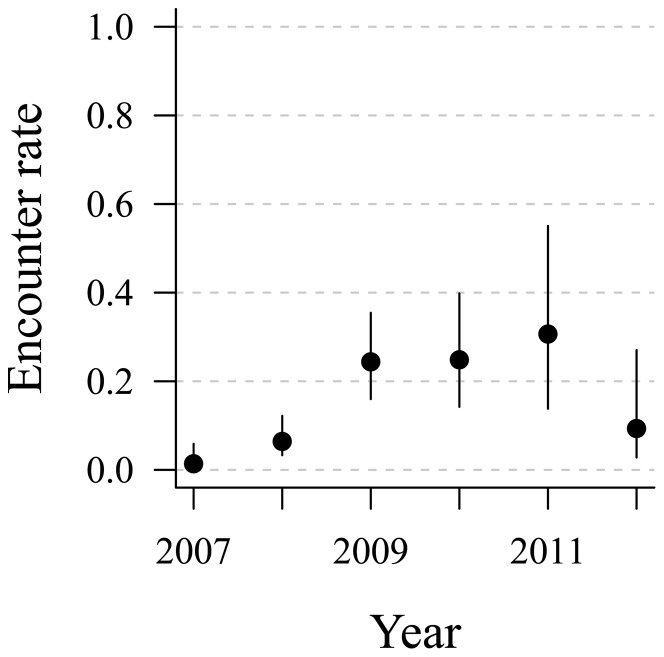
The African penguin Spheniscus demersus has an 'Endangered' conservation status and a decreasing population. Following abandonment, 841 African penguin chicks in 2006 and 481 in 2007 were admitted to SANCCOB (Southern African Foundation for the Conservation of Coastal Birds) for hand-rearing from colonies in the Western Cape, South Africa, after large numbers of breeding adults commenced moult with chicks still in the nest. Of those admitted, 91% and 73% respectively were released into the wild. There were veterinary concerns about avian malaria, airsacculitis and pneumonia, feather-loss and pododermatitis (bumblefoot). Post-release juvenile (0.32, s.e. = 0.08) and adult (0.76, s.e. = 0.10) survival rates were similar to African penguin chicks reared after oil spills and to recent survival rates recorded for naturally-reared birds. By December 2012, 12 birds had bred, six at their colony of origin, and the apparent recruitment rate was 0.11 (s.e. = 0.03). Hand-rearing of abandoned penguin chicks is recommended as a conservation tool to limit mortality and to bolster the population at specific colonies. The feasibility of conservation translocations for the creation of new colonies for this species using hand-reared chicks warrants investigation. Any such programme would be predicated on adequate disease surveillance programmes established to minimise the risk of disease introduction to wild birds.
非洲企鹅(Spheniscus demersus)处于“濒危”保护状态,其种群数量正在减少。2006年有841只、2007年有481只非洲企鹅雏鸟在被遗弃后被送往南非海岸鸟类保护基金会(SANCCOB)进行人工饲养,这些雏鸟来自南非西开普省的繁殖群体,此前大量成年繁殖企鹅开始换羽时雏鸟仍在巢中。在被收容的雏鸟中,分别有91%和73%被放归野外。兽医关注禽疟疾、气囊炎和肺炎、羽毛脱落以及足皮炎(禽掌炎)等问题。放归后的幼鸟(0.32,标准误=0.08)和成鸟(0.76,标准误=0.10)存活率与溢油事故后饲养的非洲企鹅雏鸟以及近期自然饲养鸟类的存活率相似。到2012年12月,已有12只鸟繁殖,其中6只在其原繁殖群体中繁殖,明显的补充率为0.11(标准误=0.03)。建议对被遗弃的企鹅雏鸟进行人工饲养,作为一种保护手段,以降低死亡率并增加特定繁殖群体的数量。利用人工饲养的雏鸟为该物种建立新繁殖群体的保护转移的可行性值得研究。任何此类计划都将基于建立充分的疾病监测计划,以尽量减少疾病传入野生鸟类的风险。