Hu Yiheng, Wang Chao, Huang Kun, Xia Fen, Parvin Jeffrey D, Mondal Neelima
Department of Biomedical Informatics, The Ohio State University, Columbus, Ohio, United States of America.
Department of Radiation Oncology, The Ohio State University, Columbus, Ohio, United States of America.
PLoS One. 2014 Oct 22;9(10):e110522. doi: 10.1371/journal.pone.0110522. eCollection 2014.
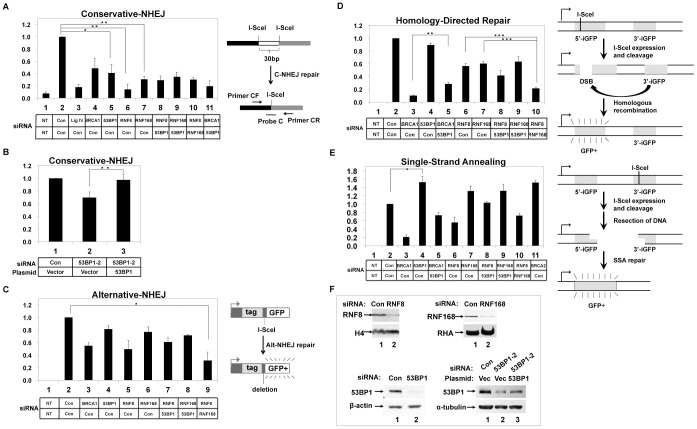
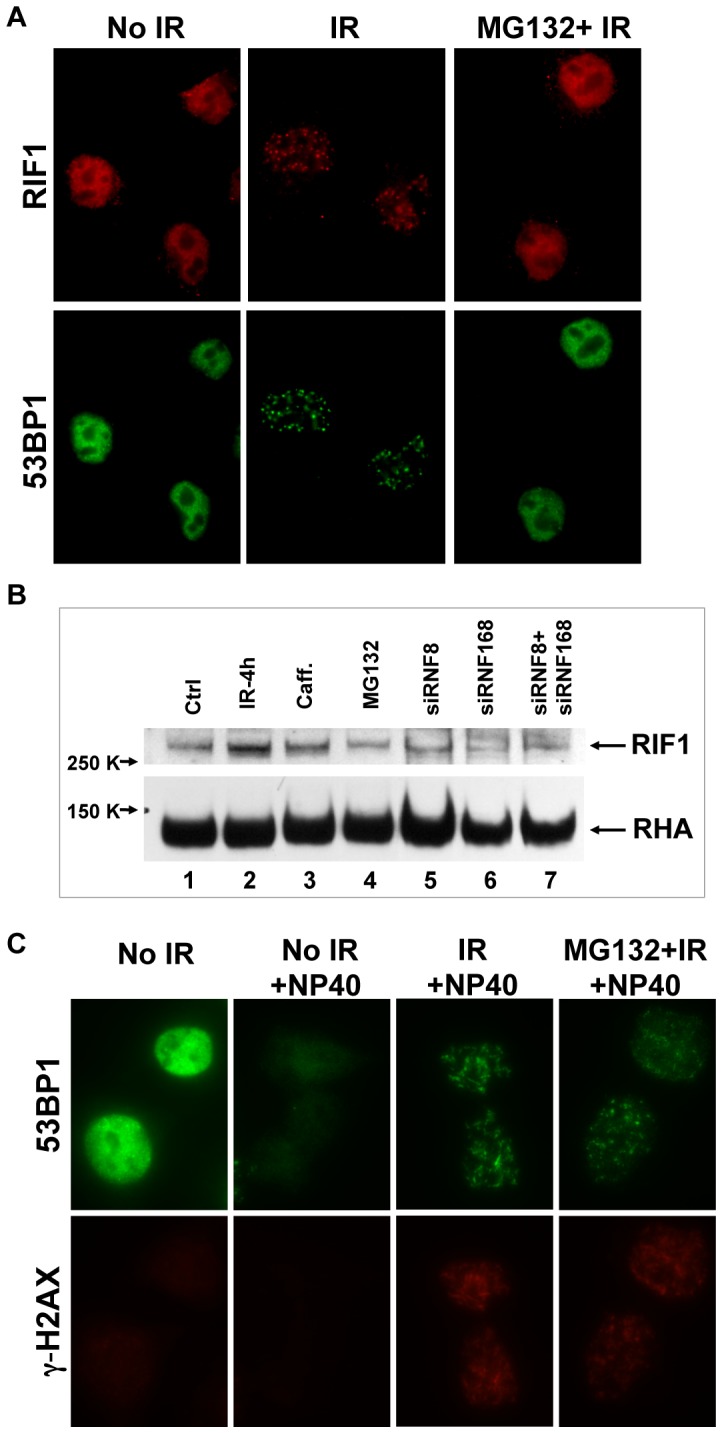
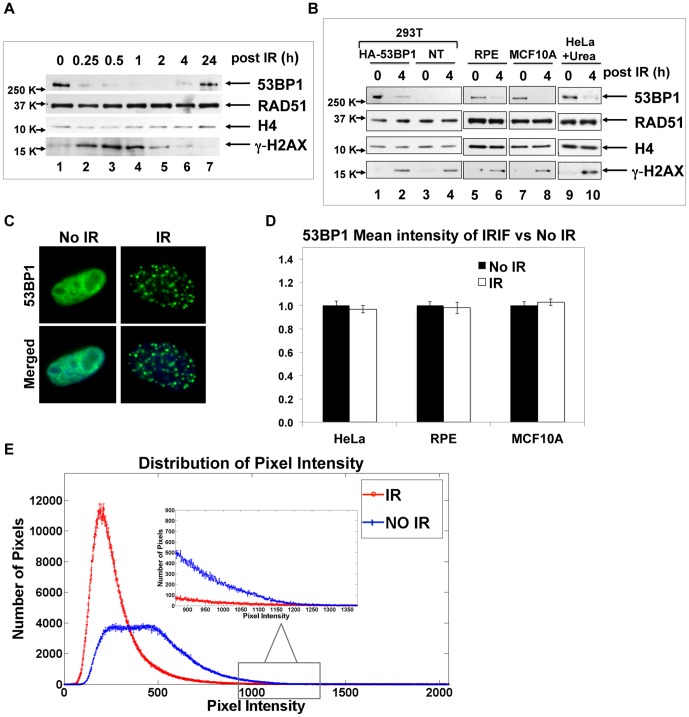
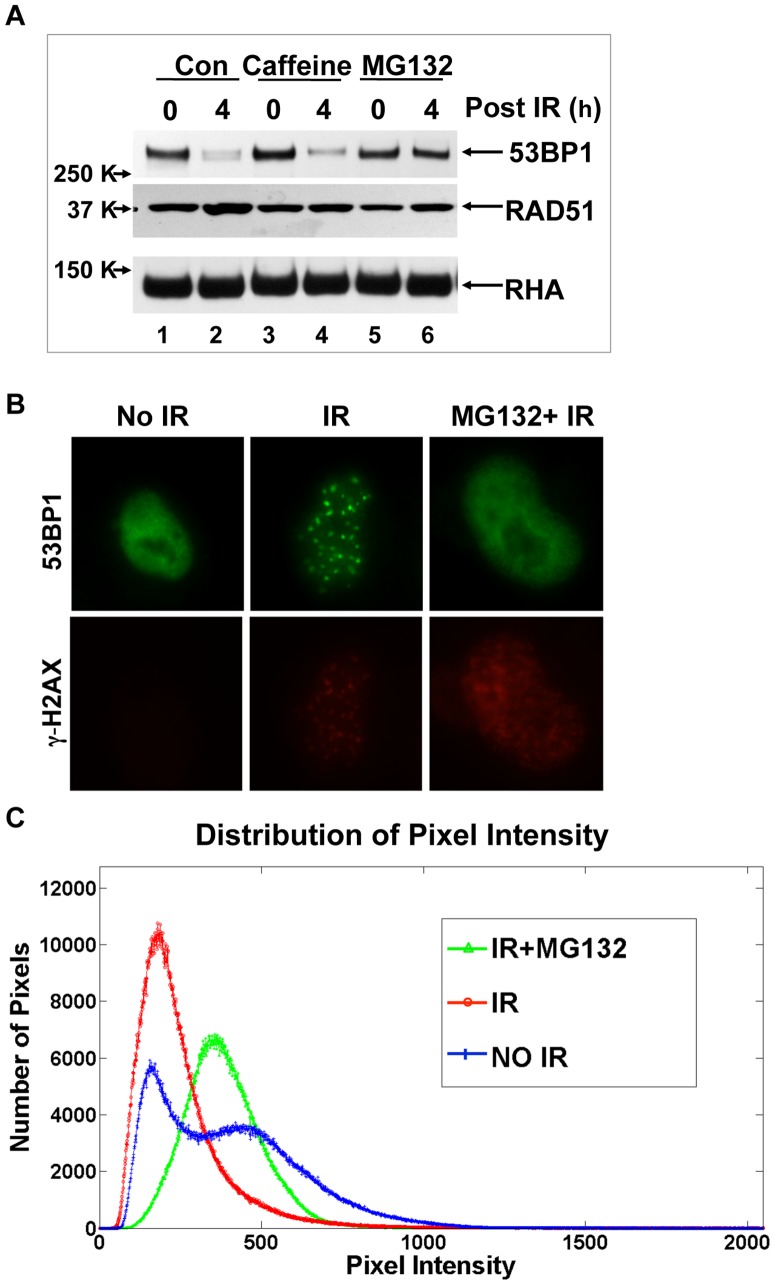
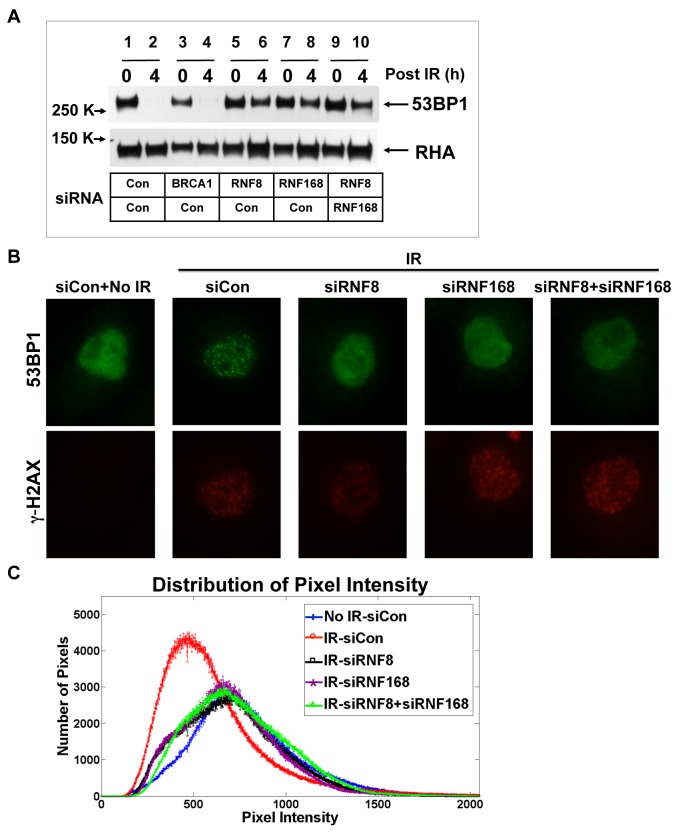
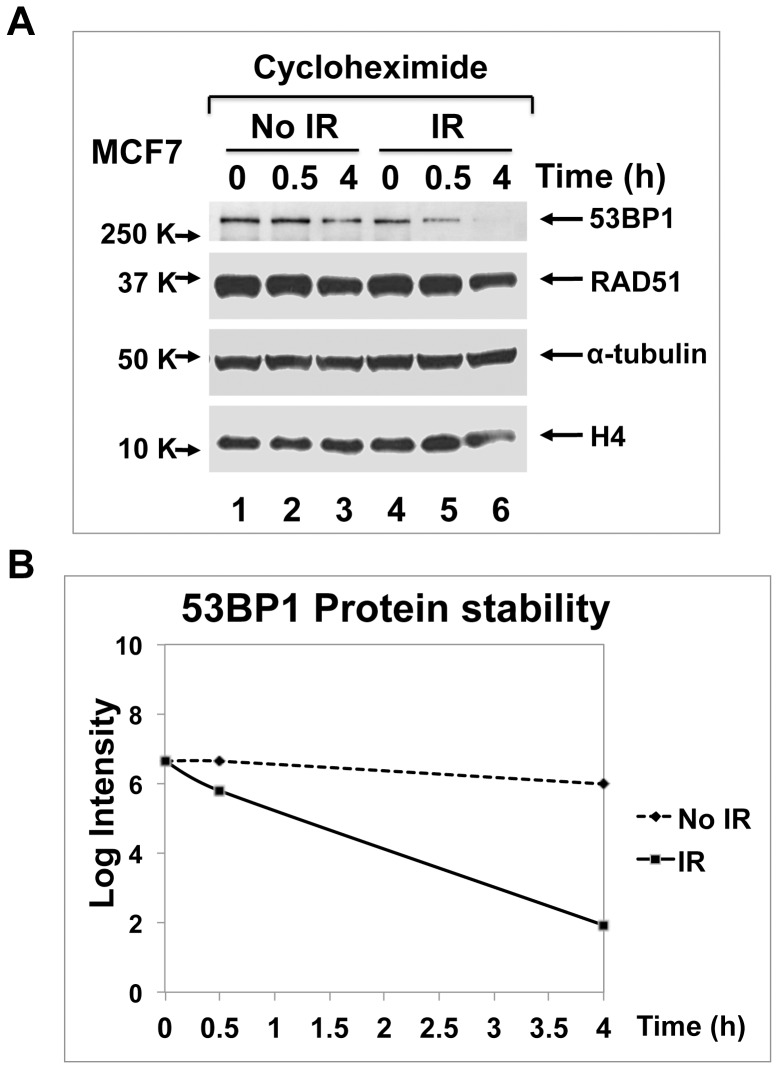
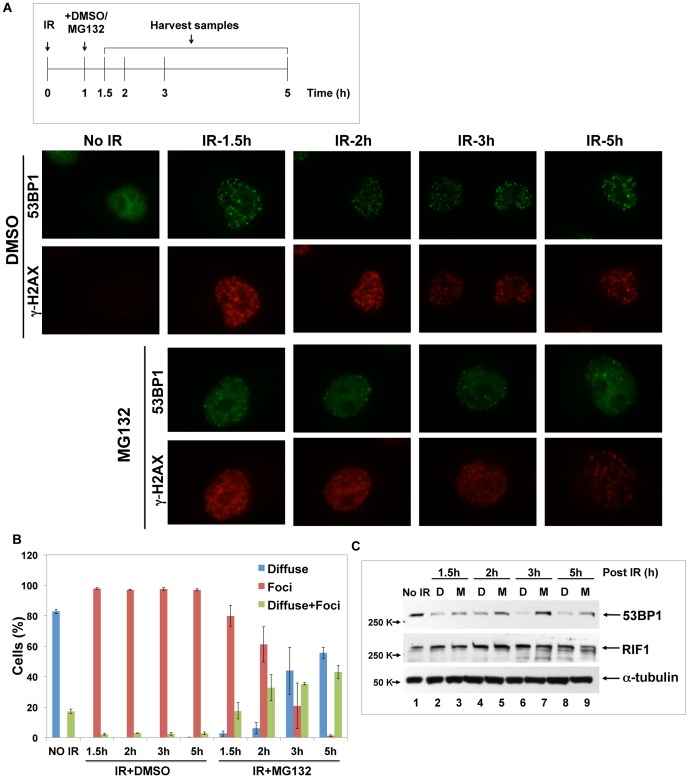
53BP1 regulates DNA double-strand break (DSB) repair. In functional assays for specific DSB repair pathways, we found that 53BP1 was important in the conservative non-homologous end-joining (C-NHEJ) pathway, and this activity was dependent upon RNF8 and RNF168. We observed that 53BP1 protein was diffusely abundant in nuclei, and upon ionizing radiation, 53BP1 was everywhere degraded except at DNA damage sites. Depletion of RNF8 or RNF168 blocked the degradation of the diffusely localized nuclear 53BP1, and ionizing radiation induced foci (IRIF) did not form. Furthermore, when 53BP1 degradation was inhibited, a subset of 53BP1 was bound to DNA damage sites but bulk, unbound 53BP1 remained in the nucleoplasm, and localization of its downstream effector RIF1 at DSBs was abolished. Our data suggest a novel mechanism for responding to DSB that upon ionizing radiation, 53BP1 was divided into two populations, ensuring functional DSB repair: damage site-bound 53BP1 whose binding signal is known to be generated by RNF8 and RNF168; and unbound bulk 53BP1 whose ensuing degradation is regulated by RNF8 and RNF168.
53BP1调节DNA双链断裂(DSB)修复。在特定DSB修复途径的功能检测中,我们发现53BP1在保守非同源末端连接(C-NHEJ)途径中起重要作用,且该活性依赖于RNF8和RNF168。我们观察到53BP1蛋白在细胞核中广泛存在,在电离辐射后,除了DNA损伤位点外,53BP1在各处均被降解。RNF8或RNF168的缺失会阻止细胞核中广泛分布的53BP1的降解,且不会形成电离辐射诱导灶(IRIF)。此外,当53BP1的降解受到抑制时,一部分53BP1会与DNA损伤位点结合,但大量未结合的53BP1仍留在核质中,其下游效应物RIF1在DSB处的定位也会被消除。我们的数据表明了一种对DSB作出反应的新机制,即在电离辐射后,53BP1被分为两个群体,以确保功能性DSB修复:与损伤位点结合的53BP1,其结合信号已知由RNF8和RNF168产生;以及未结合的大量53BP1,其随后的降解由RNF8和RNF168调节。