Dombert Benjamin, Sivadasan Rajeeve, Simon Christian M, Jablonka Sibylle, Sendtner Michael
Institute for Clinical Neurobiology, University Hospital Wuerzburg, Wuerzburg, Germany.
PLoS One. 2014 Oct 22;9(10):e110846. doi: 10.1371/journal.pone.0110846. eCollection 2014.
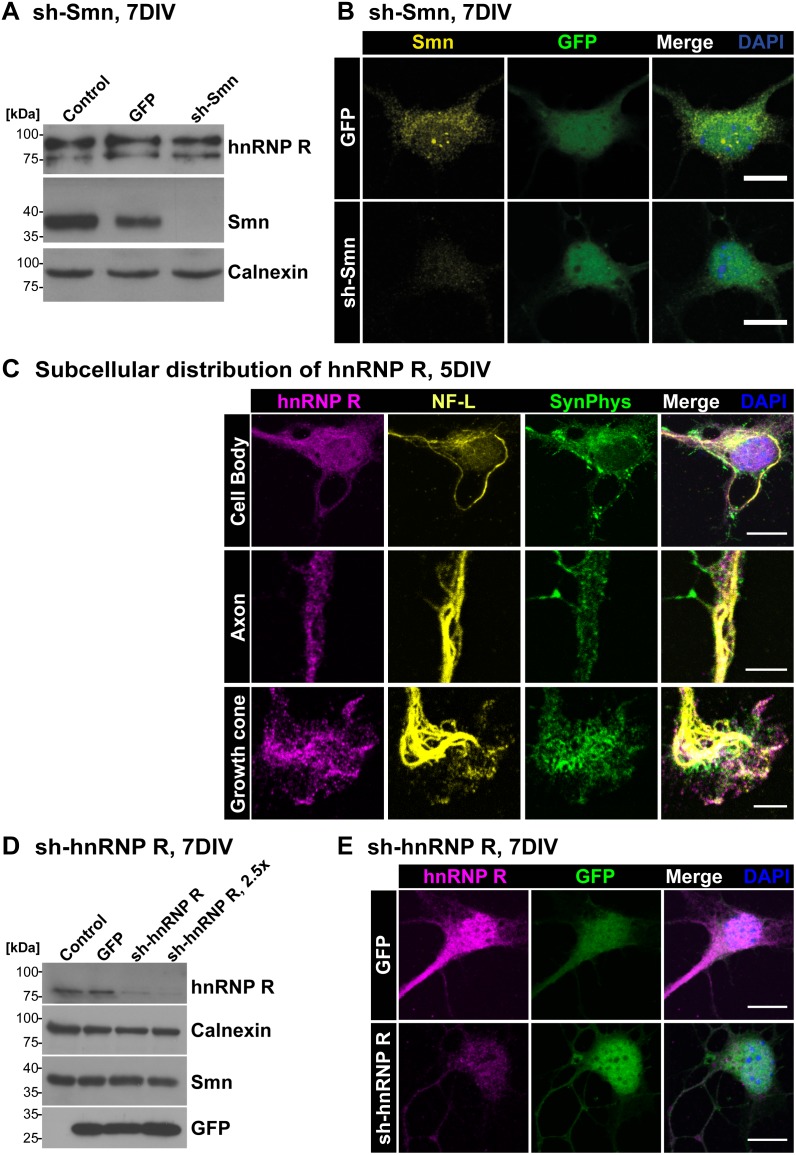
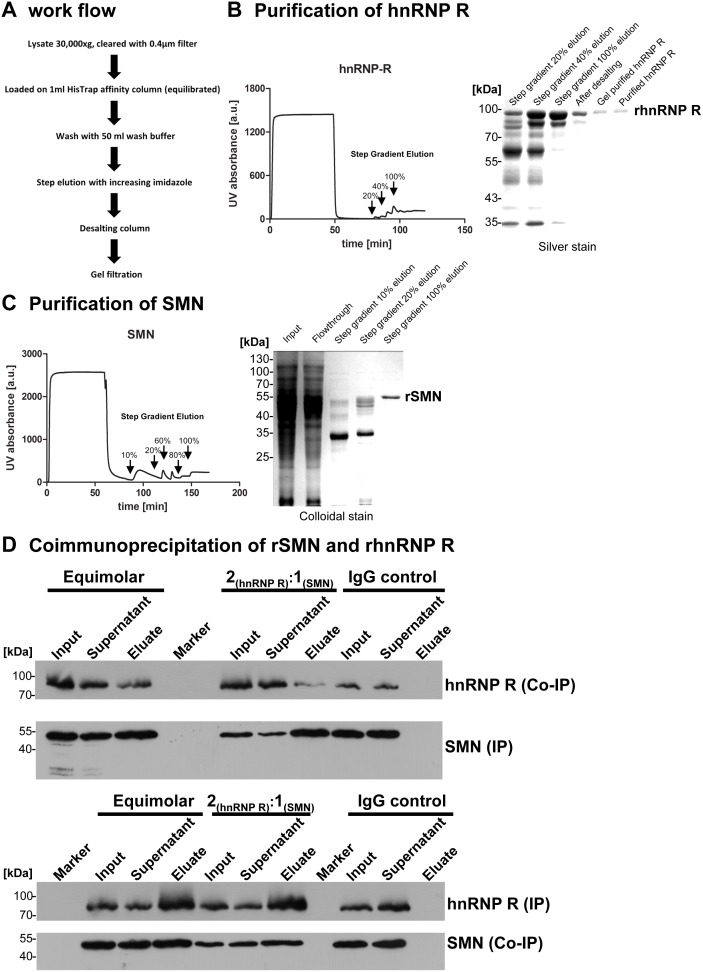
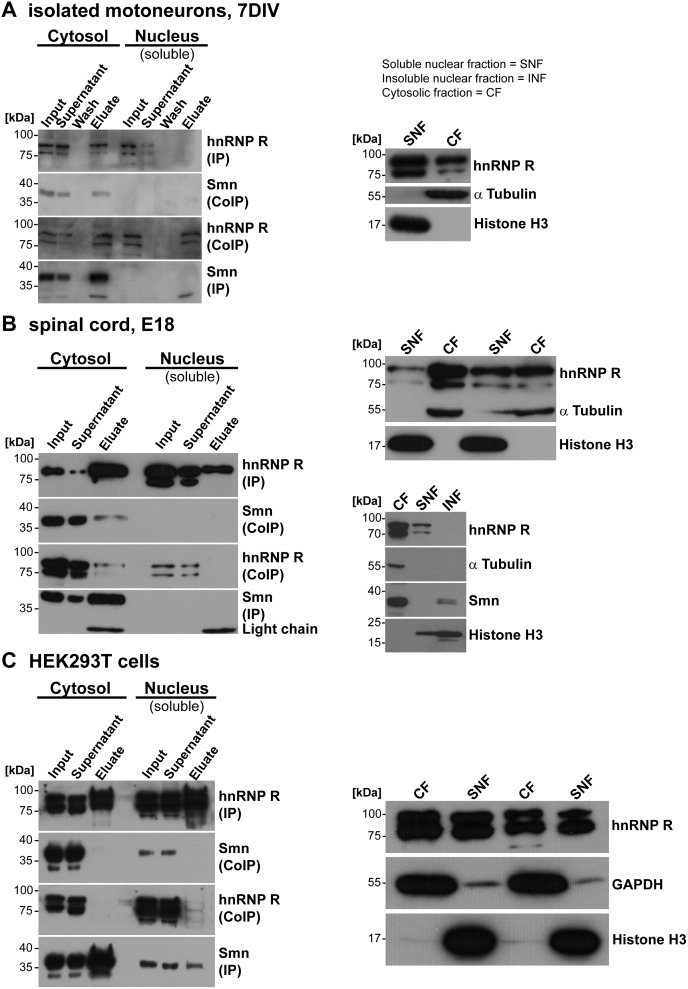
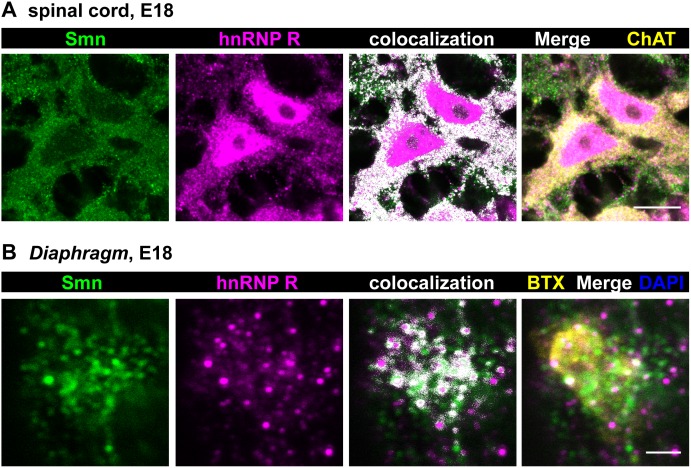
Spinal muscular atrophy (SMA) is caused by deficiency of the ubiquitously expressed survival motoneuron (SMN) protein. SMN is crucial component of a complex for the assembly of spliceosomal small nuclear ribonucleoprotein (snRNP) particles. Other cellular functions of SMN are less characterized so far. SMA predominantly affects lower motoneurons, but the cellular basis for this relative specificity is still unknown. In contrast to nonneuronal cells where the protein is mainly localized in perinuclear regions and the nucleus, Smn is also present in dendrites, axons and axonal growth cones of isolated motoneurons in vitro. However, this distribution has not been shown in vivo and it is not clear whether Smn and hnRNP R are also present in presynaptic axon terminals of motoneurons in postnatal mice. Smn also associates with components not included in the classical SMN complex like RNA-binding proteins FUS, TDP43, HuD and hnRNP R which are involved in RNA processing, subcellular localization and translation. We show here that Smn and hnRNP R are present in presynaptic compartments at neuromuscular endplates of embryonic and postnatal mice. Smn and hnRNP R are localized in close proximity to each other in axons and axon terminals both in vitro and in vivo. We also provide new evidence for a direct interaction of Smn and hnRNP R in vitro and in vivo, particularly in the cytosol of motoneurons. These data point to functions of SMN beyond snRNP assembly which could be crucial for recruitment and transport of RNA particles into axons and axon terminals, a mechanism which may contribute to SMA pathogenesis.
脊髓性肌萎缩症(SMA)是由普遍表达的生存运动神经元(SMN)蛋白缺乏所致。SMN是剪接体小核核糖核蛋白(snRNP)颗粒组装复合物的关键组成部分。到目前为止,SMN的其他细胞功能尚未得到充分表征。SMA主要影响下运动神经元,但其这种相对特异性的细胞基础仍不清楚。与非神经元细胞中该蛋白主要定位于核周区域和细胞核不同,在体外分离的运动神经元的树突、轴突和轴突生长锥中也存在Smn。然而,这种分布尚未在体内得到证实,并且尚不清楚Smn和hnRNP R是否也存在于出生后小鼠运动神经元的突触前轴突终末。Smn还与经典SMN复合物中未包含的成分相关联,如参与RNA加工、亚细胞定位和翻译的RNA结合蛋白FUS、TDP43、HuD和hnRNP R。我们在此表明,Smn和hnRNP R存在于胚胎和出生后小鼠神经肌肉终板的突触前区室中。在体外和体内,Smn和hnRNP R在轴突和轴突终末彼此紧邻定位。我们还提供了新的证据,证明Smn和hnRNP R在体外和体内存在直接相互作用,特别是在运动神经元的胞质溶胶中。这些数据表明SMN在snRNP组装之外的功能,这可能对RNA颗粒向轴突和轴突终末的募集和运输至关重要,这一机制可能与SMA的发病机制有关。