Poddighe Simone, De Rose Francescaelena, Marotta Roberto, Ruffilli Roberta, Fanti Maura, Secci Pietro Paolo, Mostallino Maria Cristina, Setzu Maria Dolores, Zuncheddu Maria Antonietta, Collu Ignazio, Solla Paolo, Marrosu Francesco, Kasture Sanjay, Acquas Elio, Liscia Anna
Department of Biomedical Sciences, University of Cagliari, Cagliari, Italy.
Department of Life and Environmental Sciences, University of Cagliari, Cagliari, Italy.
PLoS One. 2014 Oct 23;9(10):e110802. doi: 10.1371/journal.pone.0110802. eCollection 2014.
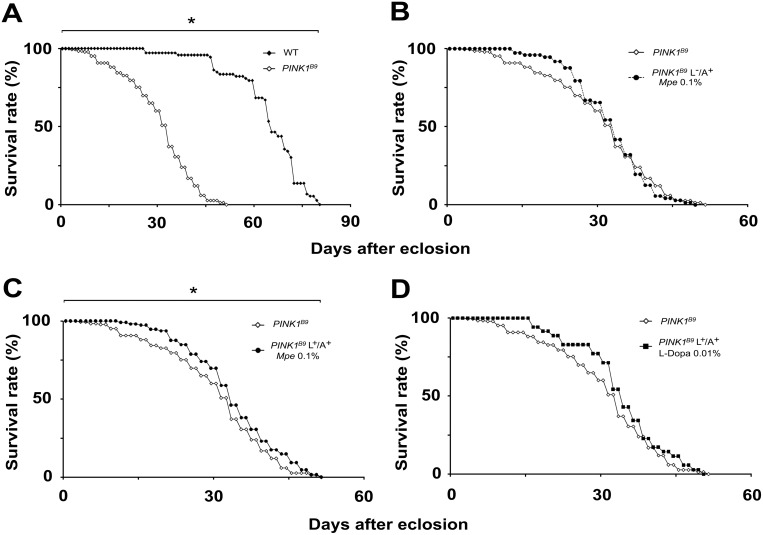
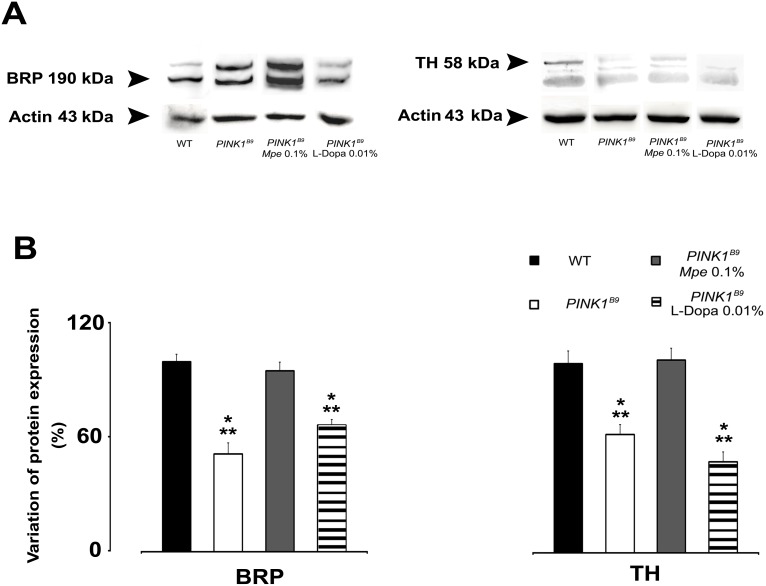
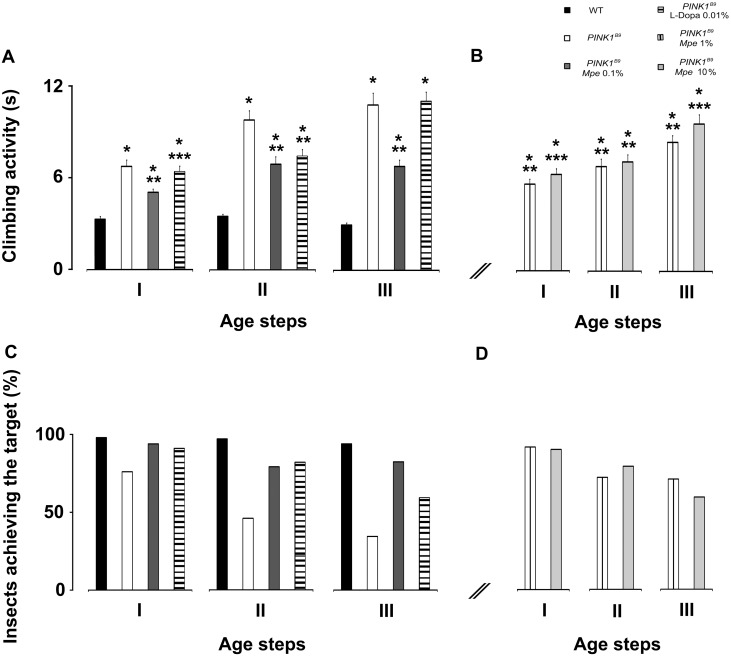
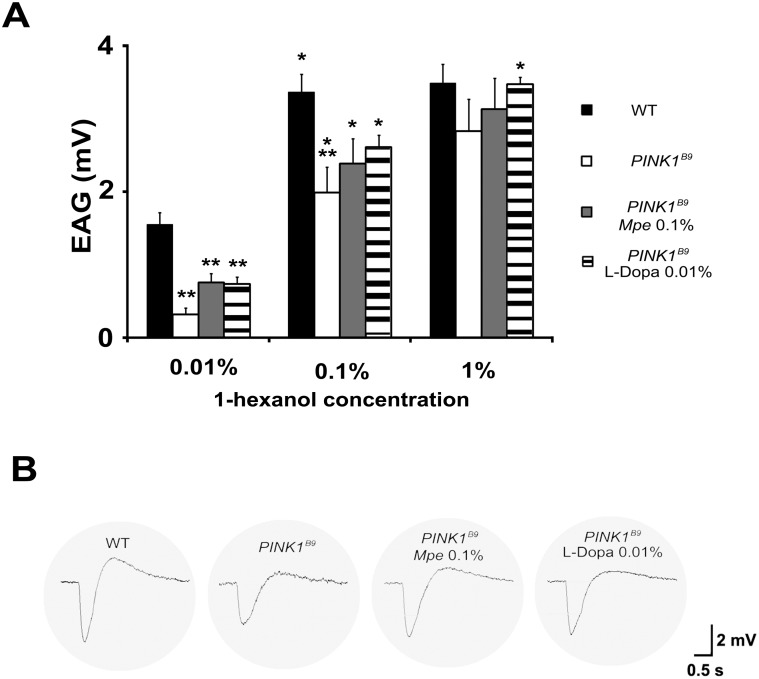
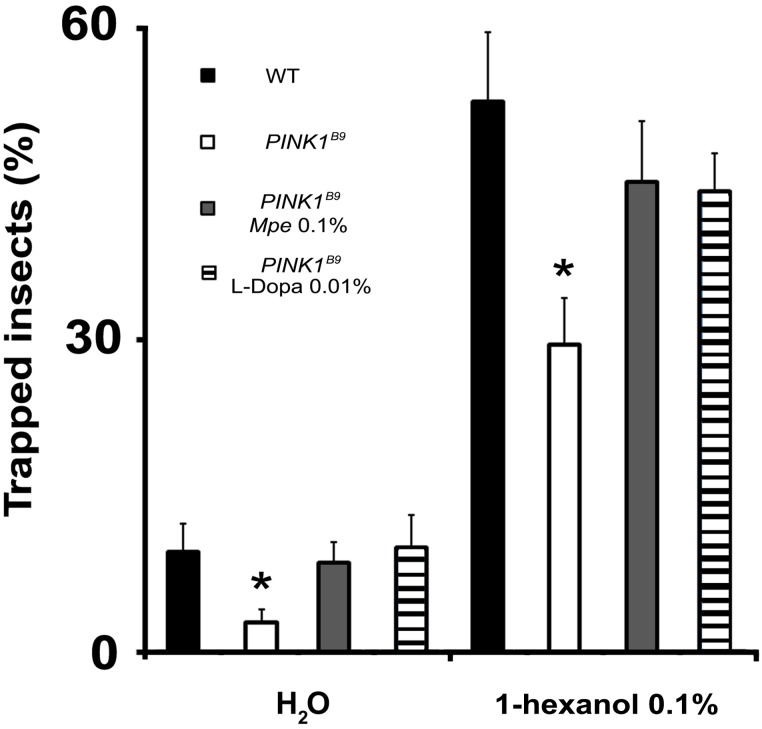
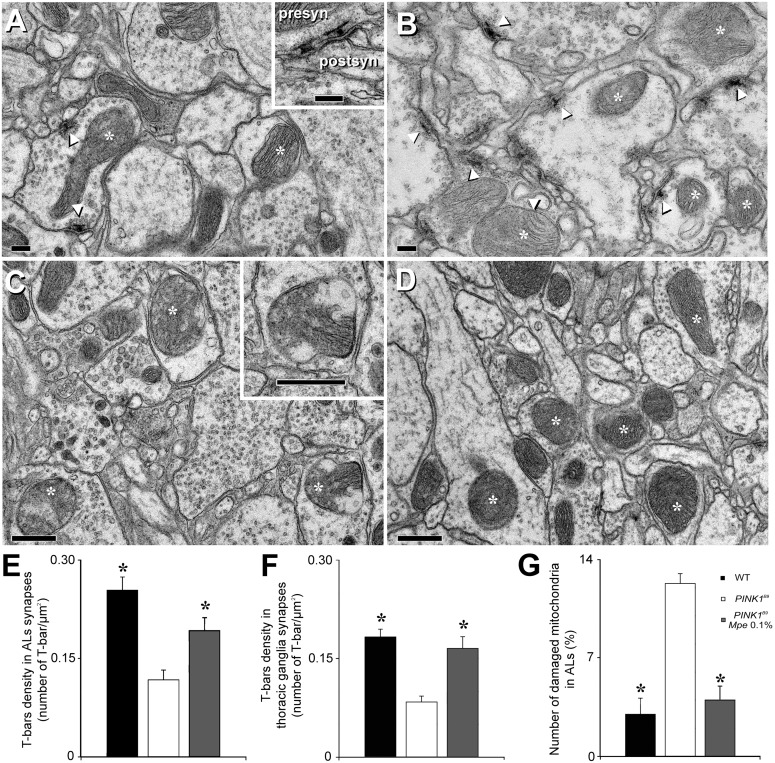
The fruit fly Drosophila melanogaster (Dm) mutant for PTEN-induced putative kinase 1 (PINK1B9) gene is a powerful tool to investigate physiopathology of Parkinson's disease (PD). Using PINK1B9 mutant Dm we sought to explore the effects of Mucuna pruriens methanolic extract (Mpe), a L-Dopa-containing herbal remedy of PD. The effects of Mpe on PINK1B9 mutants, supplied with standard diet to larvae and adults, were assayed on 3-6 (I), 10-15 (II) and 20-25 (III) days old flies. Mpe 0.1% significantly extended lifespan of PINK1B9 and fully rescued olfactory response to 1-hexanol and improved climbing behavior of PINK1B9 of all ages; in contrast, L-Dopa (0.01%, percentage at which it is present in Mpe 0.1%) ameliorated climbing of only PINK1B9 flies of age step II. Transmission electron microscopy analysis of antennal lobes and thoracic ganglia of PINK1B9 revealed that Mpe restored to wild type (WT) levels both T-bars and damaged mitochondria. Western blot analysis of whole brain showed that Mpe, but not L-Dopa on its own, restored bruchpilot (BRP) and tyrosine hydroxylase (TH) expression to age-matched WT control levels. These results highlight multiple sites of action of Mpe, suggesting that its effects cannot only depend upon its L-Dopa content and support the clinical observation of Mpe as an effective medication with intrinsic ability of delaying the onset of chronic L-Dopa-induced long-term motor complications. Overall, this study strengthens the relevance of using PINK1B9 Dm as a translational model to study the properties of Mucuna pruriens for PD treatment.
果蝇黑腹果蝇(Dm)中PTEN诱导的推定激酶1(PINK1B9)基因的突变体是研究帕金森病(PD)生理病理学的有力工具。我们使用PINK1B9突变体Dm来探索帕金森病含左旋多巴的草药疗法——刺蒺藜甲醇提取物(Mpe)的作用。在幼虫和成虫喂食标准饲料的情况下,检测了Mpe对3 - 6日龄(I)、10 - 15日龄(II)和20 - 25日龄(III)的PINK1B9突变体果蝇的影响。0.1%的Mpe显著延长了PINK1B9果蝇的寿命,并完全恢复了对1 - 己醇的嗅觉反应,改善了各年龄段PINK1B9果蝇的攀爬行为;相比之下,左旋多巴(0.01%,其在0.1%的Mpe中的含量百分比)仅改善了II龄段PINK1B9果蝇的攀爬能力。对PINK1B9果蝇触角叶和胸神经节的透射电子显微镜分析表明,Mpe使T型杆和受损线粒体均恢复到野生型(WT)水平。对全脑的蛋白质免疫印迹分析表明,Mpe能将bruchpilot(BRP)和酪氨酸羟化酶(TH)的表达恢复到与年龄匹配的WT对照水平,而左旋多巴自身则不能。这些结果突出了Mpe的多个作用位点,表明其作用不仅取决于其左旋多巴含量,并支持了Mpe作为一种有效药物具有内在能力延迟慢性左旋多巴诱导的长期运动并发症发作的临床观察。总体而言,本研究加强了使用PINK1B9 Dm作为转化模型来研究刺蒺藜治疗帕金森病特性的相关性。