Xu Meng, Jin Hua, Xu Cheng-Xiong, Sun Bo, Mao Zhi, Bi Wen-Zhi, Wang Yan
Department of Orthopaedics, The General Hospital of Chinese People's Liberation Army, Beijing, China.
Department of Pharmaceutical Sciences, College of Pharmacy, University of South Florida, Tampa, FL, USA.
Oncotarget. 2014 Oct 15;5(19):9472-83. doi: 10.18632/oncotarget.2418.
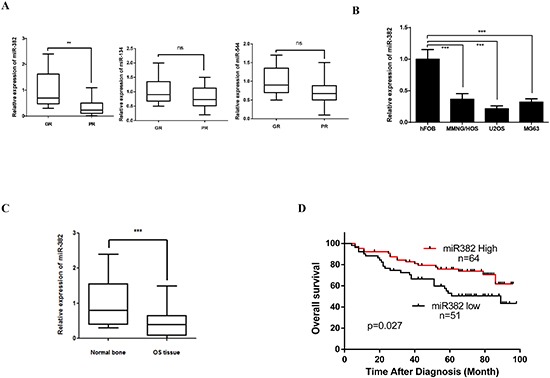
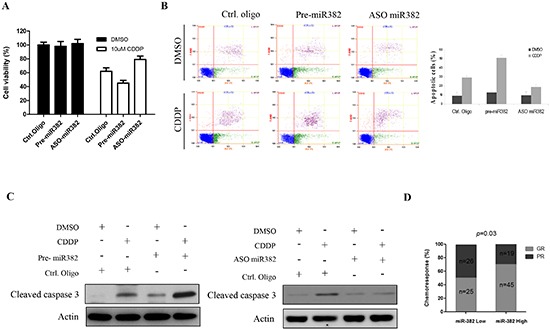
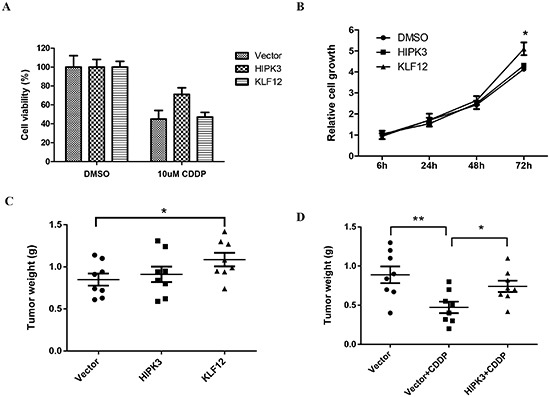
Dysregulation of miRNAs is involved in osteosarcoma (OS). Here, we demonstrate that miR-382 is decreased in specimens of OS patients with a poor chemoresponse compared to those with a good chemoresponse. In addition, our clinical data show that decreased miR-382 was associated with poor survival in OS patients. Overexpression of miR-382 inhibited cell growth and chemoresistance by targeting KLF12 and HIPK3, respectively. In contrast, inhibition of miR-382 or overexpression of target genes stimulated OS cell growth and chemoresistance both in vitro and in vivo. Taken together, these findings suggest that miR-382 is a tumor suppressor miRNA and induction of miR-382 is a potential strategy to inhibit OS progression.
微小RNA(miRNA)失调与骨肉瘤(OS)有关。在此,我们证明,与化疗反应良好的骨肉瘤患者标本相比,化疗反应差的患者标本中miR-382水平降低。此外,我们的临床数据表明,miR-382水平降低与骨肉瘤患者的不良生存相关。miR-382的过表达分别通过靶向KLF12和HIPK3抑制细胞生长和化疗耐药性。相反,抑制miR-382或过表达靶基因在体外和体内均能刺激骨肉瘤细胞生长和化疗耐药性。综上所述,这些发现表明miR-382是一种肿瘤抑制性miRNA,诱导miR-382表达是抑制骨肉瘤进展的潜在策略。