Choi Soo-Im, Kim Seo-Yeon, Lee Jaeha, Cho Eun-Wie, Kim In-Gyu
Department of Radiation Biology, Environmental Radiation Research Group, Korea Atomic Energy Research Institute (KAERI), Daedeok-daero, Yuseong-gu, Daejeon, South Korea. Department of Radiation Biotechnology and Applied Radioisotope, Korea University of Science and Technology, Daedeok-daero, Yuseong-gu, Daejeon, South Korea.
Department of Radiation Biology, Environmental Radiation Research Group, Korea Atomic Energy Research Institute (KAERI), Daedeok-daero, Yuseong-gu, Daejeon, South Korea.
Oncotarget. 2014 Oct 30;5(20):9823-37. doi: 10.18632/oncotarget.2450.
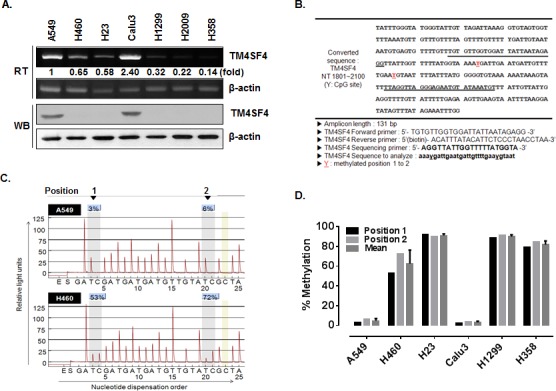
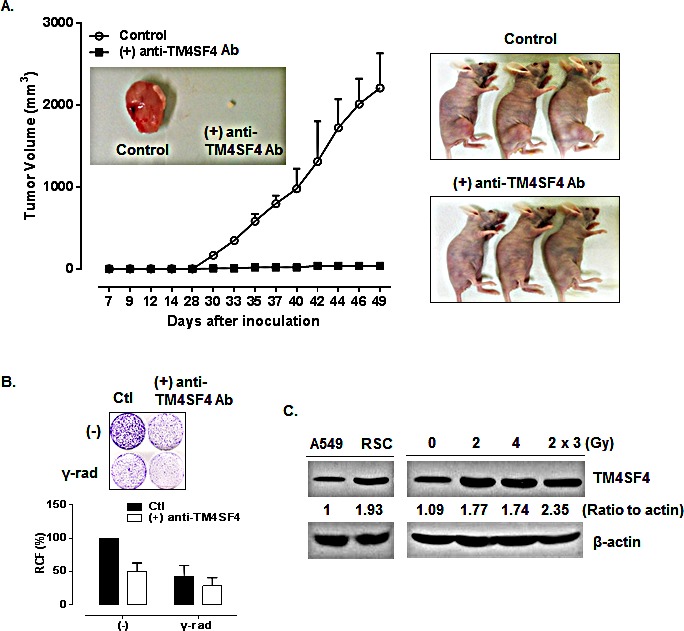
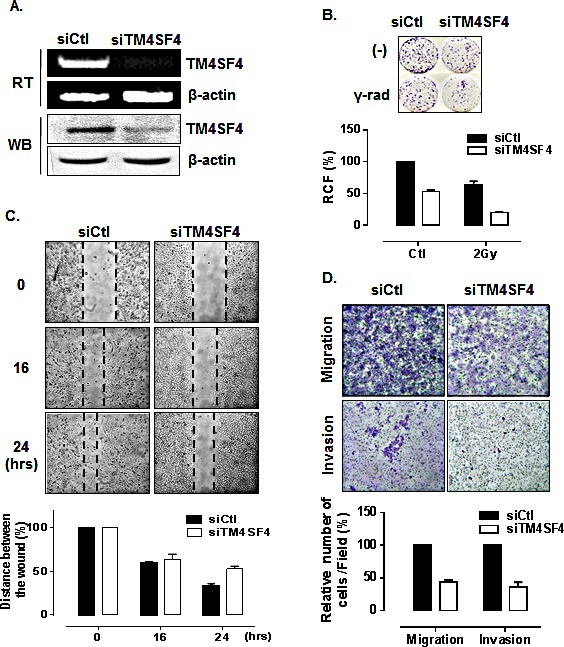
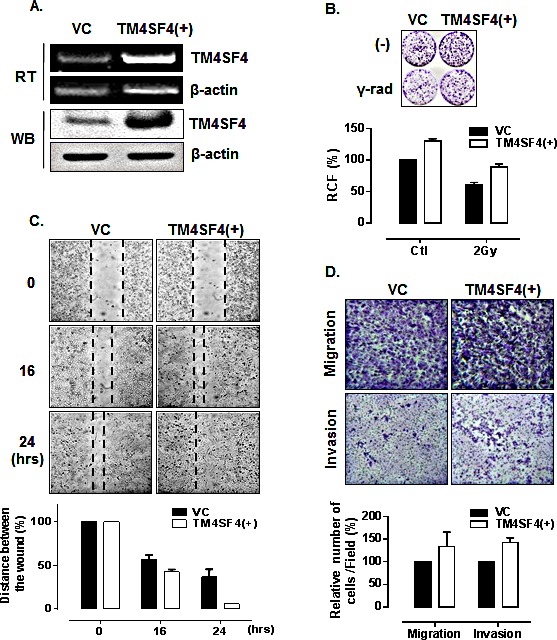
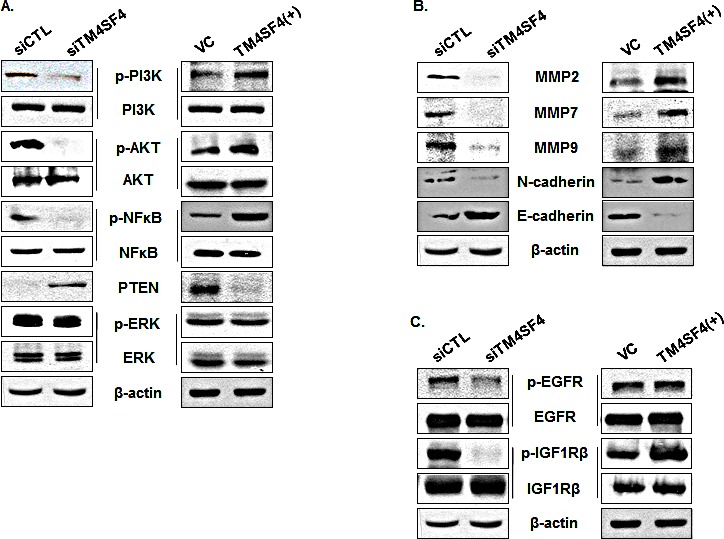
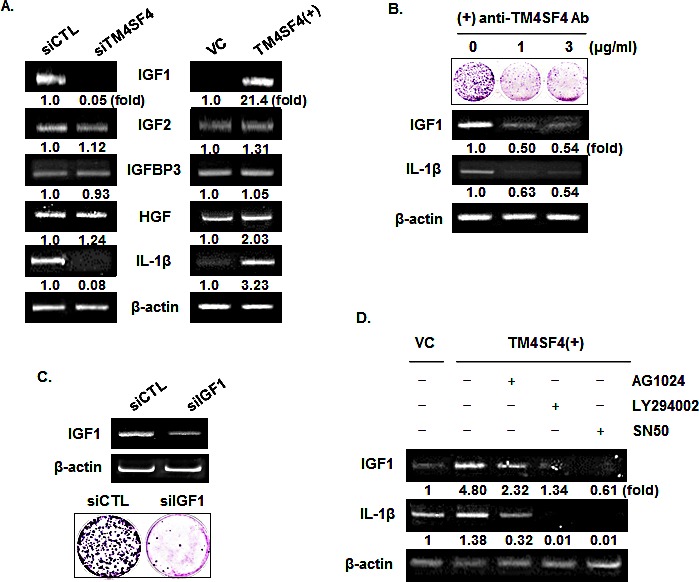
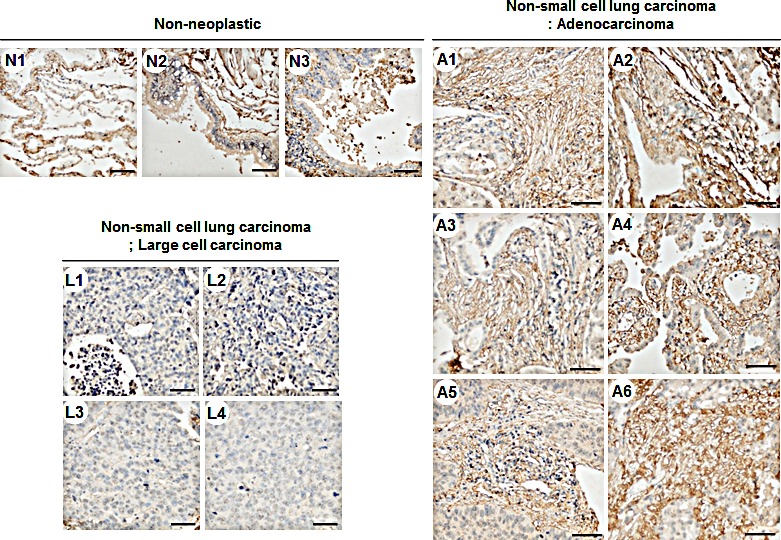
Transmembrane 4 L six family member 4 (TM4SF4) is a member of the tetraspanin L6 domain family. Other members of this family, TM4SF1 (also known as L6-Ag) and TM4SF5, have been shown to be upregulated in multiple tumors and involved in epithelial-to-mesenchymal transition and cell migration. However, unlike its homologs, little is known about TM4SF4. Here, we show that TM4SF4 was highly expressed in radiation-resistant lung adenocarcinoma cells, such as A549 and Calu-3 cells, and its expression activated cell growth, migration, and invasion. Overexpression of TM4SF4 in A549 cells increased the activation of PI3K, AKT, and NF-kappaB and the expression of PTEN. IGF1R was clearly activated by overexpression of TM4SF4, although EGFR was also slightly activated. TM4SF4 expression was correlated with the increased expression of IGF1, consequently resulting in IGF1R activation. Tumorigenic activity of TM4SF4 in lung adenocarcinoma cells was also demonstrated by xenograft assay; however, this activity was almost completely suppressed by treatment with anti-TM4SF4 antibody. Our results suggest that TM4SF4 overexpression in lung carcinoma cells results in resistance to radiotherapy via IGF1-induced IGF1R activation and blocking the activity of TM4SF4 using specific antibody can be a promising therapeutics against TM4SF4-overexpressing lung adenocarcinoma.
跨膜4 L六家族成员4(TM4SF4)是四跨膜蛋白L6结构域家族的成员。该家族的其他成员,即TM4SF1(也称为L6-Ag)和TM4SF5,已被证明在多种肿瘤中上调,并参与上皮-间质转化和细胞迁移。然而,与它的同源物不同,人们对TM4SF4知之甚少。在这里,我们表明TM4SF4在耐辐射的肺腺癌细胞(如A549和Calu-3细胞)中高表达,其表达激活了细胞生长、迁移和侵袭。TM4SF4在A549细胞中的过表达增加了PI3K、AKT和NF-κB的激活以及PTEN的表达。虽然EGFR也略有激活,但TM4SF4的过表达明显激活了IGF1R。TM4SF4的表达与IGF1表达的增加相关,从而导致IGF1R激活。异种移植试验也证明了TM4SF4在肺腺癌细胞中的致瘤活性;然而,用抗TM4SF4抗体处理几乎完全抑制了这种活性。我们的结果表明,肺癌细胞中TM4SF4的过表达通过IGF1诱导的IGF1R激活导致放疗抗性,使用特异性抗体阻断TM4SF4的活性可能是针对TM4SF4过表达肺腺癌的一种有前景的治疗方法。