Shim Jae Sung, Imaizumi Takato
Department of Biology, University of Washington , Seattle, Washington 98195-1800, United States.
Biochemistry. 2015 Jan 20;54(2):157-70. doi: 10.1021/bi500922q. Epub 2014 Dec 30.
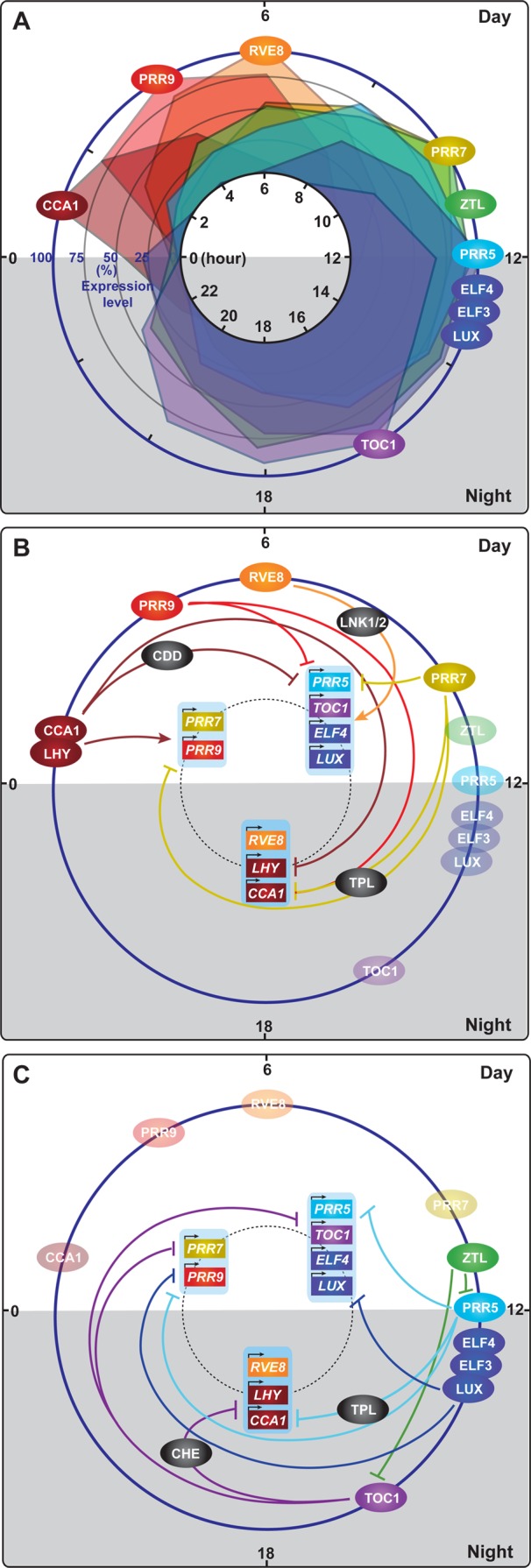
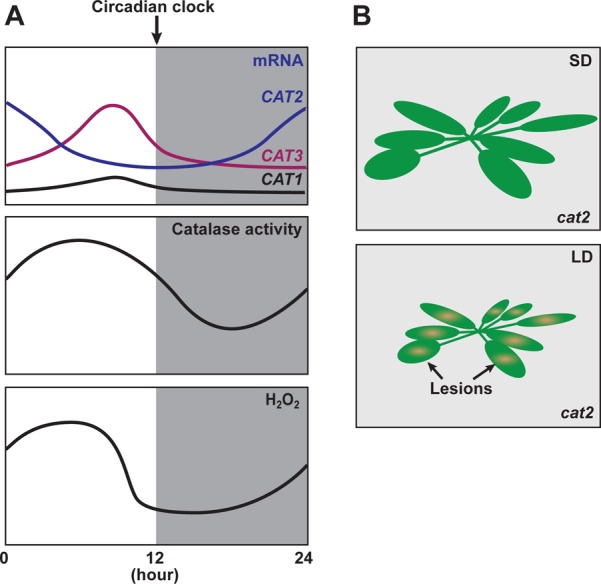
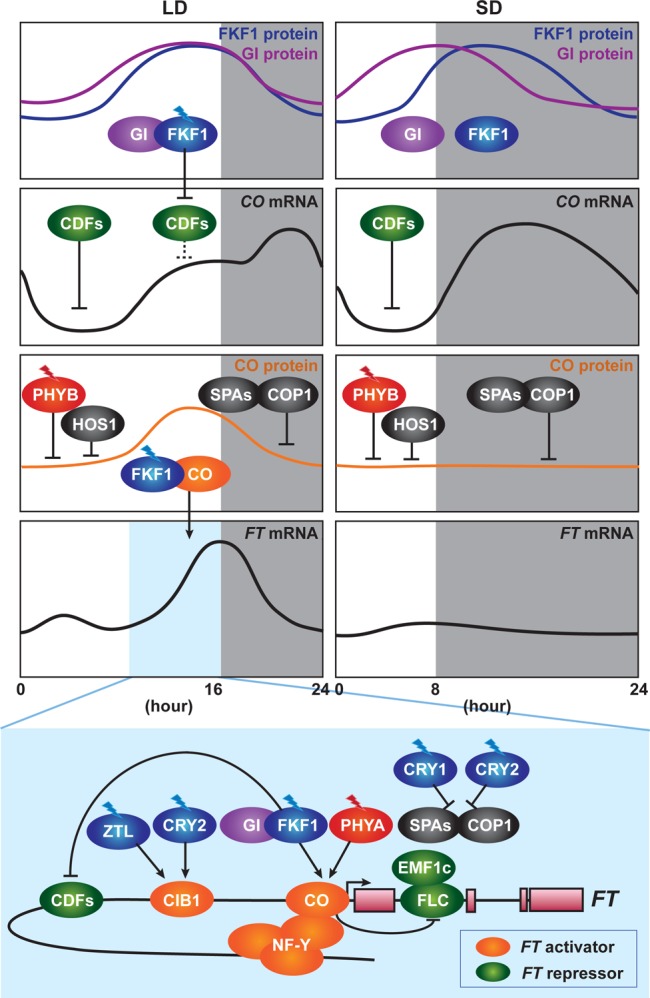
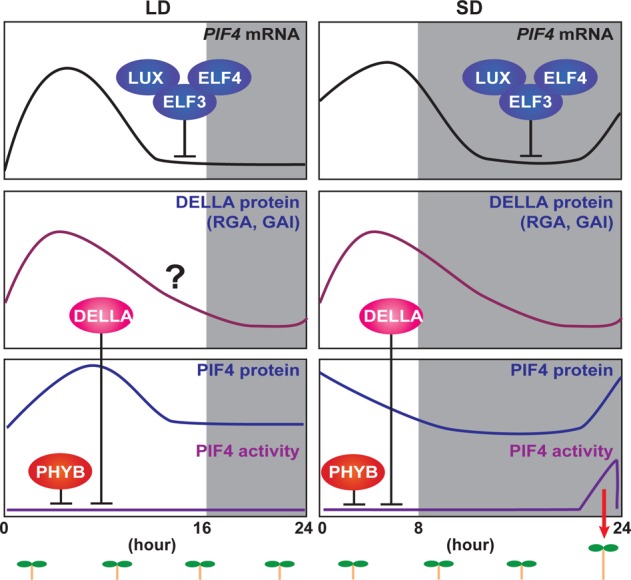
Many of the developmental responses and behaviors in plants that occur throughout the year are controlled by photoperiod; among these, seasonal flowering is the most characterized. Molecular genetic and biochemical analyses have revealed the mechanisms by which plants sense changes in day length to regulate seasonal flowering. In Arabidopsis thaliana, induction of the expression of a florigen, FLOWERING LOCUS T (FT) protein, is a major output of the photoperiodic flowering pathway. The circadian clock coordinates the expression profiles and activities of the components in this pathway. Light-dependent control of CONSTANS (CO) transcription factor activity is a crucial part of the induction of the photoperiodic expression of FT. CO protein is stabilized only in the long day afternoon, which is when FT is induced. In this review, we summarize recent progress in the determination of the molecular architecture of the circadian clock and mechanisms underlying photoperiodic flowering. In addition, we introduce the molecular mechanisms of other biological processes, such as hypocotyl growth and reactive oxygen species production, which are also controlled by alterations in photoperiod.
植物全年发生的许多发育反应和行为都受光周期控制;其中,季节性开花最为典型。分子遗传学和生化分析揭示了植物感知日长变化以调节季节性开花的机制。在拟南芥中,成花素开花位点T(FT)蛋白表达的诱导是光周期开花途径的主要输出。生物钟协调该途径中各组分的表达谱和活性。CONSTANS(CO)转录因子活性的光依赖性控制是FT光周期表达诱导的关键部分。CO蛋白仅在长日下午稳定,此时FT被诱导。在本综述中,我们总结了生物钟分子结构测定及光周期开花潜在机制方面的最新进展。此外,我们还介绍了其他生物学过程的分子机制,如胚轴生长和活性氧产生,它们也受光周期变化的控制。