Ruiz-Ramos Dannise V, Baums Iliana B
Department of Biology, Pennsylvania State University, 208 Mueller Laboratory, University Park, PA 16802, USA.
BMC Genomics. 2014 Oct 27;15(1):939. doi: 10.1186/1471-2164-15-939.
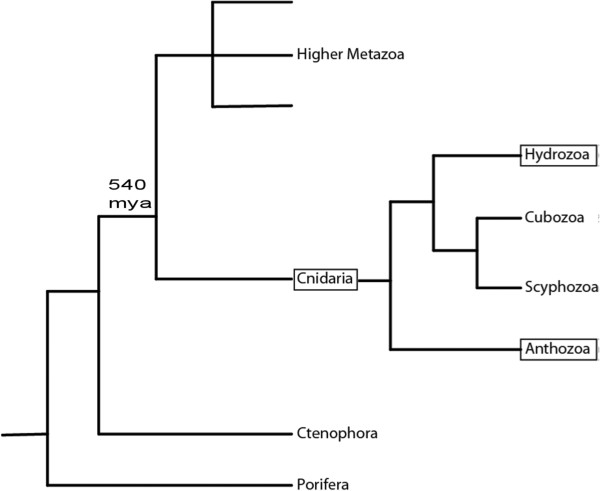
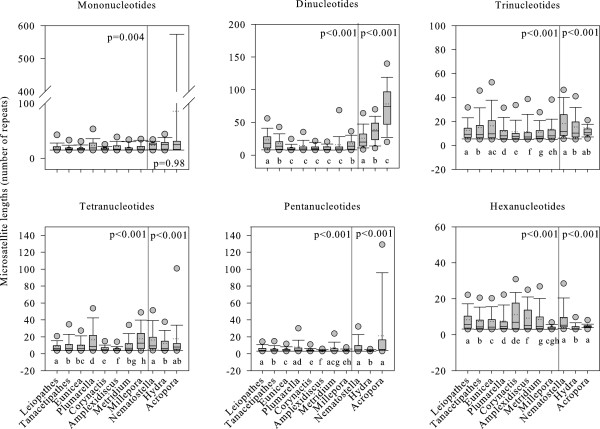
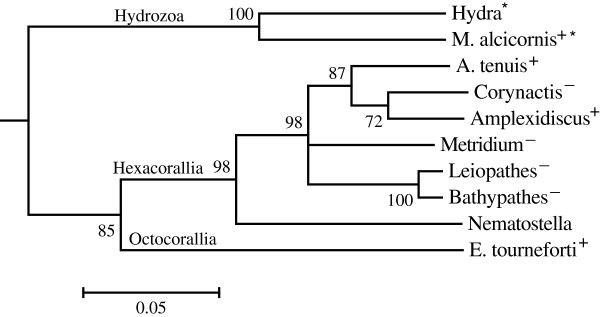
Microsatellite loci have high mutation rates and thus are indicative of mutational processes within the genome. By concentrating on the symbiotic and aposymbiotic cnidarians, we investigated if microsatellite abundances follow a phylogenetic or ecological pattern. Individuals from eight species were shotgun sequenced using 454 GS-FLX Titanium technology. Sequences from the three available cnidarian genomes (Nematostella vectensis, Hydra magnipapillata and Acropora digitifera) were added to the analysis for a total of eleven species representing two classes, three subclasses and eight orders within the phylum Cnidaria.
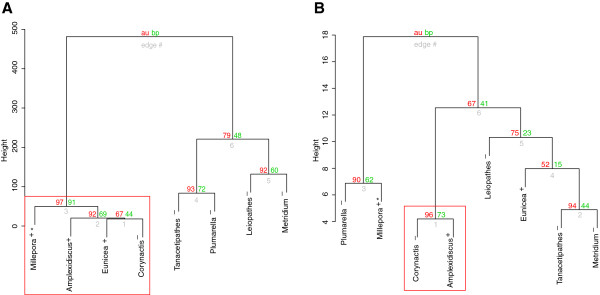
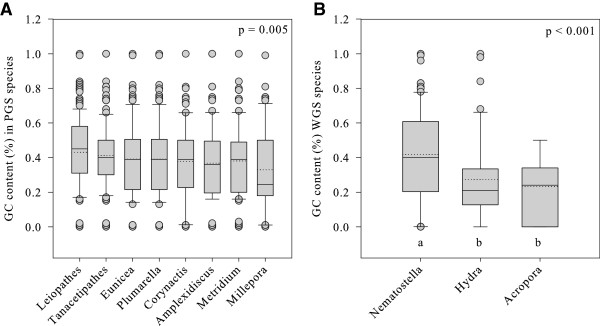
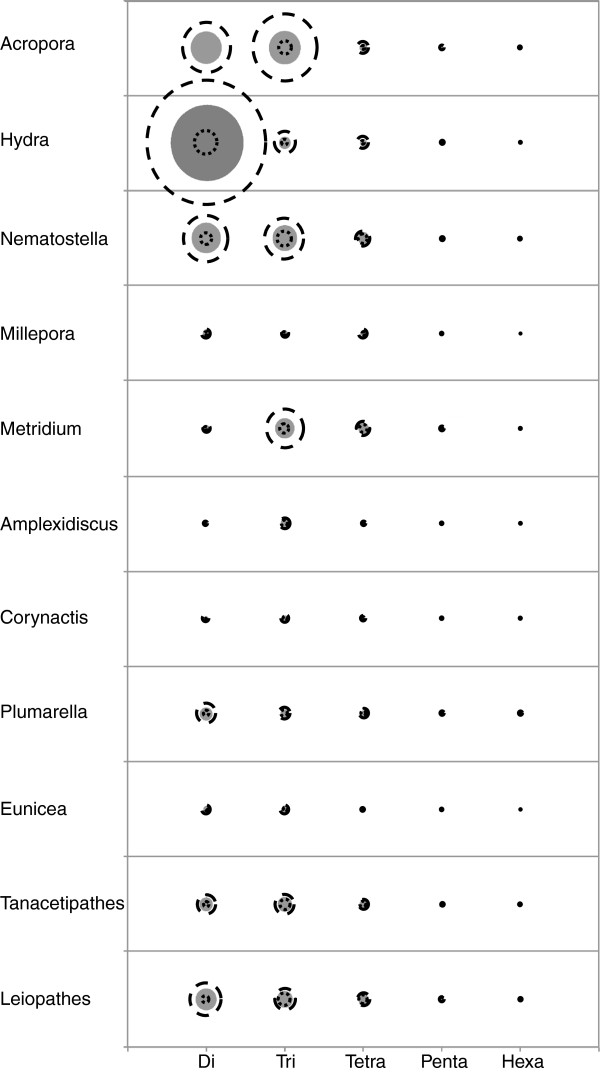
Trinucleotide and tetranucleotide repeats were the most abundant motifs, followed by hexa- and dinucleotides. Pentanucleotides were the least abundant motif in the data set. Hierarchical clustering and log likelihood ratio tests revealed a weak relationship between phylogeny and microsatellite content. Further, comparisons between cnidaria harboring intracellular dinoflagellates and those that do not, show microsatellite coverage is higher in the latter group.
Our results support previous studies that found tri- and tetranucleotides to be the most abundant motifs in invertebrates. Differences in microsatellite coverage and composition between symbiotic and non-symbiotic cnidaria suggest the presence/absence of dinoflagellates might place restrictions on the host genome.
微卫星位点具有较高的突变率,因此可指示基因组内的突变过程。通过聚焦共生和非共生刺胞动物,我们研究了微卫星丰度是否遵循系统发育或生态模式。使用454 GS-FLX Titanium技术对来自八个物种的个体进行了鸟枪法测序。将来自三个可用刺胞动物基因组(星状海葵、大乳头水螅和指状鹿角珊瑚)的序列添加到分析中,总共涉及刺胞动物门内代表两个纲、三个亚纲和八个目的11个物种。
三核苷酸和四核苷酸重复是最丰富的基序,其次是六核苷酸和二核苷酸。五核苷酸是数据集中最不丰富的基序。层次聚类和对数似然比检验显示系统发育与微卫星含量之间存在弱关系。此外,对含有细胞内甲藻的刺胞动物和不含甲藻的刺胞动物进行比较,结果显示后者的微卫星覆盖率更高。
我们的结果支持了先前的研究,即三核苷酸和四核苷酸是无脊椎动物中最丰富的基序。共生和非共生刺胞动物在微卫星覆盖率和组成上的差异表明甲藻的存在与否可能会对宿主基因组产生限制。