Flynn Nichole, Getz Angela, Visser Frank, Janes Tara A, Syed Naweed I
Department of Cell Biology and Anatomy, and the Hotchkiss Brain Institute, Faculty of Medicine, University of Calgary, Calgary, Canada.
PLoS One. 2014 Oct 27;9(10):e111103. doi: 10.1371/journal.pone.0111103. eCollection 2014.
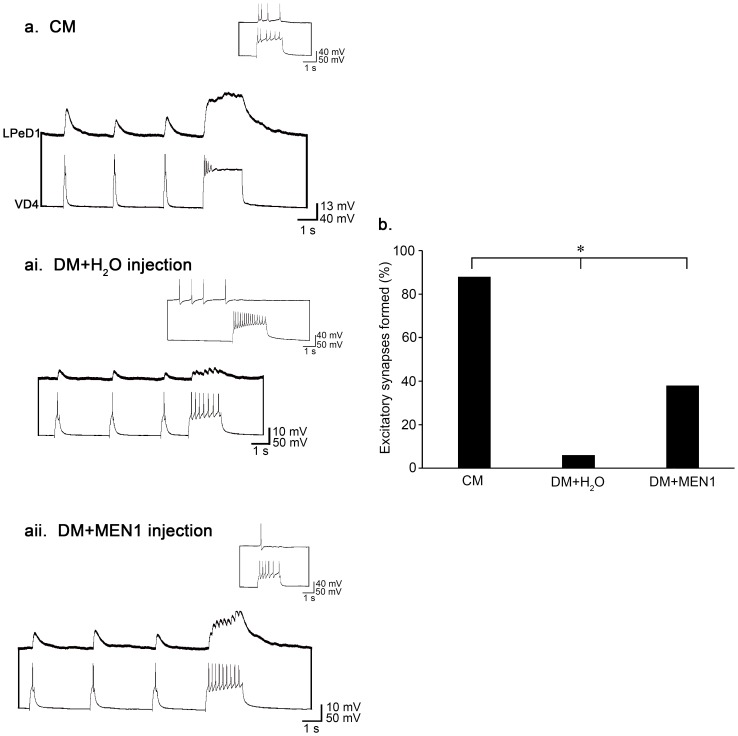
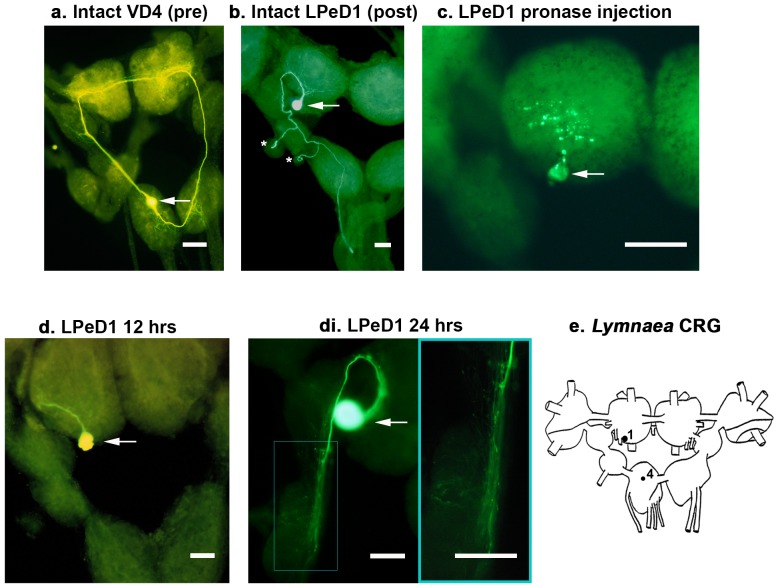
Neurotrophic factors (NTFs) support neuronal survival, differentiation, and even synaptic plasticity both during development and throughout the life of an organism. However, their precise roles in central synapse formation remain unknown. Previously, we demonstrated that excitatory synapse formation in Lymnaea stagnalis requires a source of extrinsic NTFs and receptor tyrosine kinase (RTK) activation. Here we show that NTFs such as Lymnaea epidermal growth factor (L-EGF) act through RTKs to trigger a specific subset of intracellular signalling events in the postsynaptic neuron, which lead to the activation of the tumor suppressor menin, encoded by Lymnaea MEN1 (L-MEN1) and the expression of excitatory nicotinic acetylcholine receptors (nAChRs). We provide direct evidence that the activation of the MAPK/ERK cascade is required for the expression of nAChRs, and subsequent synapse formation between pairs of neurons in vitro. Furthermore, we show that L-menin activation is sufficient for the expression of postsynaptic excitatory nAChRs and subsequent synapse formation in media devoid of NTFs. By extending our findings in situ, we reveal the necessity of EGFRs in mediating synapse formation between a single transplanted neuron and its intact presynaptic partner. Moreover, deficits in excitatory synapse formation following EGFR knock-down can be rescued by injecting synthetic L-MEN1 mRNA in the intact central nervous system. Taken together, this study provides the first direct evidence that NTFs functioning via RTKs activate the MEN1 gene, which appears sufficient to regulate synapse formation between central neurons. Our study also offers a novel developmental role for menin beyond tumour suppression in adult humans.
神经营养因子(NTFs)在生物体发育过程和整个生命过程中支持神经元存活、分化,甚至突触可塑性。然而,它们在中枢突触形成中的精确作用仍不清楚。此前,我们证明了椎实螺(Lymnaea stagnalis)中兴奋性突触的形成需要外源性神经营养因子和受体酪氨酸激酶(RTK)激活。在此我们表明,诸如椎实螺表皮生长因子(L-EGF)之类的神经营养因子通过RTK发挥作用,以触发突触后神经元中特定的细胞内信号转导事件子集,这导致由椎实螺MEN1(L-MEN1)编码的肿瘤抑制因子menin的激活以及兴奋性烟碱型乙酰胆碱受体(nAChRs)的表达。我们提供了直接证据,表明MAPK/ERK级联的激活是体外神经元对之间nAChRs表达及随后突触形成所必需的。此外,我们表明,在缺乏神经营养因子的培养基中,L-menin激活足以使突触后兴奋性nAChRs表达及随后的突触形成。通过扩展我们在原位的研究结果,我们揭示了表皮生长因子受体(EGFRs)在介导单个移植神经元与其完整突触前伙伴之间突触形成中的必要性。此外,通过在完整的中枢神经系统中注射合成的L-MEN1 mRNA,可以挽救EGFR敲低后兴奋性突触形成的缺陷。综上所述,本研究提供了首个直接证据,即通过RTK发挥作用的神经营养因子激活MEN1基因,这似乎足以调节中枢神经元之间的突触形成。我们的研究还为menin在成年人类中除肿瘤抑制之外的新的发育作用提供了依据。