Stacchiotti Alessandra, Favero Gaia, Giugno Lorena, Lavazza Antonio, Reiter Russel J, Rodella Luigi Fabrizio, Rezzani Rita
Anatomy and Physiopathology Division, Department of Clinical and Experimental Sciences, University of Brescia, Brescia, Italy.
Istituto Zooprofilattico Sperimentale della Lombardia ed Emilia Romagna, OIE Reference Laboratory for RHD, Brescia, Italy.
PLoS One. 2014 Oct 27;9(10):e111141. doi: 10.1371/journal.pone.0111141. eCollection 2014.
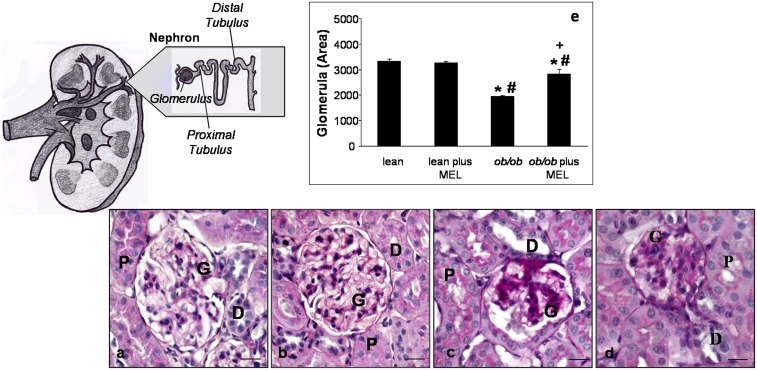
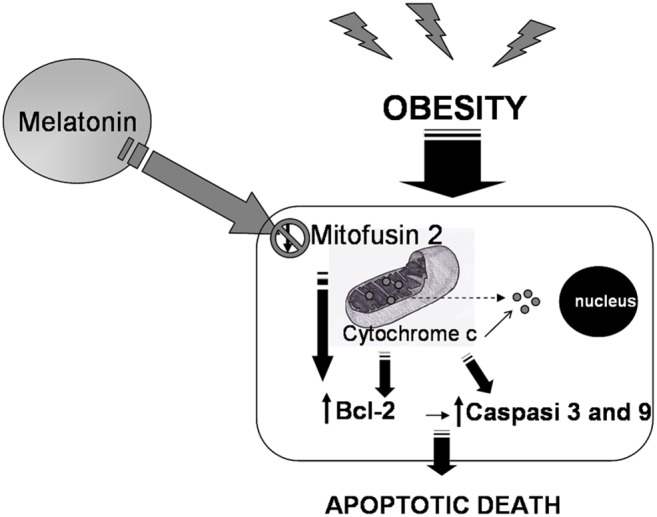
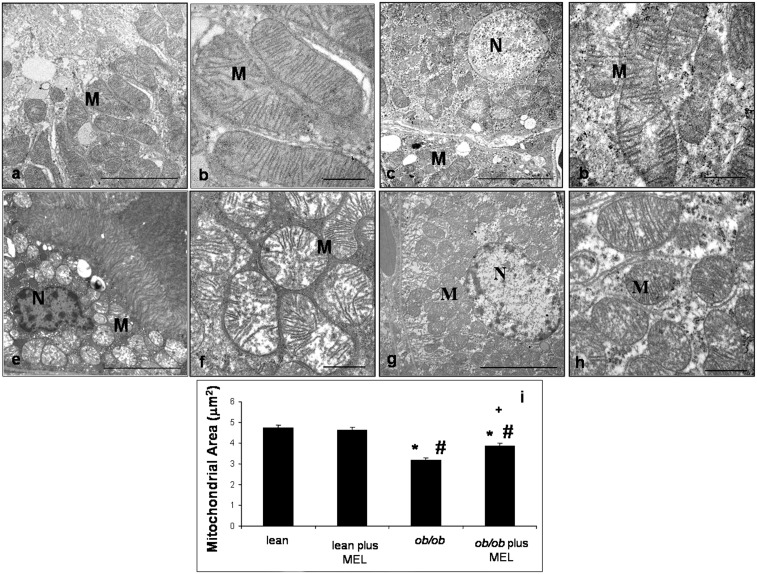
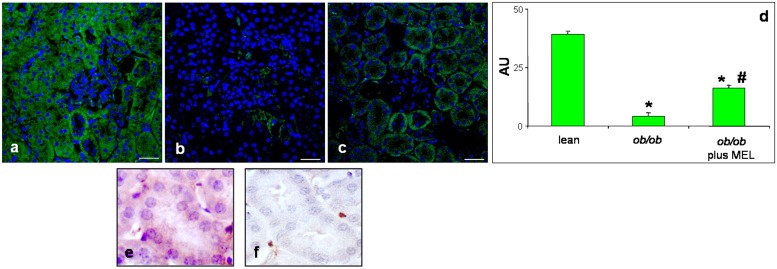
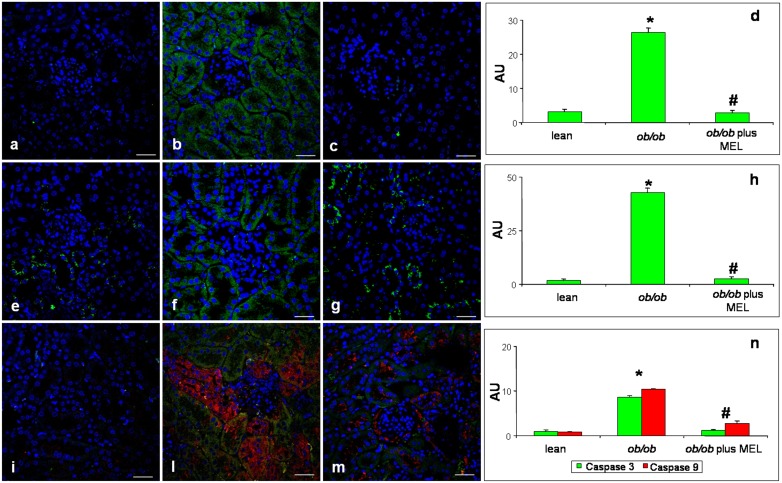
Obesity is a common and complex health problem, which impacts crucial organs; it is also considered an independent risk factor for chronic kidney disease. Few studies have analyzed the consequence of obesity in the renal proximal convoluted tubules, which are the major tubules involved in reabsorptive processes. For optimal performance of the kidney, energy is primarily provided by mitochondria. Melatonin, an indoleamine and antioxidant, has been identified in mitochondria, and there is considerable evidence regarding its essential role in the prevention of oxidative mitochondrial damage. In this study we evaluated the mechanism(s) of mitochondrial alterations in an animal model of obesity (ob/ob mice) and describe the beneficial effects of melatonin treatment on mitochondrial morphology and dynamics as influenced by mitofusin-2 and the intrinsic apoptotic cascade. Melatonin dissolved in 1% ethanol was added to the drinking water from postnatal week 5-13; the calculated dose of melatonin intake was 100 mg/kg body weight/day. Compared to control mice, obesity-related morphological alterations were apparent in the proximal tubules which contained round mitochondria with irregular, short cristae and cells with elevated apoptotic index. Melatonin supplementation in obese mice changed mitochondria shape and cristae organization of proximal tubules, enhanced mitofusin-2 expression, which in turn modulated the progression of the mitochondria-driven intrinsic apoptotic pathway. These changes possibly aid in reducing renal failure. The melatonin-mediated changes indicate its potential protective use against renal morphological damage and dysfunction associated with obesity and metabolic disease.
肥胖是一个常见且复杂的健康问题,会影响重要器官;它还被认为是慢性肾病的一个独立风险因素。很少有研究分析肥胖对肾近端曲小管的影响,肾近端曲小管是参与重吸收过程的主要小管。为使肾脏发挥最佳功能,能量主要由线粒体提供。褪黑素是一种吲哚胺和抗氧化剂,已在线粒体中被发现,并且有大量证据表明其在预防线粒体氧化损伤中起重要作用。在本研究中,我们评估了肥胖动物模型(ob/ob小鼠)中线粒体改变的机制,并描述了褪黑素治疗对线粒体形态和动力学的有益影响,这些影响受线粒体融合蛋白2和内在凋亡级联反应的影响。从出生后第5周 - 13周,将溶解于1%乙醇的褪黑素添加到饮用水中;计算得出的褪黑素摄入量为100毫克/千克体重/天。与对照小鼠相比,肥胖相关的形态学改变在近端小管中很明显,近端小管中含有圆形线粒体,其嵴不规则且短,细胞凋亡指数升高。给肥胖小鼠补充褪黑素改变了近端小管的线粒体形状和嵴的结构,增强了线粒体融合蛋白2的表达,这反过来又调节了线粒体驱动的内在凋亡途径的进程。这些变化可能有助于减少肾衰竭。褪黑素介导的变化表明其对与肥胖和代谢疾病相关的肾脏形态损伤和功能障碍具有潜在的保护作用。