De Stefano Daniela, Villella Valeria R, Esposito Speranza, Tosco Antonella, Sepe Angela, De Gregorio Fabiola, Salvadori Laura, Grassia Rosa, Leone Carlo A, De Rosa Giuseppe, Maiuri Maria C, Pettoello-Mantovani Massimo, Guido Stefano, Bossi Anna, Zolin Anna, Venerando Andrea, Pinna Lorenzo A, Mehta Anil, Bona Gianni, Kroemer Guido, Maiuri Luigi, Raia Valeria
a European Institute for Research in Cystic Fibrosis; Division of Genetics and Cell Biology; San Raffaele Scientific Institute ; Milan , Italy.
Autophagy. 2014;10(11):2053-74. doi: 10.4161/15548627.2014.973737.
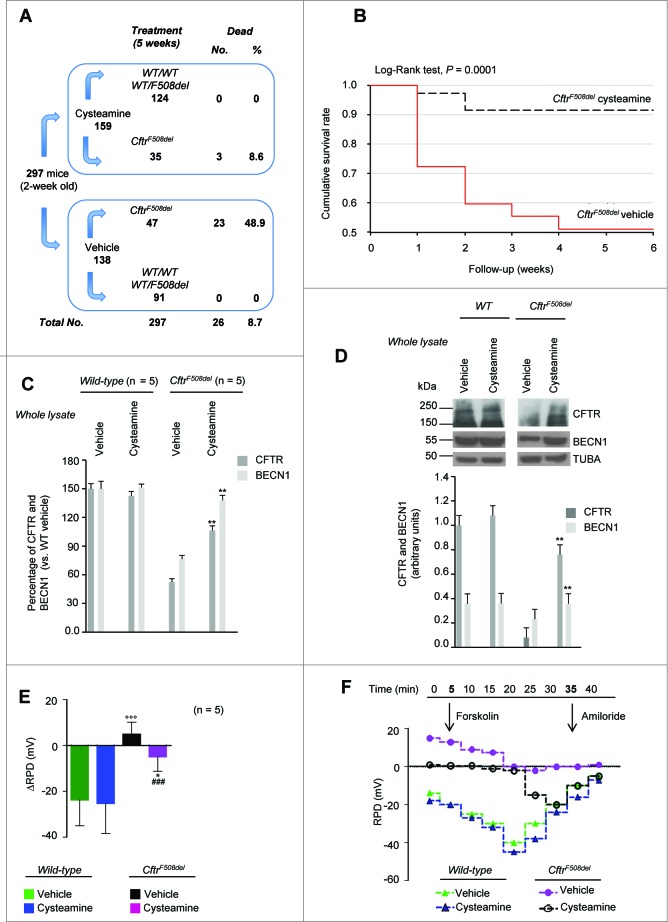
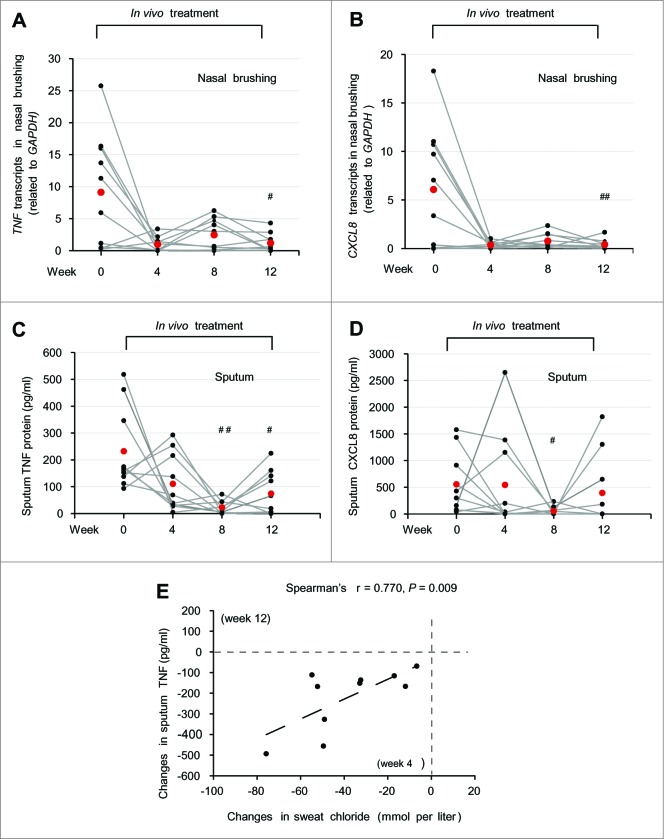
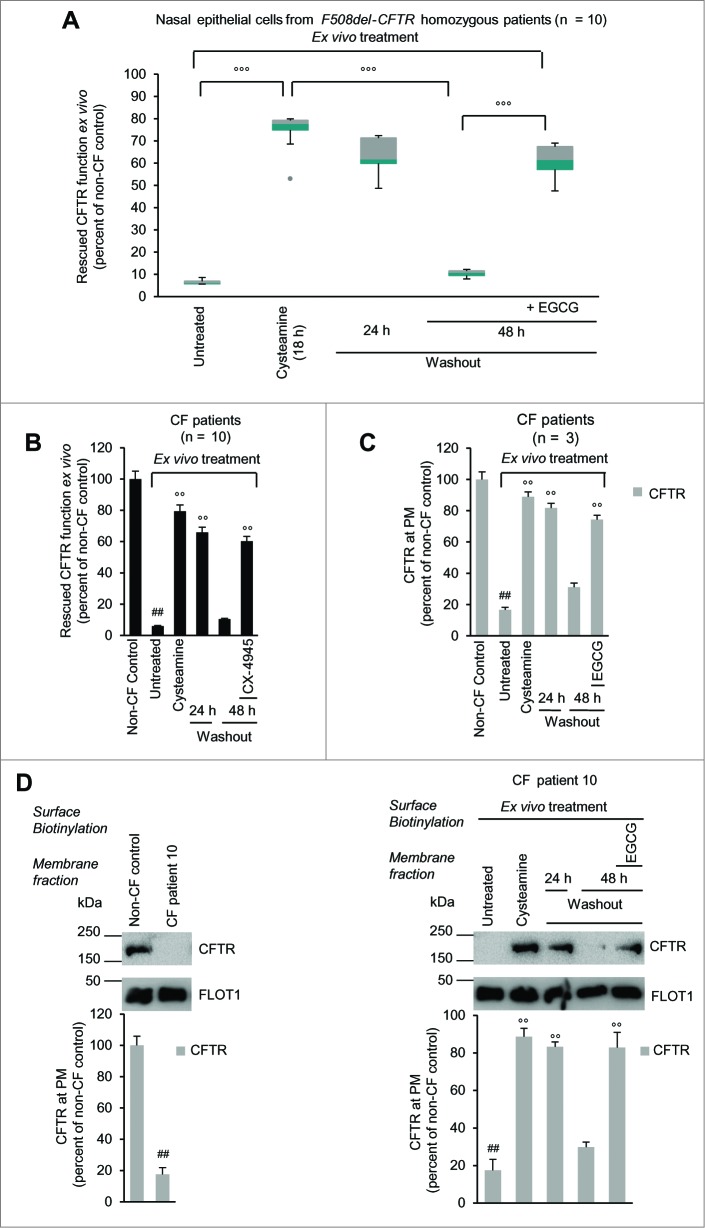
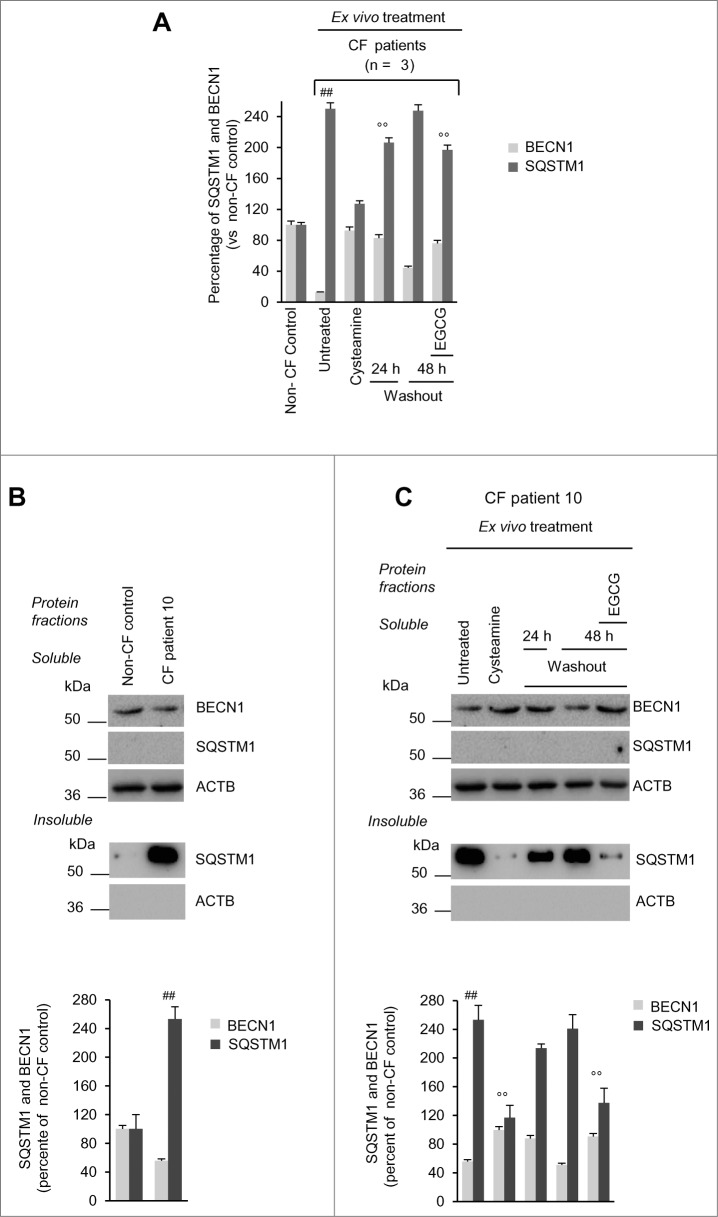
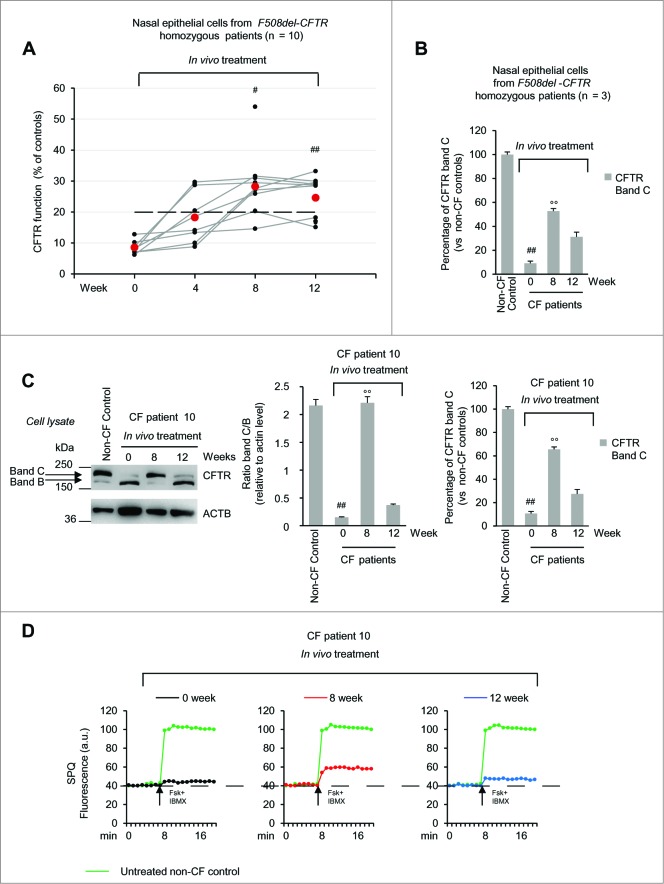
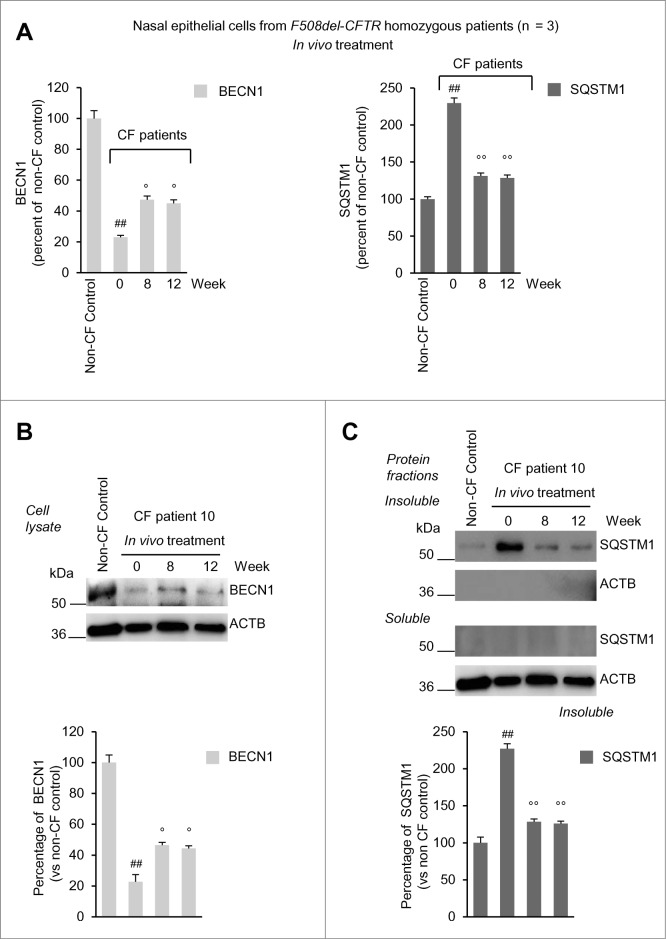
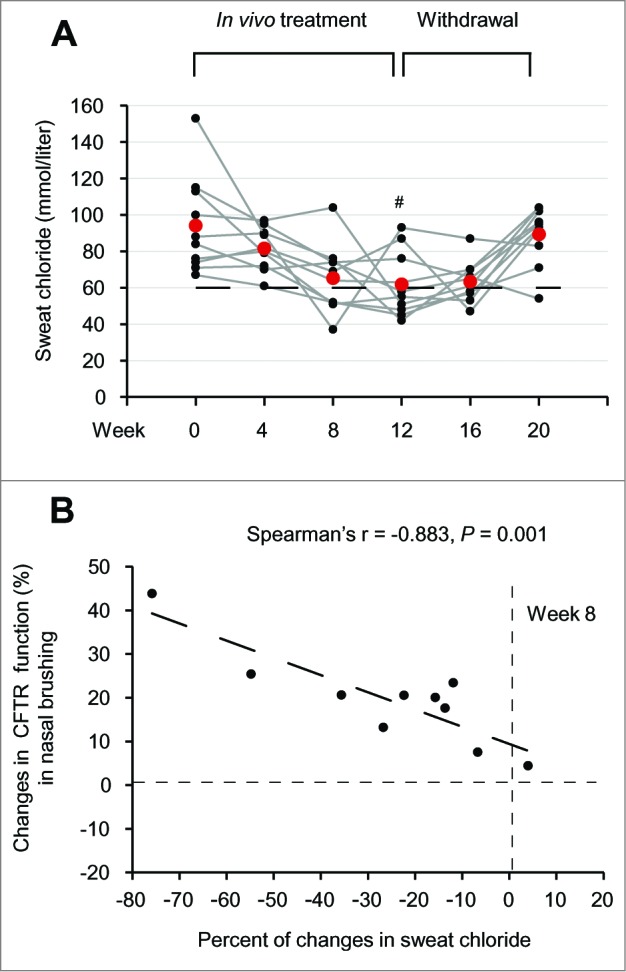
Restoration of BECN1/Beclin 1-dependent autophagy and depletion of SQSTM1/p62 by genetic manipulation or autophagy-stimulatory proteostasis regulators, such as cystamine, have positive effects on mouse models of human cystic fibrosis (CF). These measures rescue the functional expression of the most frequent pathogenic CFTR mutant, F508del, at the respiratory epithelial surface and reduce lung inflammation in Cftr(F508del) homozygous mice. Cysteamine, the reduced form of cystamine, is an FDA-approved drug. Here, we report that oral treatment with cysteamine greatly reduces the mortality rate and improves the phenotype of newborn mice bearing the F508del-CFTR mutation. Cysteamine was also able to increase the plasma membrane expression of the F508del-CFTR protein in nasal epithelial cells from F508del homozygous CF patients, and these effects persisted for 24 h after cysteamine withdrawal. Importantly, this cysteamine effect after washout was further sustained by the sequential administration of epigallocatechin gallate (EGCG), a green tea flavonoid, both in vivo, in mice, and in vitro, in primary epithelial cells from CF patients. In a pilot clinical trial involving 10 F508del-CFTR homozygous CF patients, the combination of cysteamine and EGCG restored BECN1, reduced SQSTM1 levels and improved CFTR function from nasal epithelial cells in vivo, correlating with a decrease of chloride concentrations in sweat, as well as with a reduction of the abundance of TNF/TNF-alpha (tumor necrosis factor) and CXCL8 (chemokine [C-X-C motif] ligand 8) transcripts in nasal brushing and TNF and CXCL8 protein levels in the sputum. Altogether, these results suggest that optimal schedules of cysteamine plus EGCG might be used for the treatment of CF caused by the F508del-CFTR mutation.
通过基因操作或自噬刺激蛋白稳态调节剂(如胱胺)恢复BECN1/Beclin 1依赖性自噬并消耗SQSTM1/p62,对人类囊性纤维化(CF)小鼠模型具有积极作用。这些措施可挽救呼吸道上皮表面最常见的致病性CFTR突变体F508del的功能表达,并减轻Cftr(F508del)纯合小鼠的肺部炎症。半胱胺是胱胺的还原形式,是一种经美国食品药品监督管理局批准的药物。在此,我们报告口服半胱胺可大大降低携带F508del-CFTR突变的新生小鼠的死亡率,并改善其表型。半胱胺还能够增加来自F508del纯合CF患者的鼻上皮细胞中F508del-CFTR蛋白的质膜表达,并且在停止使用半胱胺后这些作用持续24小时。重要的是,无论是在体内(小鼠中)还是体外(CF患者的原代上皮细胞中),通过依次施用表没食子儿茶素没食子酸酯(EGCG,一种绿茶类黄酮),均可进一步维持冲洗后半胱胺的这种作用。在一项涉及10名F508del-CFTR纯合CF患者的试点临床试验中,半胱胺和EGCG的组合可恢复BECN1,降低SQSTM1水平,并改善体内鼻上皮细胞的CFTR功能,这与汗液中氯化物浓度的降低以及鼻拭子中TNF/TNF-α(肿瘤坏死因子)和CXCL8(趋化因子[C-X-C基序]配体8)转录本丰度的降低以及痰液中TNF和CXCL8蛋白水平的降低相关。总之,这些结果表明,半胱胺加EGCG的最佳给药方案可能用于治疗由F508del-CFTR突变引起的CF。