Gallon Lorenzo, Traitanon Opas, Sustento-Reodica Nedjema, Leventhal Joseph, Ansari M Javeed, Gehrau Ricardo C, Ariyamuthu Venkatesh, De Serres Sacha A, Alvarado Antonio, Chhabra Darshika, Mathew James M, Najafian Nader, Mas Valeria
1] Comprehensive Transplant Center, Northwestern University, Chicago, Illinois, USA [2] Department of Medicine-Nephrology, Northwestern University, Chicago, Illinois, USA.
1] Department of Medicine-Nephrology, Northwestern University, Chicago, Illinois, USA [2] Department of Medicine-Nephrology, Thammasart University Hospital, Pathumthani, Thailand.
Kidney Int. 2015 Apr;87(4):828-38. doi: 10.1038/ki.2014.350. Epub 2014 Oct 29.
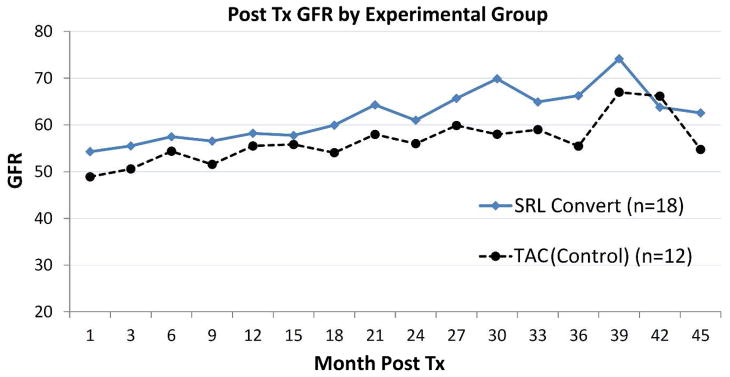
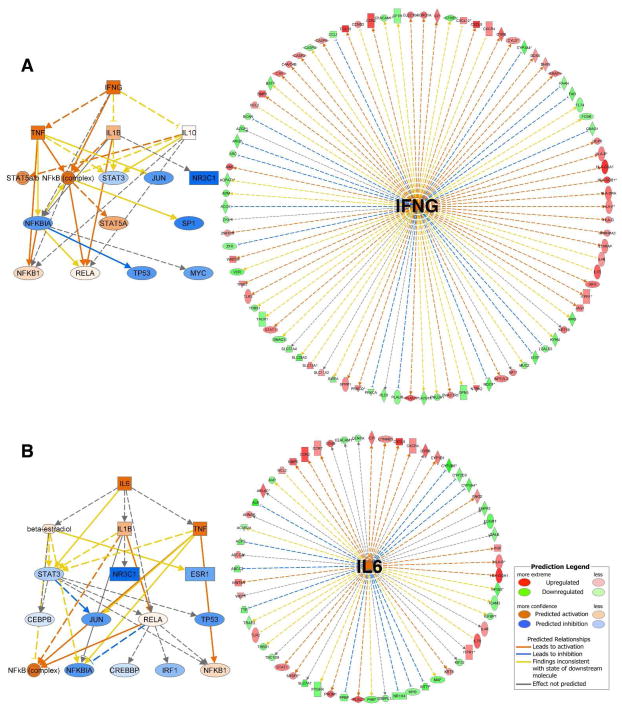
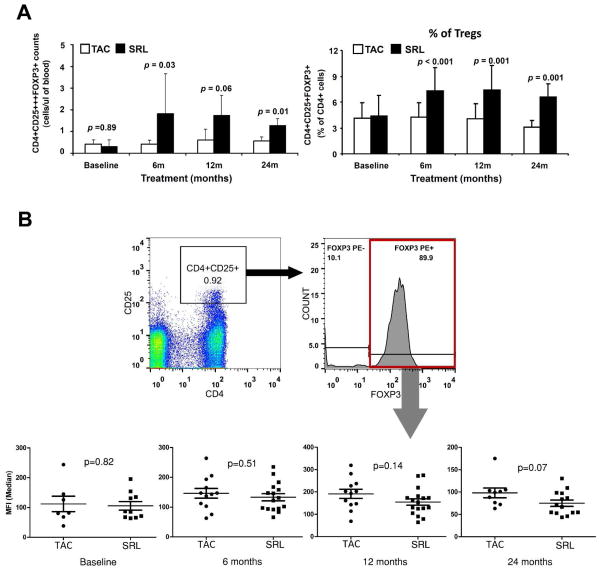
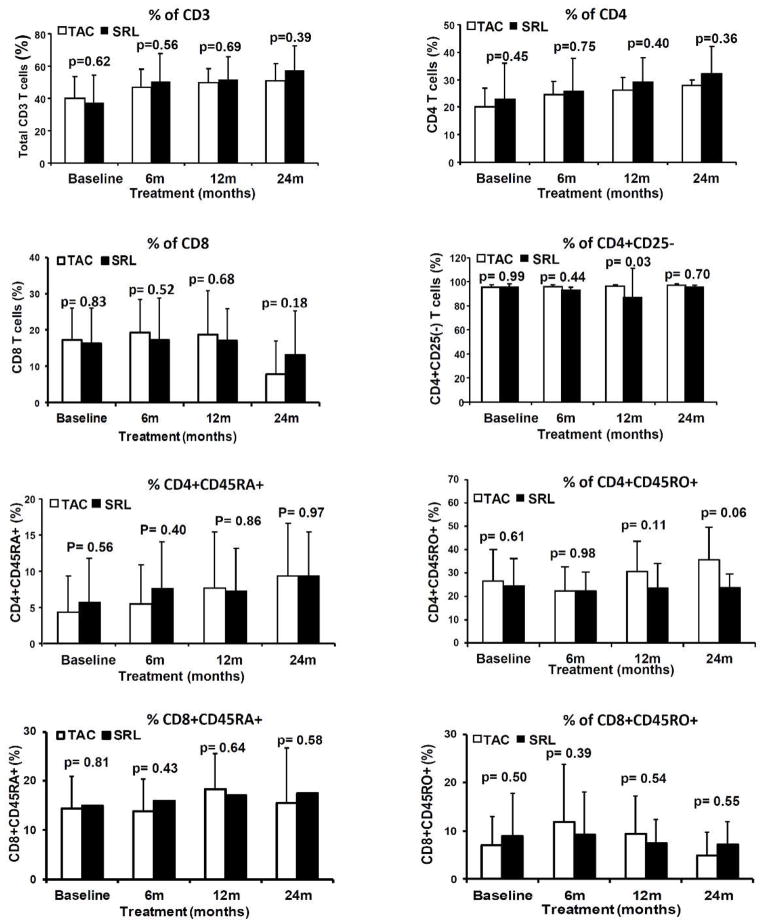
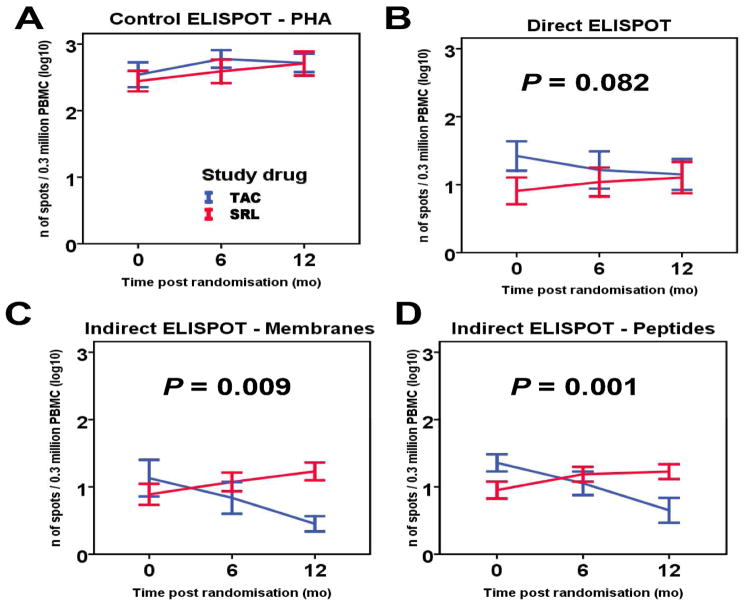
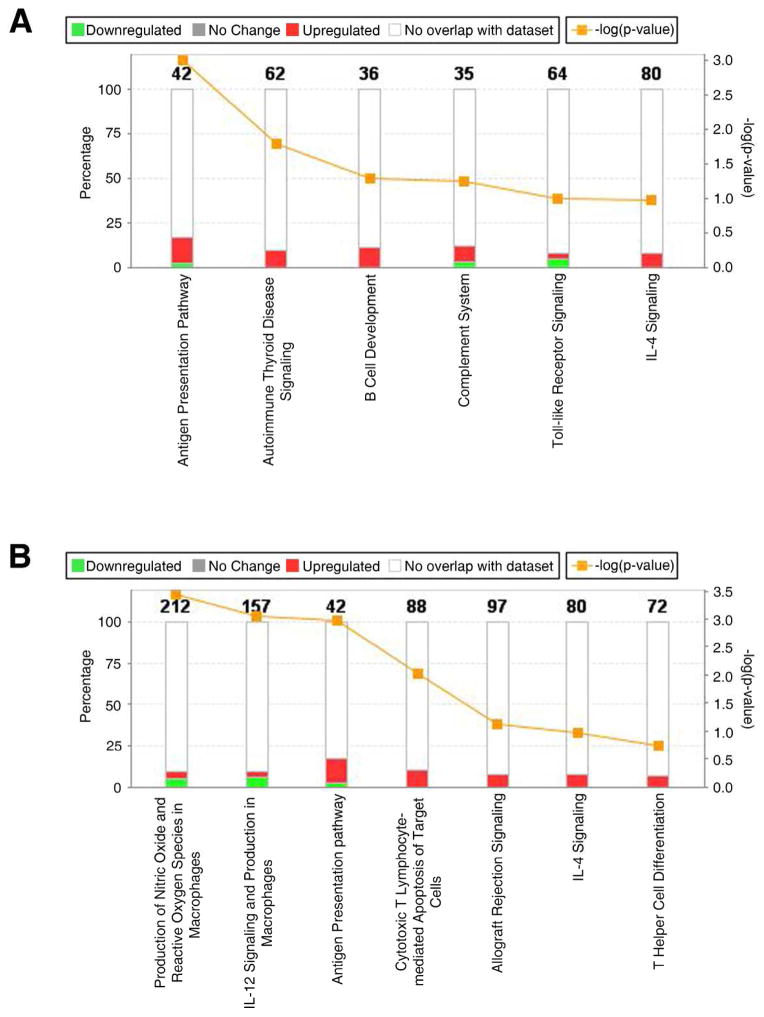
Tacrolimus and sirolimus are commonly used maintenance immunosuppressants in kidney transplantation. As their effects on immune cells and allograft molecular profiles have not been elucidated, we characterized the effects of tacrolimus to sirolimus conversion on the frequency and function of T cells, and on graft molecular profiles. Samples from renal transplant patients in a randomized trial of 18 patients with late sirolimus conversion and 12 on tacrolimus maintenance were utilized. Peripheral blood was collected at 0, 6, 12, and 24 months post randomization, with T-cell subpopulations analyzed by flow cytometry and T-cell alloreactivity tested by IFN-γ ELISPOT. Graft biopsy samples obtained 24 months post randomization were used for gene expression analysis. Sirolimus conversion led to an increase in CD4(+)25(+++)Foxp3(+) regulatory T cells. While tacrolimus-maintained patients showed a decrease in indirect alloreactivity over time post transplant, sirolimus conversion increased indirect alloreactive T-cell frequencies compared with tacrolimus-maintained patients. No histological differences were found in graft biopsies, but molecular profiles showed activation of the antigen presentation, IL-12 signaling, oxidative stress, macrophage-derived production pathways, and increased inflammatory and immune response in sirolimus-converted patients. Thus, chronic immune alterations are induced after sirolimus conversion. Despite the molecular profile being favorable to calcineurin inhibitor-based regimen, there was no impact in renal function over 30 months of follow-up.
他克莫司和西罗莫司是肾移植中常用的维持性免疫抑制剂。由于它们对免疫细胞和移植器官分子谱的影响尚未阐明,我们对他克莫司转换为西罗莫司后对T细胞频率和功能以及移植器官分子谱的影响进行了特征描述。利用了一项随机试验中肾移植患者的样本,其中18例患者进行了西罗莫司晚期转换,12例患者维持使用他克莫司。在随机分组后的0、6、12和24个月采集外周血,通过流式细胞术分析T细胞亚群,并通过IFN-γ ELISPOT检测T细胞同种异体反应性。随机分组后24个月获得的移植肾活检样本用于基因表达分析。西罗莫司转换导致CD4(+)25(+++)Foxp3(+)调节性T细胞增加。虽然他克莫司维持治疗的患者在移植后随时间间接同种异体反应性降低,但与他克莫司维持治疗的患者相比,西罗莫司转换增加了间接同种异体反应性T细胞频率。在移植肾活检中未发现组织学差异,但分子谱显示西罗莫司转换患者的抗原呈递、IL-12信号传导、氧化应激、巨噬细胞衍生产物途径激活,以及炎症和免疫反应增加。因此,西罗莫司转换后会诱导慢性免疫改变。尽管分子谱有利于基于钙调神经磷酸酶抑制剂的方案,但在30个月的随访中对肾功能没有影响。