Xiang Yan, Meng Shasha, Wang Jinfeng, Li Songyang, Liu Jingru, Li Hongmei, Li Tingyu, Song Weihong, Zhou Weihui
Ministry of Education Key Laboratory of Child Development and Disorders; Chongqing Key Laboratory of Translational Medical Research in Cognitive Development and Learning and Memory Disorders, Children's Hospital of Chongqing Medical University, 136 ZhongshanEr Lu, Yuzhong District, Chongqing 400014, China.
1] Ministry of Education Key Laboratory of Child Development and Disorders; Chongqing Key Laboratory of Translational Medical Research in Cognitive Development and Learning and Memory Disorders, Children's Hospital of Chongqing Medical University, 136 ZhongshanEr Lu, Yuzhong District, Chongqing 400014, China [2] Townsend Family Laboratories, Department of Psychiatry, Brain Research Center, University of British Columbia, Vancouver, British Columbia, V6T1Z3, Canada.
Sci Rep. 2014 Oct 31;4:6864. doi: 10.1038/srep06864.
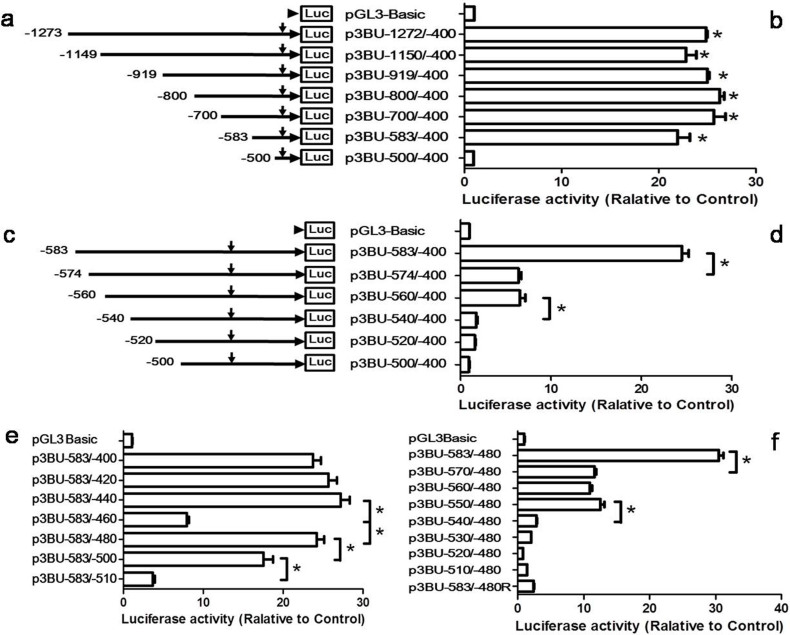
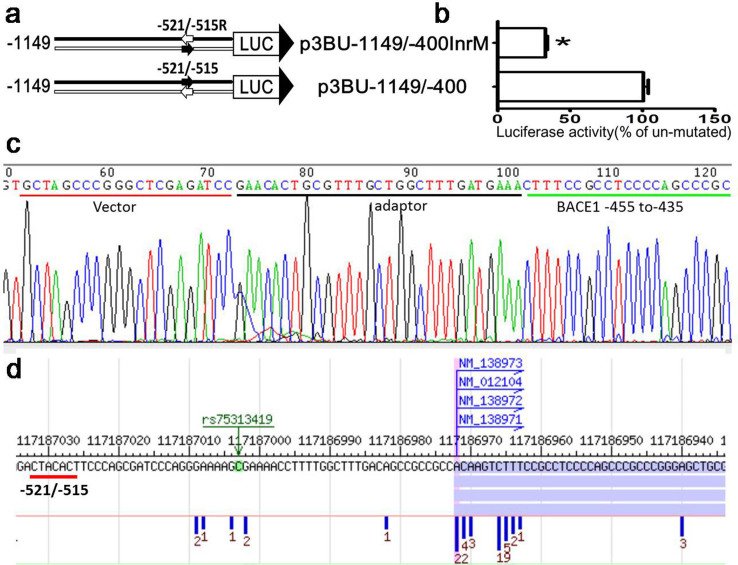
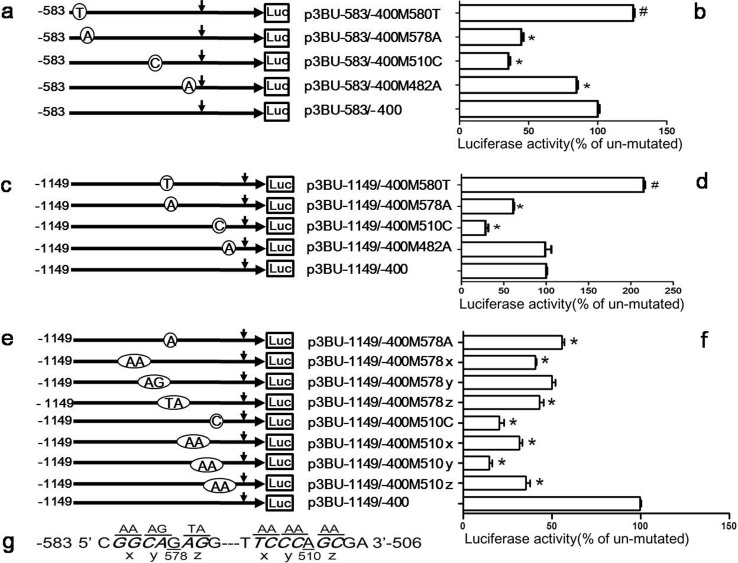
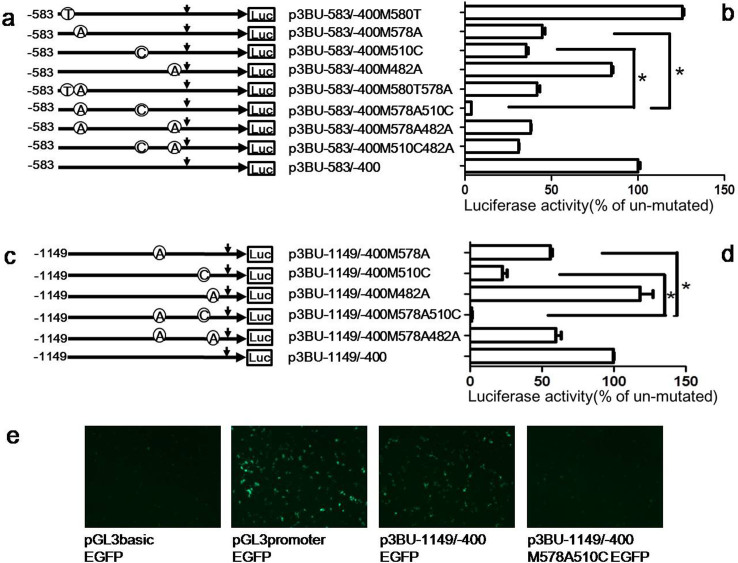
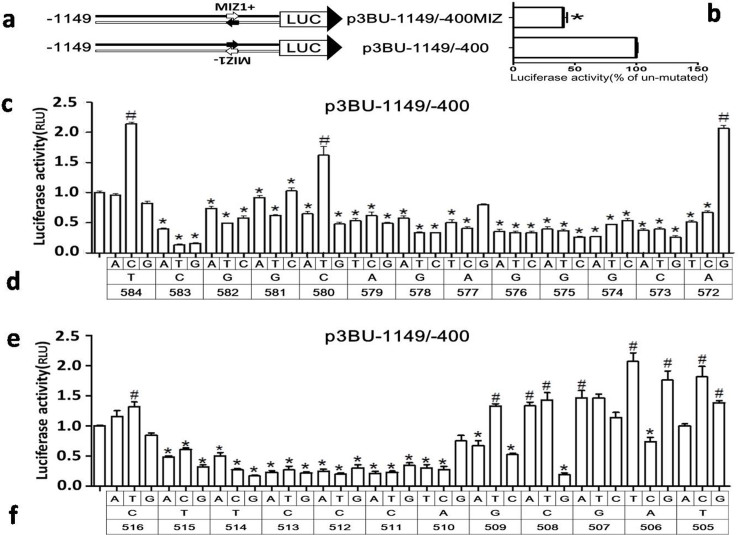
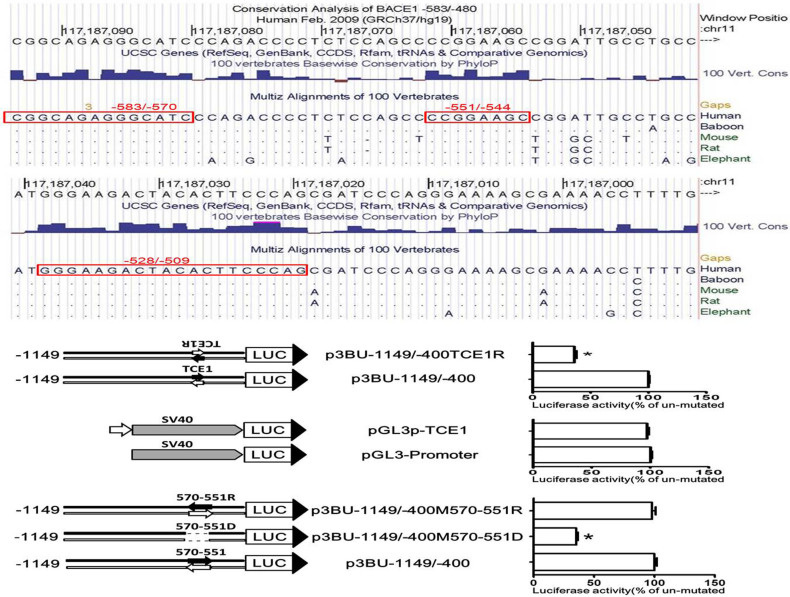
BACE1 gene encodes for β-Site amyloid β precursor protein (APP)-cleaving enzyme1, which is required for generating amyloid β protein(Aβ). Deposition of Aβ in brain plays an essential role in Alzheimer's Disease (AD) pathogenesis. BACE1 gene has a tissue-specific expression pattern and its expression is tightly regulated at transcriptional level. Core promoter is a minimal DNA sequence to direct transcription initiation and serves as a converging platform for the vast network of regulatory events. Here we identified the core promoter of human BACE1 gene, which is a 71 nucleotides region absent of typical known core promoter elements and is sufficient to initiate a basal transcription. Two novel DNA motifs, designated TCE1 and TCE2, were found to be involved in activating the transcription of human BACE1 gene in a synergistic way. Two single nucleotide mutations in these motifs completely abolished the promoter activity. In conclusion, our studies have demonstrated that novel DNA motif TCE1 and TCE2 in human BACE1 gene promoter are two essential cis-acting elements for BACE1 gene transcription. Studies on how these two motifs being regulated by different stimuli could provide insights into the molecular mechanisms underlying AD pathogenesis and pharmaceutical potentials of targeting these motifs for AD treatment.
BACE1基因编码β-淀粉样前体蛋白(APP)裂解酶1,该酶是生成淀粉样β蛋白(Aβ)所必需的。Aβ在大脑中的沉积在阿尔茨海默病(AD)发病机制中起关键作用。BACE1基因具有组织特异性表达模式,其表达在转录水平受到严格调控。核心启动子是指导转录起始的最小DNA序列,是大量调控事件网络的汇聚平台。在此,我们鉴定了人类BACE1基因的核心启动子,它是一个71个核苷酸的区域,不存在典型的已知核心启动子元件,但足以启动基础转录。发现两个新的DNA基序,命名为TCE1和TCE2,以协同方式参与激活人类BACE1基因的转录。这些基序中的两个单核苷酸突变完全消除了启动子活性。总之,我们的研究表明,人类BACE1基因启动子中的新DNA基序TCE1和TCE2是BACE1基因转录的两个必需顺式作用元件。研究这两个基序如何受到不同刺激的调控,可为AD发病机制的分子机制以及针对这些基序进行AD治疗的药物潜力提供见解。