Kadonaga James T
Department of Molecular Biology, University of California, San Diego, La Jolla, CA, USA.
Wiley Interdiscip Rev Dev Biol. 2012 Jan-Feb;1(1):40-51. doi: 10.1002/wdev.21. Epub 2011 Dec 6.
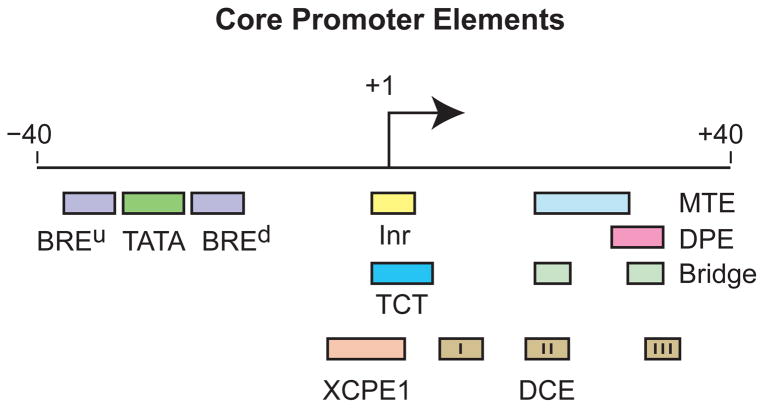
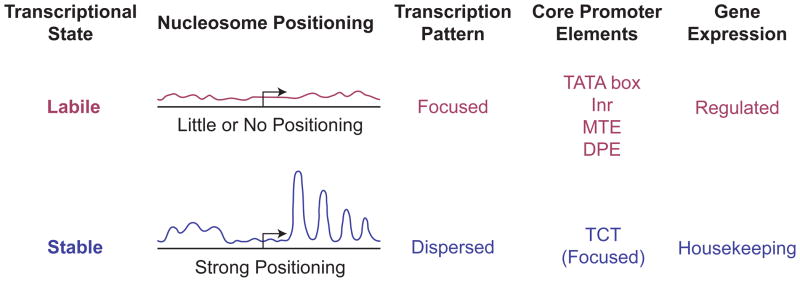
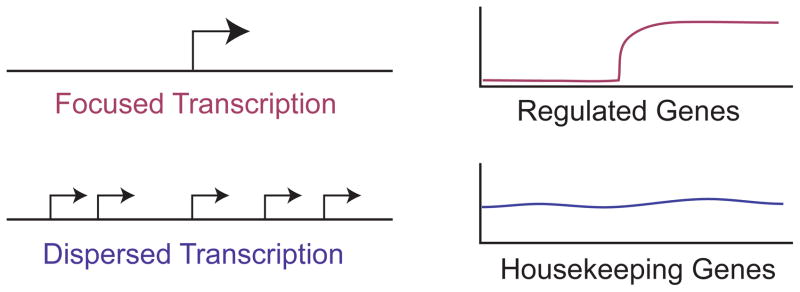
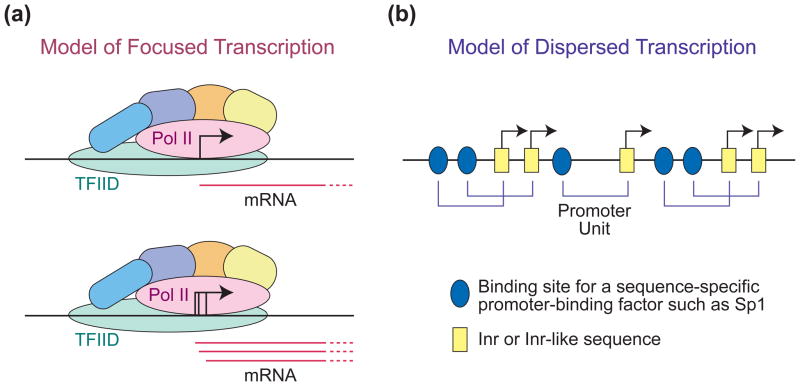
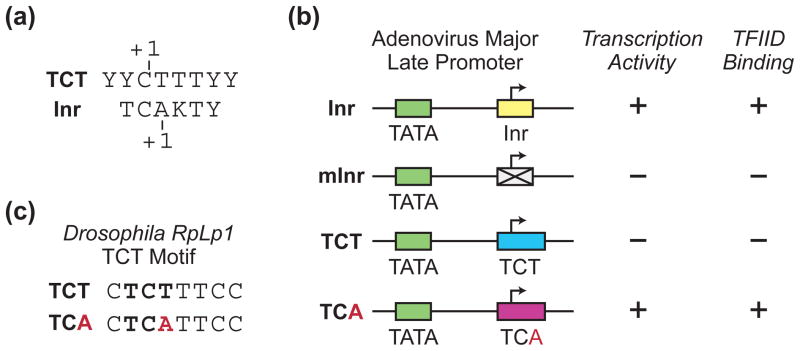
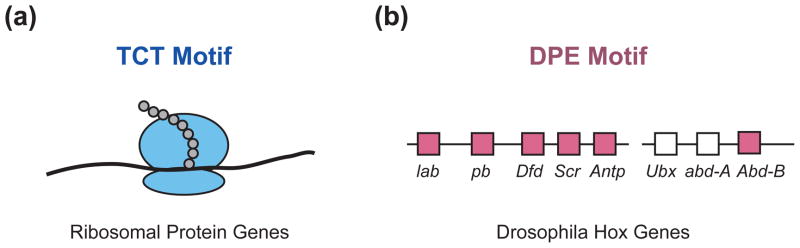
The RNA polymerase II core promoter is sometimes referred to as the gateway to transcription. The core promoter is generally defined to be the stretch of DNA that directs the initiation of transcription. This simple description belies a complex multidimensional regulatory element, as there is considerable diversity in core promoter structure and function. Core promoters can be viewed at the levels of DNA sequences, transcription factors, and biological networks. Key DNA sequences are known as core promoter elements, which include the TATA box, initiator (Inr), polypyrimidine initiator (TCT), TFIIB recognition element (BRE), motif ten element (MTE), and downstream core promoter element (DPE) motifs. There are no universal core promoter elements that are present in all promoters. Different types of core promoters are transcribed by different sets of transcription factors and exhibit distinct properties, such as specific interactions with transcriptional enhancers, that are determined by the presence or absence of particular core promoter motifs. Moreover, some core promoter elements have been found to be associated with specific biological networks. For instance, the TCT motif is dedicated to the transcription of ribosomal protein genes in Drosophila and humans. In addition, nearly all of the Drosophila Hox genes have a DPE motif in their core promoters. The complexity of the core promoter is further seen in the relation among transcription initiation patterns, the stability or lability of transcriptional states, and the organization of the chromatin structure in the promoter region. Hence, the current data indicate that the core promoter is a critical component in the regulation of gene activity.
RNA聚合酶II核心启动子有时被称为转录的门户。核心启动子通常被定义为指导转录起始的一段DNA。这一简单描述掩盖了一个复杂的多维调控元件,因为核心启动子的结构和功能存在相当大的多样性。核心启动子可以从DNA序列、转录因子和生物网络等层面来审视。关键的DNA序列被称为核心启动子元件,包括TATA盒、起始子(Inr)、多嘧啶起始子(TCT)、TFIIB识别元件(BRE)、基序十元件(MTE)和下游核心启动子元件(DPE)基序。并非所有启动子中都存在通用的核心启动子元件。不同类型的核心启动子由不同的转录因子组合转录,并表现出不同的特性,例如与转录增强子的特定相互作用,这取决于特定核心启动子基序的有无。此外,已发现一些核心启动子元件与特定生物网络相关。例如,TCT基序专门负责果蝇和人类核糖体蛋白基因的转录。此外,几乎所有果蝇Hox基因的核心启动子中都有一个DPE基序。核心启动子的复杂性还体现在转录起始模式、转录状态的稳定性或不稳定性以及启动子区域染色质结构的组织之间的关系上。因此,目前的数据表明核心启动子是基因活性调控中的关键组成部分。