Quan Longquan, Chen Yongqiang, Song Jun, Yan Quanmei, Zhang Quanjun, Lai Sisi, Fan Nana, Xin Jige, Zou Qingjian, Lai Liangxue
Jilin Provincial Key Laboratory of Animal Embryo Engineering, College of Animal Science, Jilin University, Changchun, China.
Key Laboratory of Regenerative Biology, South China Institute for Stem Cell Biology and Regenerative Medicine, Guangzhou Institutes of Biomedicine and Health, Chinese Academy of Sciences, Guangzhou, China.
PLoS One. 2014 Oct 31;9(10):e109728. doi: 10.1371/journal.pone.0109728. eCollection 2014.
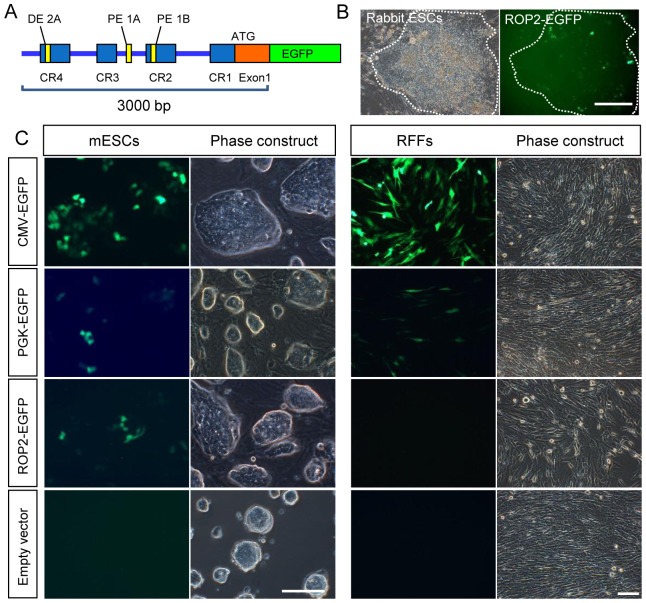
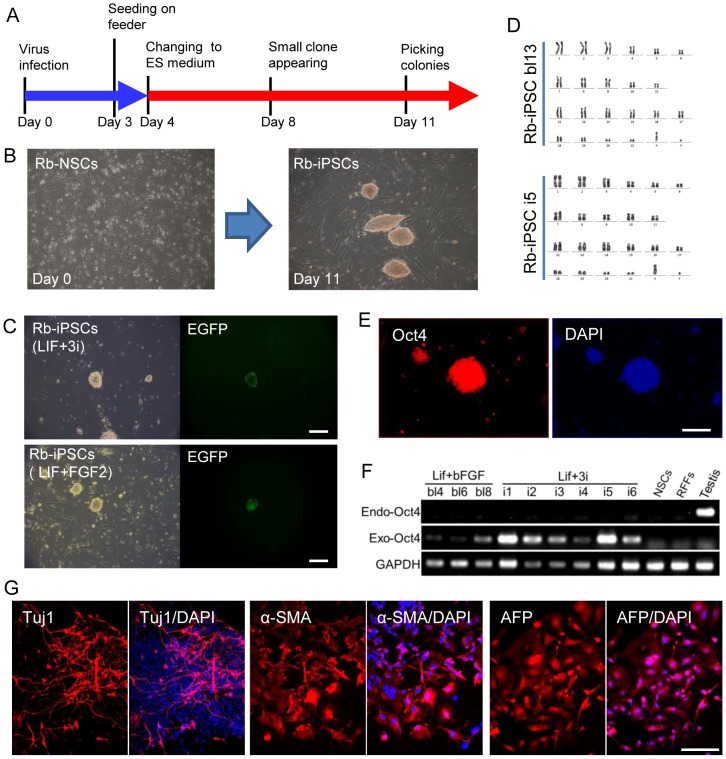
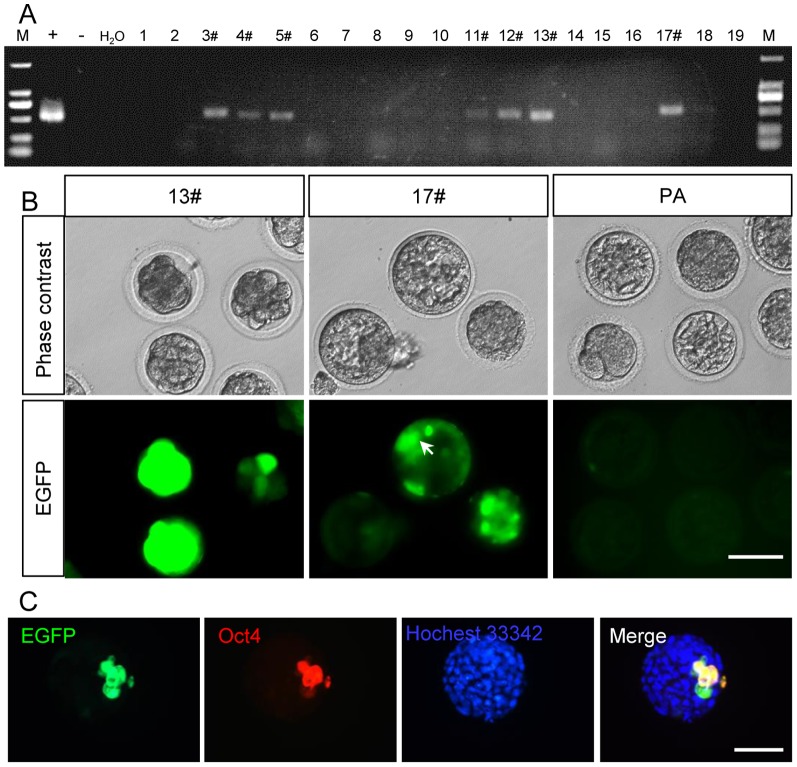
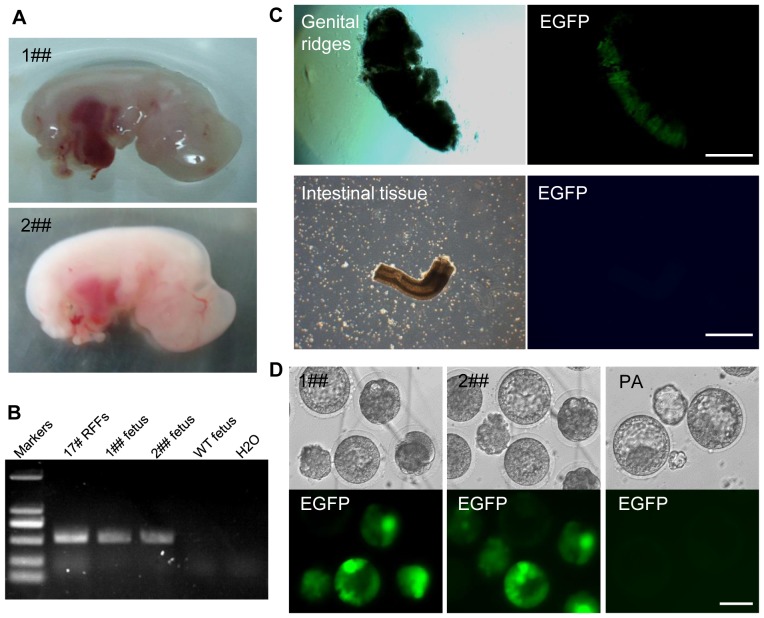
Rabbits are commonly used as laboratory animal models to investigate human diseases and phylogenetic development. However, pluripotent stem cells that contribute to germline transmission have yet to be established in rabbits. The transcription factor Oct4, also known as Pou5f1, is considered essential for the maintenance of the pluripotency of stem cells. Hence, pluripotent cells can be identified by monitoring Oct4 expression using a well-established Oct4 promoter-based reporter system. This study developed a rabbit Oct4 promoter-based enhanced green fluorescent protein (EGFP) reporter system by transfecting pROP2-EGFP into rabbit fetal fibroblasts (RFFs). The transgenic RFFs were used as donor cells for somatic cell nuclear transfer (SCNT). The EGFP expression was detected in the blastocysts and genital ridges of SCNT fetuses. Fibroblasts and neural stem cells (NSCs) were derived from the SCNT fetuses. EGFP was also reactivated in blastocysts after the second SCNT, and induced pluripotent stem cells (iPSCs) were obtained after reprogramming using Yamanaka's factors. The results above indicated that a rabbit reporter system used to monitor the differentiating status of cells was successfully developed.
兔子通常被用作实验室动物模型来研究人类疾病和系统发育。然而,尚未在兔子中建立能够实现种系传递的多能干细胞。转录因子Oct4,也称为Pou5f1,被认为是维持干细胞多能性所必需的。因此,可以通过使用成熟的基于Oct4启动子的报告系统监测Oct4表达来鉴定多能细胞。本研究通过将pROP2-EGFP转染到兔胎儿成纤维细胞(RFFs)中,开发了一种基于兔Oct4启动子的增强型绿色荧光蛋白(EGFP)报告系统。转基因RFFs被用作体细胞核移植(SCNT)的供体细胞。在SCNT胎儿的囊胚和生殖嵴中检测到EGFP表达。从SCNT胎儿中获得了成纤维细胞和神经干细胞(NSCs)。在第二次SCNT后,囊胚中的EGFP也被重新激活,并且使用山中因子重编程后获得了诱导多能干细胞(iPSCs)。上述结果表明成功开发了一种用于监测细胞分化状态的兔报告系统。