Chen Shao-Liang, Hu Zuo-Ying, Zuo Guang-Feng, Li Ming-Hui, Li Bin
Department of Cardiology, Nanjing First Hospital, Nanjing Medical University, 68 Changle Road, Nanjing 210006, China.
BMC Cardiovasc Disord. 2014 Oct 31;14:150. doi: 10.1186/1471-2261-14-150.
Ivabradine (IVBD), a novel I(f)-channel inhibitor and specific heart rate-lowering agent, is known to have anti-oxidative activity that promotes endothelial function. However, the molecular mechanism through which IVBD acts on cardiac function has yet to be elucidated, especially in experimental diabetic animals.
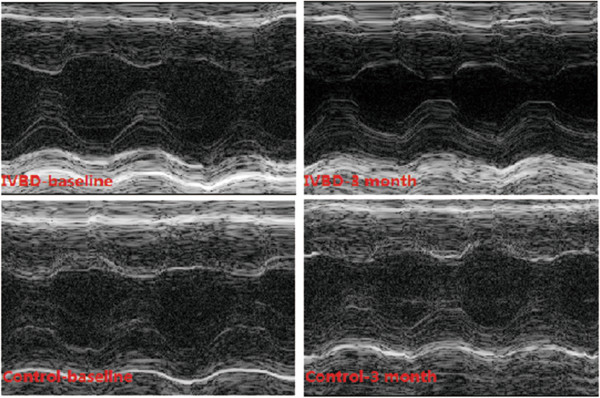
For this reason, twenty diabetic mice were randomly assigned to IVBD-treated (10 mg/kg/day) and control (saline) groups. After a 3-month treatment, microarray assay was performed to identify differentia expressed genes, and cardiac function was measured by echocardiography, with subsequent immunohistochemistry analysis and western blotting.
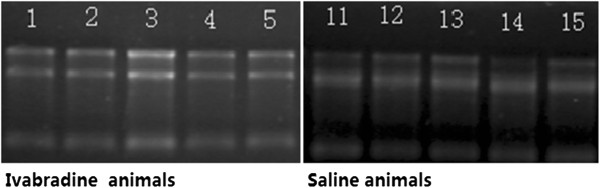
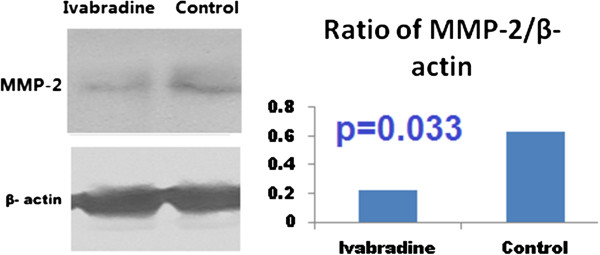
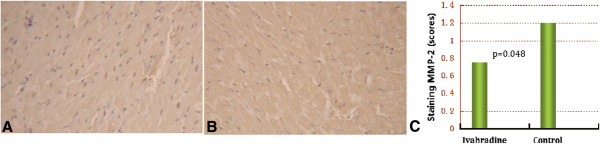
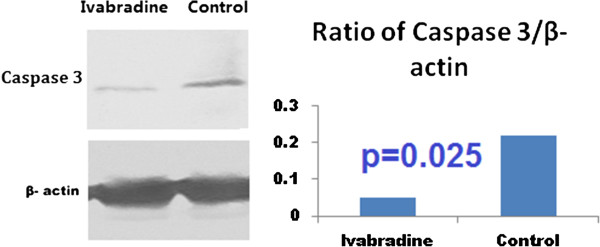
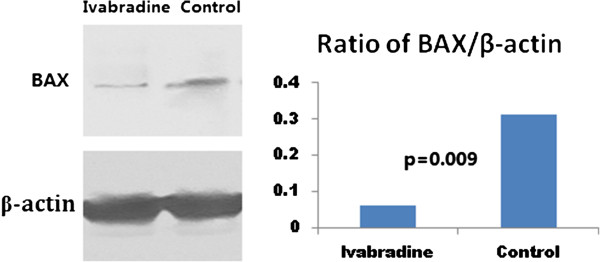
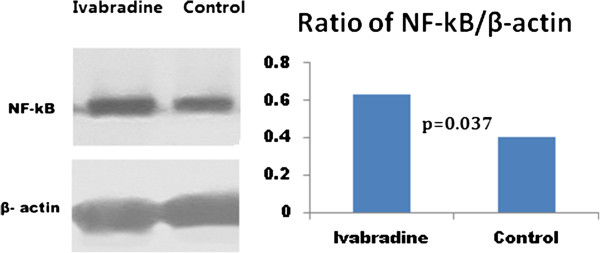
Our results showed that ivabradine treatment attenuated the expression and staining score of matrix metalloproteinase (MMP)-2, induced the dephosphorylation of caspase 3, BAX and MMP-2, and enhanced the phosphorylation of NF-κB. Ivabradine treatment led to a significant improvement in cardiac function.
Ivabradine significantly improved cardiac function by attenuating apoptosis and inhibiting the expression and activity of MMP-2 in diabetic mice, which underscored the novel clinical implications of ivabradine for diabetic patients.
伊伐布雷定(IVBD)是一种新型的I(f)通道抑制剂和特异性降心率药物,已知具有促进内皮功能的抗氧化活性。然而,IVBD作用于心脏功能的分子机制尚未阐明,尤其是在实验性糖尿病动物中。
因此,将20只糖尿病小鼠随机分为IVBD治疗组(10mg/kg/天)和对照组(生理盐水)。经过3个月的治疗后,进行微阵列分析以鉴定差异表达基因,并通过超声心动图测量心脏功能,随后进行免疫组织化学分析和蛋白质印迹法。
我们的结果表明,伊伐布雷定治疗可减弱基质金属蛋白酶(MMP)-2的表达和染色评分,诱导半胱天冬酶3、BAX和MMP-2的去磷酸化,并增强核因子κB的磷酸化。伊伐布雷定治疗导致心脏功能显著改善。
伊伐布雷定通过减轻糖尿病小鼠的细胞凋亡并抑制MMP-2的表达和活性,显著改善了心脏功能,这突出了伊伐布雷定对糖尿病患者的新临床意义。