Department of Physiology and Pharmacology, University of Calgary Calgary, AB, Canada ; Hotchkiss Brain Institute, University of Calgary Calgary, AB, Canada.
Hotchkiss Brain Institute, University of Calgary Calgary, AB, Canada ; Department of Clinical Neurosciences, University of Calgary Calgary, AB, Canada.
Front Cell Dev Biol. 2014 Aug 28;2:45. doi: 10.3389/fcell.2014.00045. eCollection 2014.
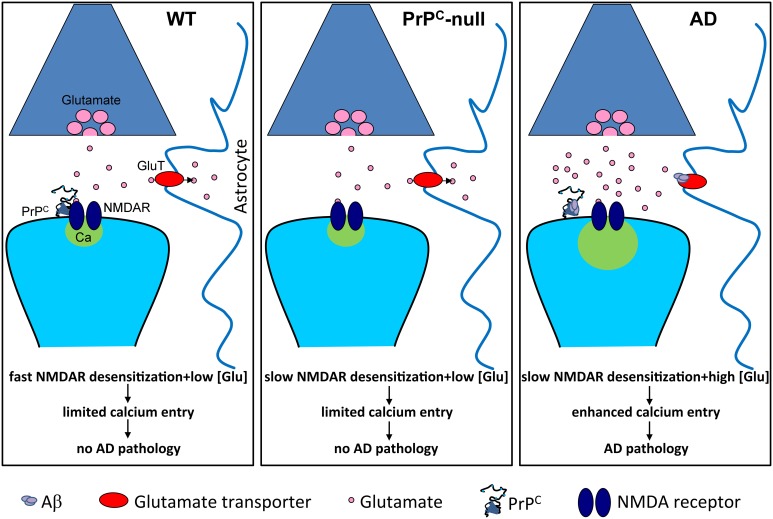
Although it is well established that misfolding of the cellular prion protein (PrP(C)) into the β-sheet-rich, aggregated scrapie conformation (PrP(Sc)) causes a variety of transmissible spongiform encephalopathies (TSEs), the physiological roles of PrP(C) are still incompletely understood. There is accumulating evidence describing the roles of PrP(C) in neurodegeneration and neuroinflammation. Recently, we identified a functional regulation of NMDA receptors by PrP(C) that involves formation of a physical protein complex between these proteins. Excessive NMDA receptor activity during conditions such as ischemia mediates enhanced Ca(2+) entry into cells and contributes to excitotoxic neuronal death. In addition, NMDA receptors and/or PrP(C) play critical roles in neuroinflammation and glial cell toxicity. Inhibition of NMDA receptor activity protects against PrP(Sc)-induced neuronal death. Moreover, in mice lacking PrP(C), infarct size is increased after focal cerebral ischemia, and absence of PrP(C) increases susceptibility of neurons to NMDA receptor-dependent death. Recently, PrP(C) was found to be a receptor for oligomeric beta-amyloid (Aβ) peptides, suggesting a role for PrP(C) in Alzheimer's disease (AD). Our recent findings suggest that Aβ peptides enhance NMDA receptor current by perturbing the normal copper- and PrP(C)-dependent regulation of these receptors. Here, we review evidence highlighting a role for PrP(C) in preventing NMDA receptor-mediated excitotoxicity and inflammation. There is a need for more detailed molecular characterization of PrP(C)-mediated regulation of NMDA receptors, such as determining which NMDA receptor subunits mediate pathogenic effects upon loss of PrP(C)-mediated regulation and identifying PrP(C) binding site(s) on the receptor. This knowledge will allow development of novel therapeutic interventions for not only TSEs, but also for AD and other neurodegenerative disorders involving dysfunction of PrP(C).
虽然众所周知,细胞朊蛋白(PrP(C))错误折叠成富含β-片层的聚集的瘙痒构象(PrP(Sc))会导致各种传染性海绵状脑病(TSE),但 PrP(C) 的生理作用仍不完全清楚。越来越多的证据描述了 PrP(C) 在神经退行性变和神经炎症中的作用。最近,我们发现 PrP(C) 对 NMDA 受体具有功能调节作用,涉及这些蛋白质之间形成物理蛋白复合物。在缺血等情况下,NMDA 受体的过度活性介导增强的 Ca(2+)进入细胞,并有助于兴奋性神经元死亡。此外,NMDA 受体和/或 PrP(C)在神经炎症和神经胶质细胞毒性中发挥关键作用。抑制 NMDA 受体活性可防止 PrP(Sc)诱导的神经元死亡。此外,在缺乏 PrP(C)的小鼠中,局灶性脑缺血后梗死面积增加,并且缺乏 PrP(C)会增加神经元对 NMDA 受体依赖性死亡的易感性。最近,发现 PrP(C)是寡聚β-淀粉样肽(Aβ)的受体,这表明 PrP(C)在阿尔茨海默病(AD)中起作用。我们最近的发现表明,Aβ 肽通过扰乱这些受体的正常铜和 PrP(C)依赖性调节,增强 NMDA 受体电流。在这里,我们回顾了 PrP(C)在防止 NMDA 受体介导的兴奋性毒性和炎症中的作用的证据。需要更详细地对 PrP(C)介导的 NMDA 受体调节进行分子表征,例如确定哪些 NMDA 受体亚基在失去 PrP(C)介导的调节时介导致病性效应,以及确定受体上的 PrP(C)结合位点。这方面的知识将为不仅 TSE 而且 AD 和其他涉及 PrP(C)功能障碍的神经退行性疾病的新型治疗干预措施的发展提供帮助。