Archuleta Tara L, Spiller Benjamin W
Chemical and Physical Biology Program, Vanderbilt University School of Medicine, Nashville, Tennessee, United States of America.
Department of Pathology, Microbiology and Immunology, Vanderbilt University School of Medicine, Nashville, Tennessee, United States of America; Department of Pharmacology, Vanderbilt University School of Medicine, Nashville, Tennessee, United States of America.
PLoS Pathog. 2014 Nov 6;10(11):e1004498. doi: 10.1371/journal.ppat.1004498. eCollection 2014 Nov.
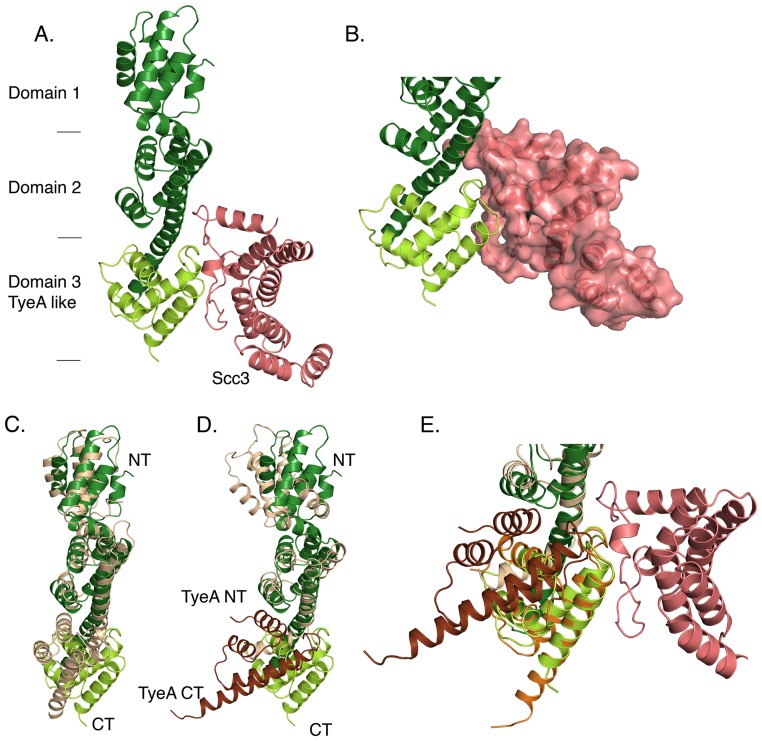
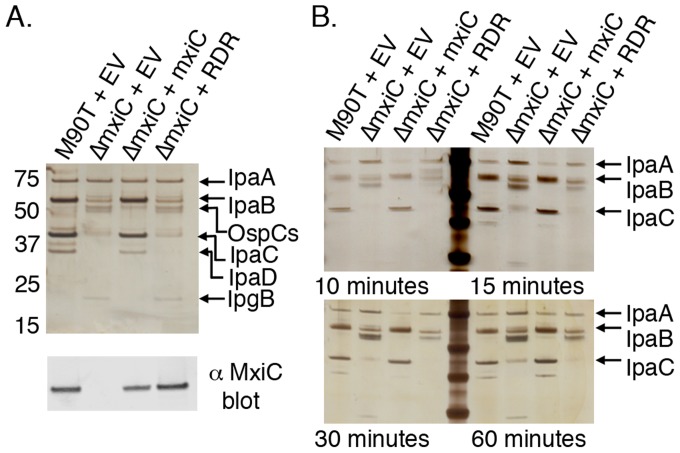
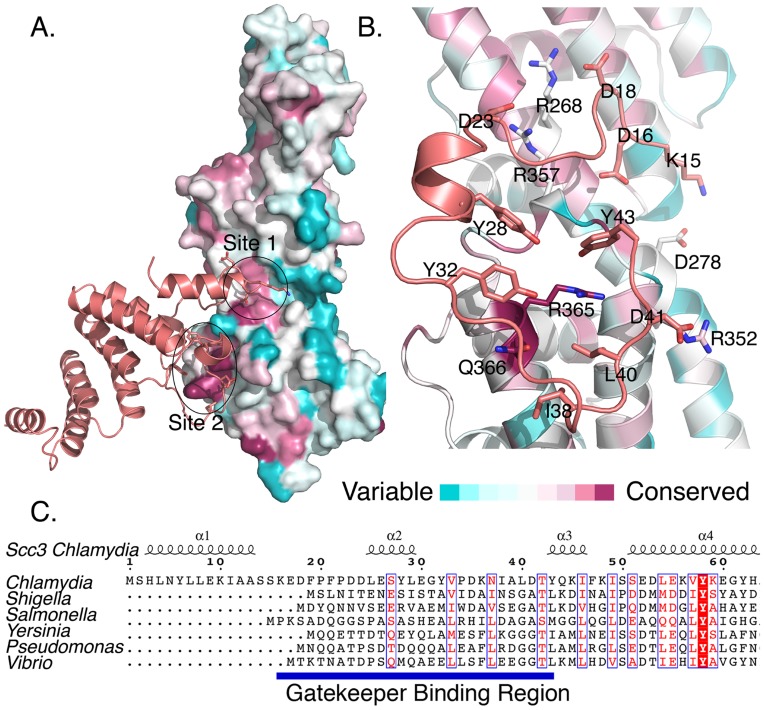
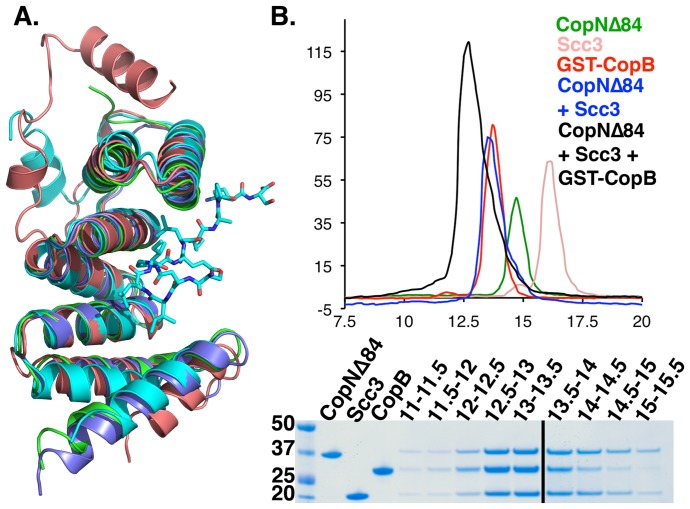
Many Gram-negative bacteria use Type Three Secretion Systems (T3SS) to deliver effector proteins into host cells. These protein delivery machines are composed of cytosolic components that recognize substrates and generate the force needed for translocation, the secretion conduit, formed by a needle complex and associated membrane spanning basal body, and translocators that form the pore in the target cell. A defined order of secretion in which needle component proteins are secreted first, followed by translocators, and finally effectors, is necessary for this system to be effective. While the secreted effectors vary significantly between organisms, the ∼20 individual protein components that form the T3SS are conserved in many pathogenic bacteria. One such conserved protein, referred to as either a plug or gatekeeper, is necessary to prevent unregulated effector release and to allow efficient translocator secretion. The mechanism by which translocator secretion is promoted while effector release is inhibited by gatekeepers is unknown. We present the structure of the Chlamydial gatekeeper, CopN, bound to a translocator-specific chaperone. The structure identifies a previously unknown interface between gatekeepers and translocator chaperones and reveals that in the gatekeeper-chaperone complex the canonical translocator-binding groove is free to bind translocators. Structure-based mutagenesis of the homologous complex in Shigella reveals that the gatekeeper-chaperone-translocator complex is essential for translocator secretion and for the ordered secretion of translocators prior to effectors.
许多革兰氏阴性菌利用三型分泌系统(T3SS)将效应蛋白输送到宿主细胞中。这些蛋白质输送机器由识别底物并产生转运所需力的胞质成分、由针状复合物和相关跨膜基体形成的分泌通道以及在靶细胞中形成孔的转运蛋白组成。该系统要有效发挥作用,需要一个特定的分泌顺序,即先分泌针状成分蛋白,接着分泌转运蛋白,最后分泌效应蛋白。虽然不同生物体分泌的效应蛋白差异很大,但构成T3SS的约20种单个蛋白质成分在许多致病细菌中是保守的。一种这样的保守蛋白,被称为堵塞物或守门人,对于防止效应蛋白不受控制地释放以及实现转运蛋白的有效分泌是必需的。守门人促进转运蛋白分泌而抑制效应蛋白释放的机制尚不清楚。我们展示了与转运蛋白特异性伴侣结合的衣原体守门人CopN的结构。该结构确定了守门人与转运蛋白伴侣之间以前未知的界面,并揭示在守门人 - 伴侣复合物中,典型的转运蛋白结合凹槽可自由结合转运蛋白。基于结构对志贺氏菌中同源复合物进行诱变,结果表明守门人 - 伴侣 - 转运蛋白复合物对于转运蛋白的分泌以及在效应蛋白之前有序分泌转运蛋白至关重要。