Ramello M C, Tosello Boari J, Canale F P, Mena H A, Negrotto S, Gastman B, Gruppi A, Acosta Rodríguez E V, Montes C L
Centro de Investigaciones en Bioquímica Clínica e Inmunología (CIBICI-CONICET), Departamento de Bioquímica Clínica, Facultad de Ciencias Químicas, Universidad Nacional de Córdoba, Haya de la Torre y Medina Allende, Ciudad Universitaria, Córdoba, Argentina.
Laboratorio de Trombosis Experimental, Instituto de Medicina Experimental (IMEX), Academia Nacional de Medicina-CONICET, Buenos Aires, Argentina.
Cell Death Dis. 2014 Nov 6;5(11):e1507. doi: 10.1038/cddis.2014.451.
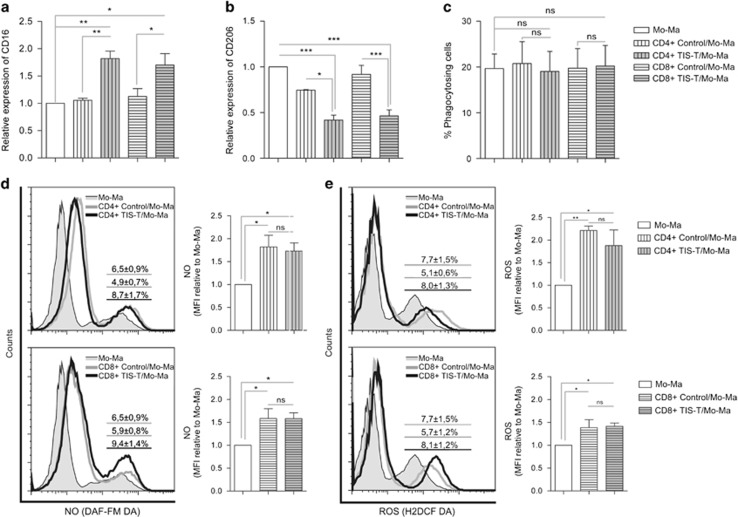
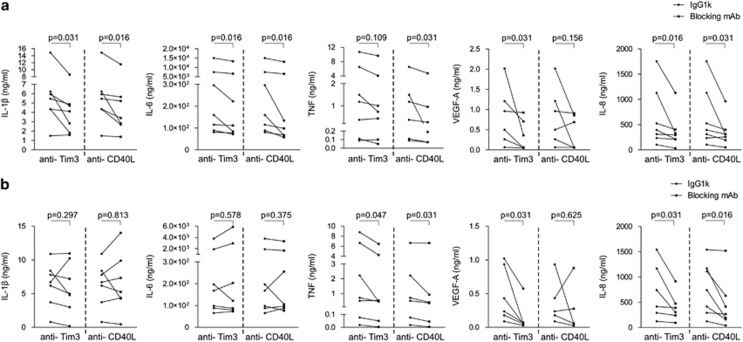
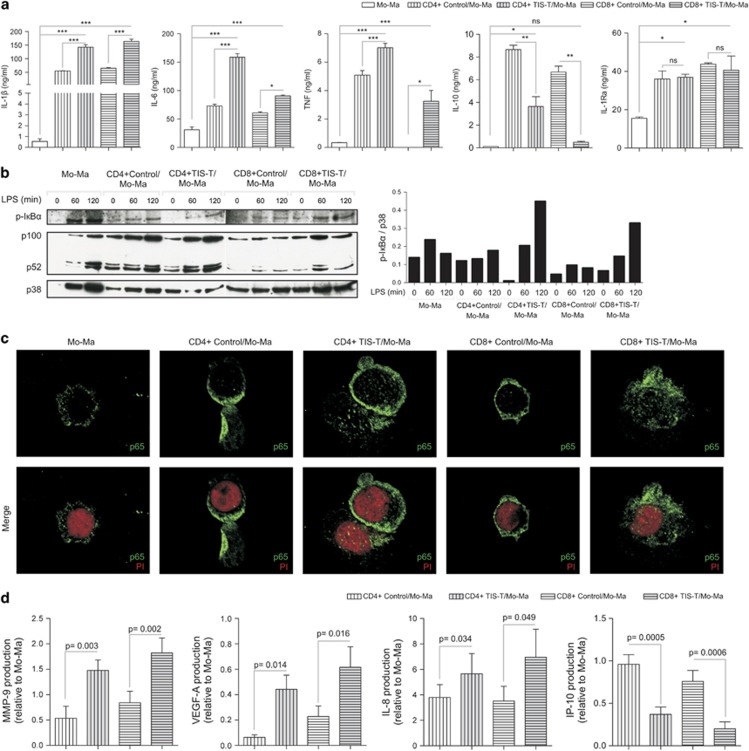
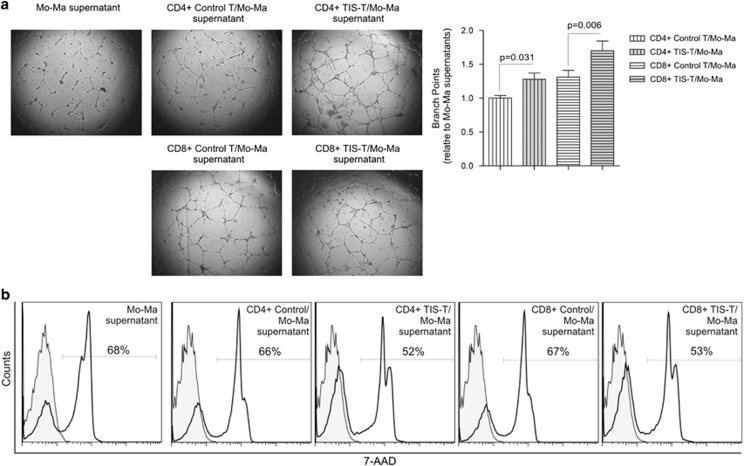
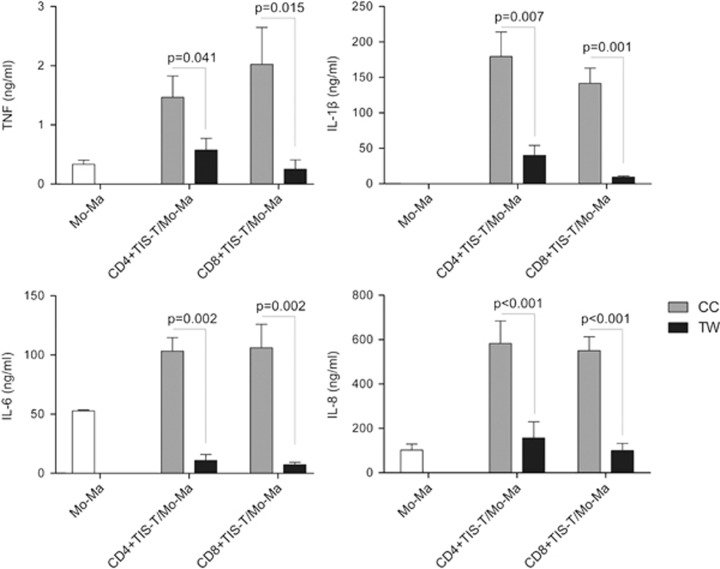
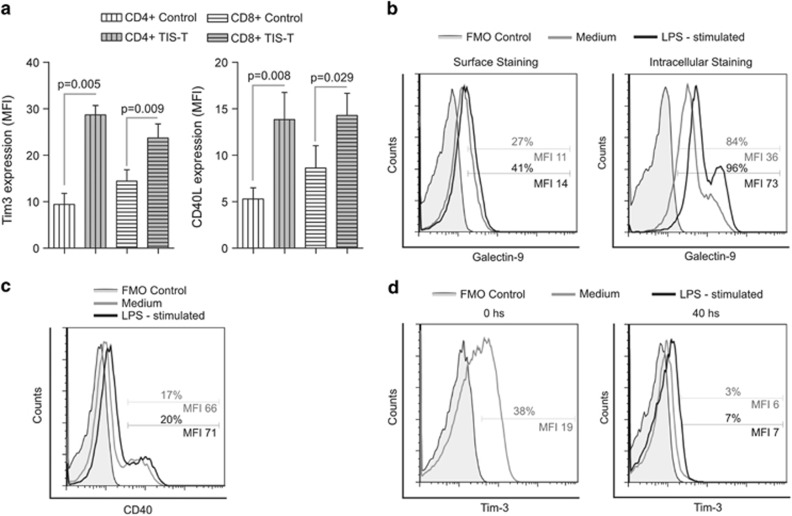
Solid tumors are infiltrated by immune cells where macrophages and senescent T cells are highly represented. Within the tumor microenvironment, a cross-talk between the infiltrating cells may occur conditioning the characteristic of the in situ immune response. Our previous work showed that tumors induce senescence of T cells, which are powerful suppressors of lympho-proliferation. In this study, we report that Tumor-Induced Senescent (TIS)-T cells may also modulate monocyte activation. To gain insight into this interaction, CD4+ or CD8+TIS-T or control-T cells were co-incubated with autologous monocytes under inflammatory conditions. After co-culture with CD4+ or CD8+TIS-T cells, CD14+ monocytes/macrophages (Mo/Ma) exhibit a higher expression of CD16+ cells and a reduced expression of CD206. These Mo/Ma produce nitric oxide and reactive oxygen species; however, TIS-T cells do not modify phagocyte capacity of Mo/Ma. TIS-T modulated-Mo/Ma show a higher production of pro-inflammatory cytokines (TNF, IL-1β and IL-6) and angiogenic factors (MMP-9, VEGF-A and IL-8) and a lower IL-10 and IP-10 secretion than monocytes co-cultured with controls. The mediator(s) present in the supernatant of TIS-T cell/monocyte-macrophage co-cultures promote(s) tubulogenesis and tumor-cell survival. Monocyte-modulation induced by TIS-T cells requires cell-to-cell contact. Although CD4+ shows different behavior from CD8+TIS-T cells, blocking mAbs against T-cell immunoglobulin and mucin protein 3 and CD40 ligand reduce pro-inflammatory cytokines and angiogenic factors production, indicating that these molecules are involved in monocyte/macrophage modulation by TIS-T cells. Our results revealed a novel role for TIS-T cells in human monocyte/macrophage modulation, which may have deleterious consequences for tumor progression. This modulation should be considered to best tailor the immunotherapy against cancer.
实体瘤被免疫细胞浸润,其中巨噬细胞和衰老T细胞占比很高。在肿瘤微环境中,浸润细胞之间可能会发生相互作用,从而决定原位免疫反应的特征。我们之前的研究表明,肿瘤会诱导T细胞衰老,而衰老的T细胞是淋巴细胞增殖的强大抑制因子。在本研究中,我们报告肿瘤诱导衰老(TIS)-T细胞也可能调节单核细胞的激活。为了深入了解这种相互作用,将CD4⁺或CD8⁺ TIS-T细胞或对照T细胞在炎症条件下与自体单核细胞共同孵育。与CD4⁺或CD8⁺ TIS-T细胞共培养后,CD14⁺单核细胞/巨噬细胞(Mo/Ma)表现出CD16⁺细胞表达增加,而CD206表达降低。这些Mo/Ma产生一氧化氮和活性氧;然而,TIS-T细胞不会改变Mo/Ma的吞噬能力。TIS-T调节的Mo/Ma显示出比与对照共培养的单核细胞产生更多的促炎细胞因子(TNF、IL-1β和IL-6)和血管生成因子(MMP-9、VEGF-A和IL-8),而IL-10和IP-10的分泌减少。TIS-T细胞/单核细胞-巨噬细胞共培养上清液中存在的介质促进了小管形成和肿瘤细胞存活。TIS-T细胞诱导的单核细胞调节需要细胞间接触。尽管CD4⁺ TIS-T细胞与CD8⁺ TIS-T细胞表现出不同的行为,但针对T细胞免疫球蛋白和粘蛋白蛋白3以及CD40配体的阻断单克隆抗体可减少促炎细胞因子和血管生成因子的产生,表明这些分子参与了TIS-T细胞对单核细胞/巨噬细胞的调节。我们的结果揭示了TIS-T细胞在人类单核细胞/巨噬细胞调节中的新作用,这可能对肿瘤进展产生有害影响。在针对癌症的免疫治疗中,应考虑这种调节作用以实现最佳治疗效果。