Evstafieva A G, Garaeva A A, Khutornenko A A, Klepikova A V, Logacheva M D, Penin A A, Novakovsky G E, Kovaleva I E, Chumakov P M
1] Belozersky Institute of Physico-Chemical Biology, Lomonosov Moscow State University, Moscow, 119992, Russia [2] Faculty of Bioengineering and Bioinformatics, Lomonosov Moscow State University, Moscow, 119992, Russia.
Faculty of Bioengineering and Bioinformatics, Lomonosov Moscow State University, Moscow, 119992, Russia.
Cell Death Dis. 2014 Nov 6;5(11):e1511. doi: 10.1038/cddis.2014.469.
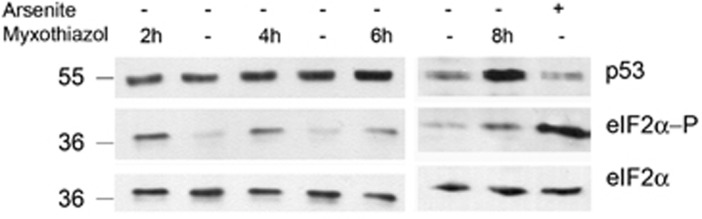
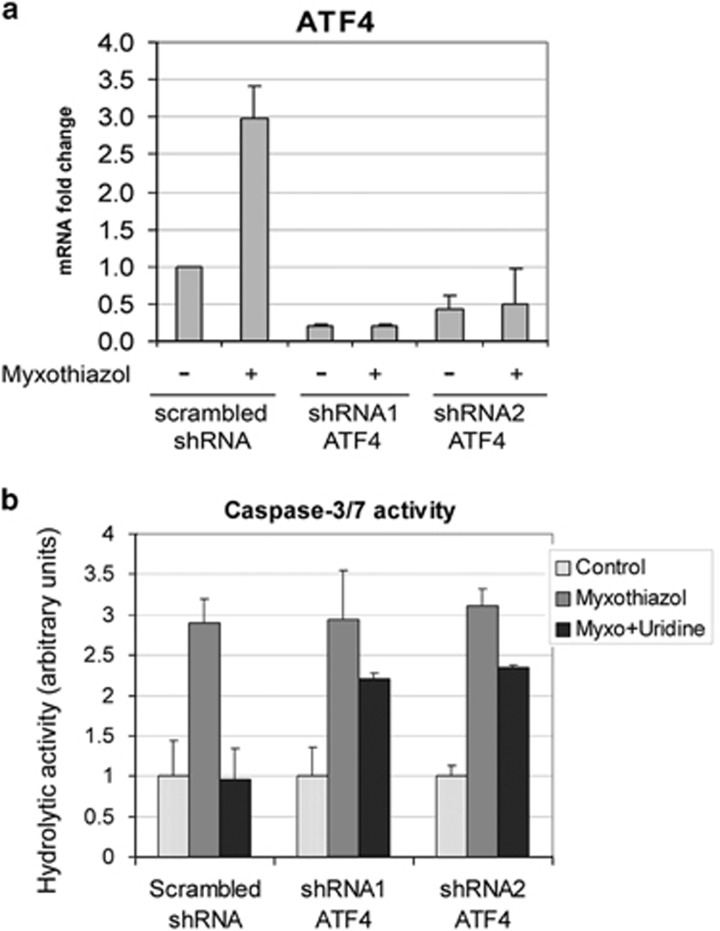
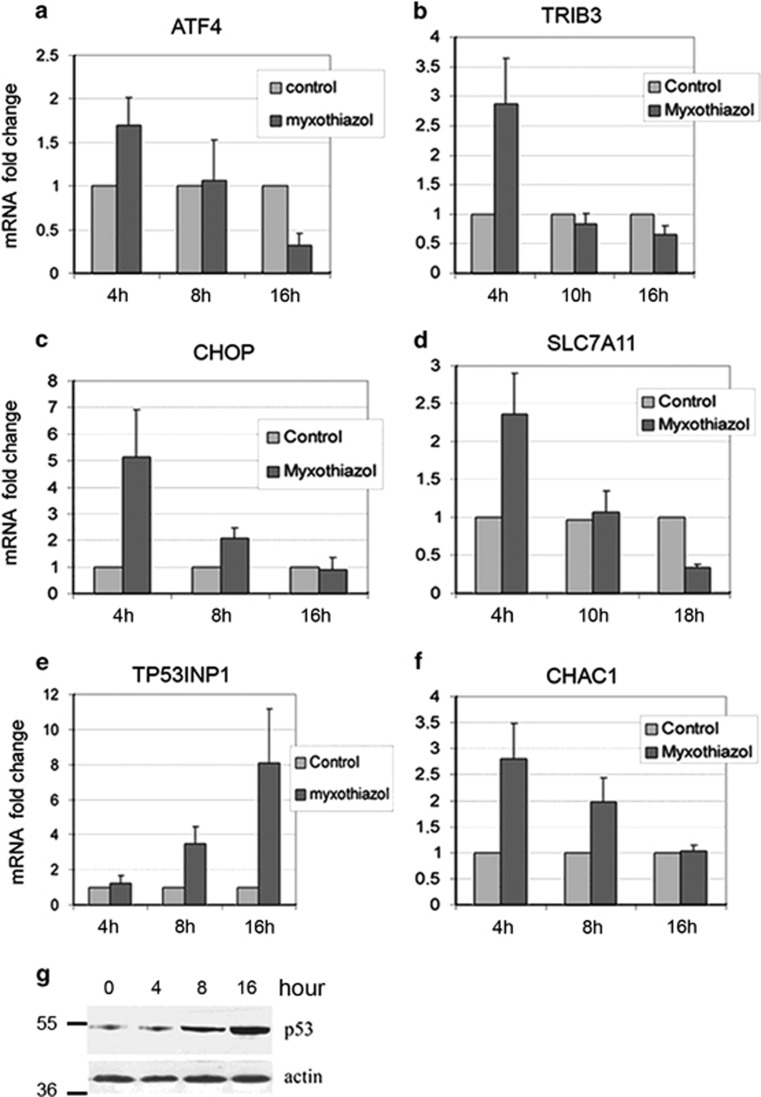
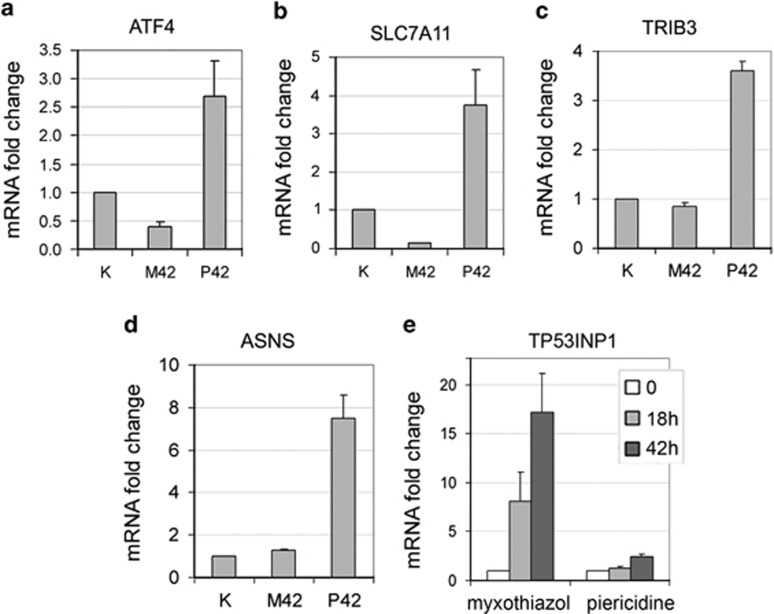
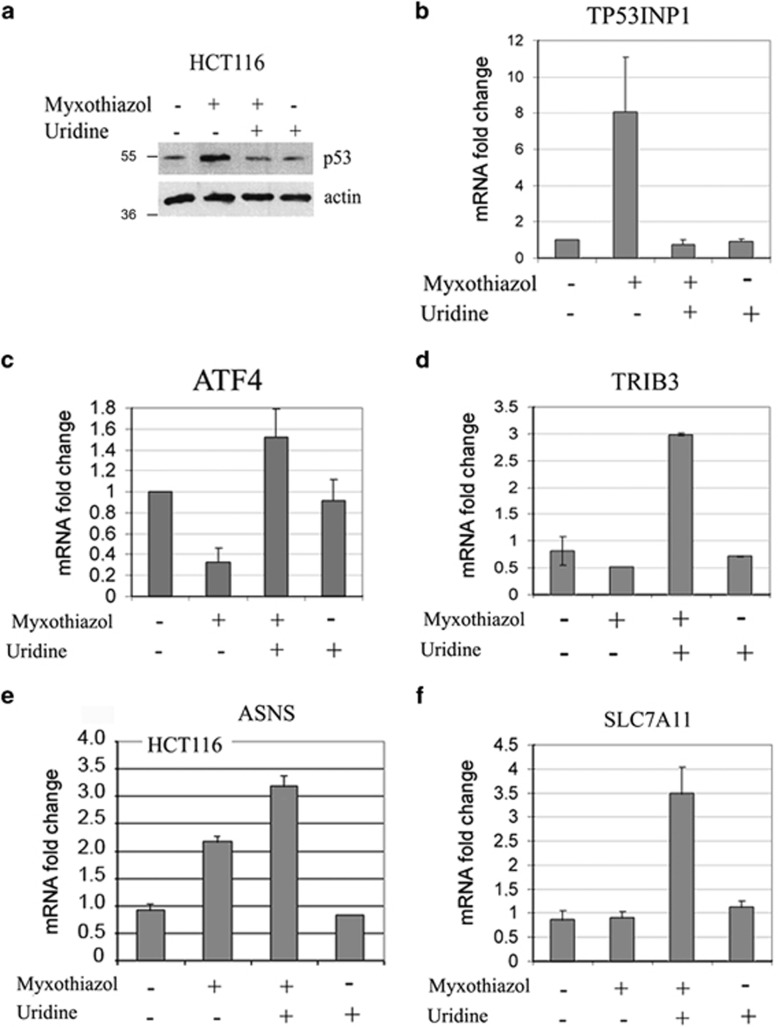
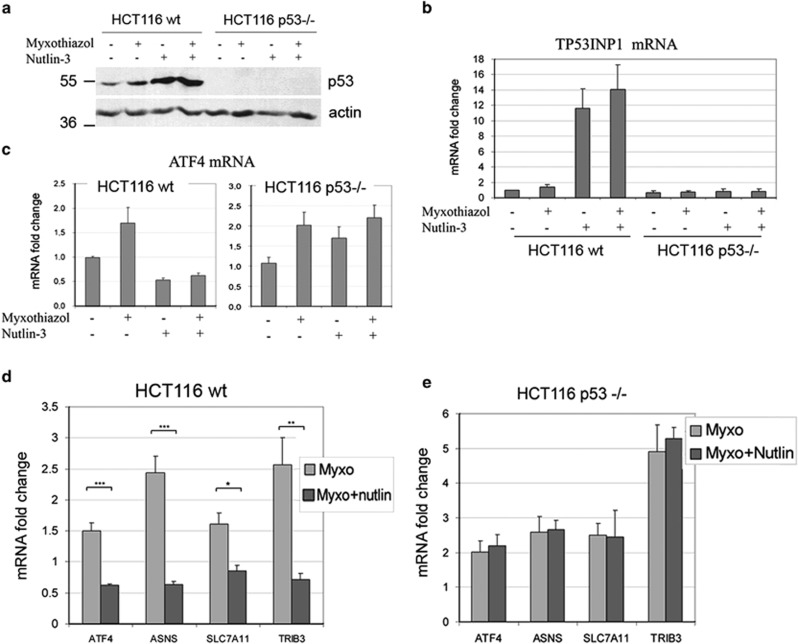
Generation of energy in mitochondria is subjected to physiological regulation at many levels, and its malfunction may result in mitochondrial diseases. Mitochondrial dysfunction is associated with different environmental influences or certain genetic conditions, and can be artificially induced by inhibitors acting at different steps of the mitochondrial electron transport chain (ETC). We found that a short-term (5 h) inhibition of ETC complex III with myxothiazol results in the phosphorylation of translation initiation factor eIF2α and upregulation of mRNA for the activating transcription factor 4 (ATF4) and several ATF4-regulated genes. The changes are characteristic for the adaptive integrated stress response (ISR), which is known to be triggered by unfolded proteins, nutrient and metabolic deficiency, and mitochondrial dysfunctions. However, after a prolonged incubation with myxothiazol (13-17 h), levels of ATF4 mRNA and ATF4-regulated transcripts were found substantially suppressed. The suppression was dependent on the p53 response, which is triggered by the impairment of the complex III-dependent de novo biosynthesis of pyrimidines by mitochondrial dihydroorotate dehydrogenase. The initial adaptive induction of ATF4/ISR acted to promote viability of cells by attenuating apoptosis. In contrast, the induction of p53 upon a sustained inhibition of ETC complex III produced a pro-apoptotic effect, which was additionally stimulated by the p53-mediated abrogation of the pro-survival activities of the ISR. Interestingly, a sustained inhibition of ETC complex I by piericidine did not induce the p53 response and stably maintained the pro-survival activation of ATF4/ISR. We conclude that a downregulation of mitochondrial ETC generally induces adaptive pro-survival responses, which are specifically abrogated by the suicidal p53 response triggered by the genetic risks of the pyrimidine nucleotide deficiency.
线粒体中的能量生成在多个层面受到生理调节,其功能失调可能导致线粒体疾病。线粒体功能障碍与不同的环境影响或特定的遗传条件相关,并且可以通过作用于线粒体电子传递链(ETC)不同步骤的抑制剂人工诱导产生。我们发现,用粘噻唑对ETC复合物III进行短期(5小时)抑制会导致翻译起始因子eIF2α磷酸化,并使激活转录因子4(ATF4)及几个受ATF4调控的基因的mRNA上调。这些变化是适应性综合应激反应(ISR)的特征,已知该反应由未折叠蛋白、营养和代谢缺乏以及线粒体功能障碍触发。然而,在用粘噻唑长时间孵育(13 - 17小时)后,发现ATF4 mRNA和受ATF4调控的转录本水平大幅降低。这种降低依赖于p53反应,该反应由线粒体二氢乳清酸脱氢酶对复合物III依赖性嘧啶从头生物合成的损害所触发。ATF4/ISR的初始适应性诱导通过减弱细胞凋亡来促进细胞活力。相反,持续抑制ETC复合物III时p53的诱导产生了促凋亡作用,p53介导的ISR促生存活性的消除进一步增强了这种作用。有趣的是,用粉蝶霉素持续抑制ETC复合物I并未诱导p53反应,而是稳定地维持了ATF4/ISR的促生存激活。我们得出结论,线粒体ETC的下调通常会诱导适应性促生存反应,而嘧啶核苷酸缺乏的遗传风险引发的自杀性p53反应会特异性地消除这些反应。