The Peter MacCallum Cancer Centre, Melbourne, Vic., Australia.
The Sir Peter MacCallum Department of Oncology, University of Melbourne, Parkville, Vic., Australia.
EMBO Mol Med. 2022 Jul 7;14(7):e15203. doi: 10.15252/emmm.202115203. Epub 2022 May 6.
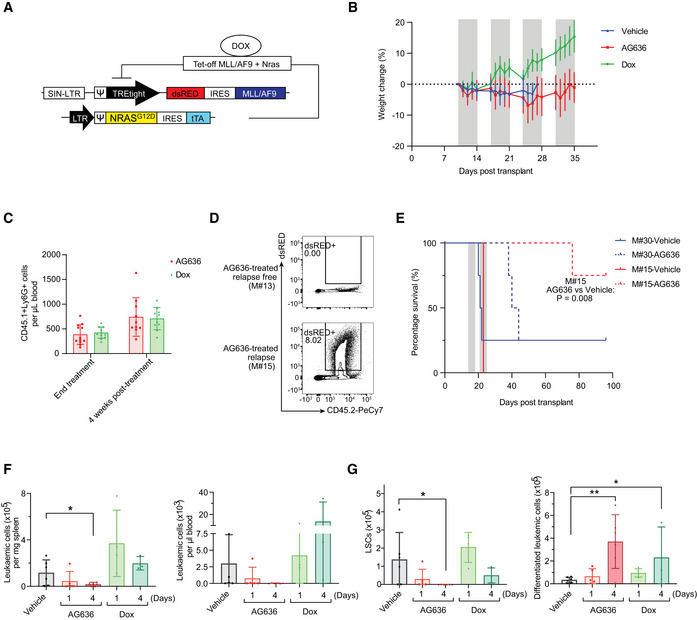
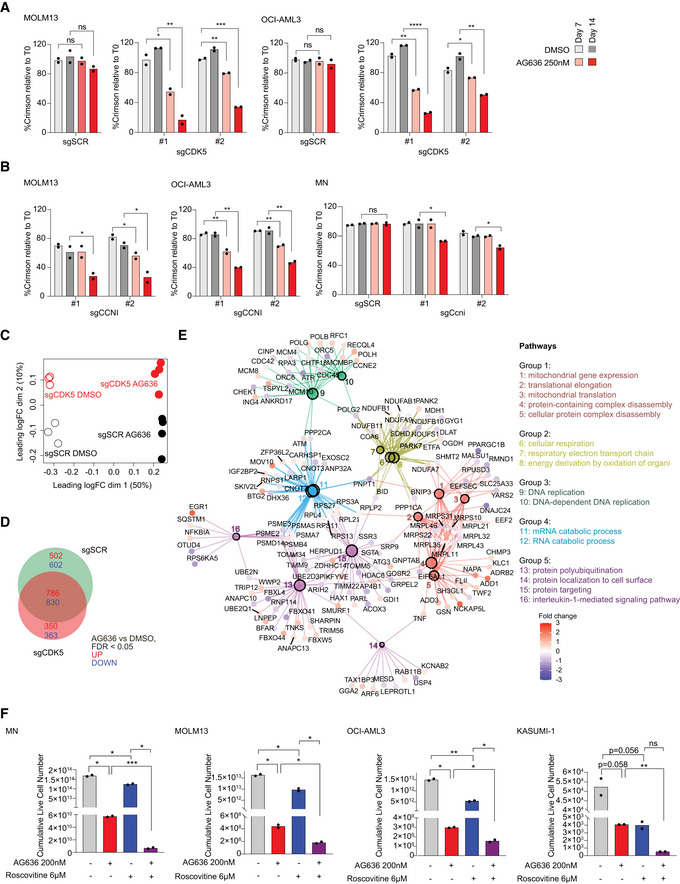
The mitochondrial enzyme dihydroorotate dehydrogenase (DHODH) catalyzes one of the rate-limiting steps in de novo pyrimidine biosynthesis, a pathway that provides essential metabolic precursors for nucleic acids, glycoproteins, and phospholipids. DHODH inhibitors (DHODHi) are clinically used for autoimmune diseases and are emerging as a novel class of anticancer agents, especially in acute myeloid leukemia (AML) where pyrimidine starvation was recently shown to reverse the characteristic differentiation block in AML cells. Herein, we show that DHODH blockade rapidly shuts down protein translation in leukemic stem cells (LSCs) and has potent and selective activity against multiple AML subtypes. Moreover, we find that ablation of CDK5, a gene that is recurrently deleted in AML and related disorders, increases the sensitivity of AML cells to DHODHi. Our studies provide important molecular insights and identify a potential biomarker for an emerging strategy to target AML.
线粒体酶二氢乳清酸脱氢酶(DHODH)催化从头合成嘧啶生物合成中的限速步骤之一,该途径为核酸、糖蛋白和磷脂提供必需的代谢前体。DHODH 抑制剂(DHODHi)临床上用于自身免疫性疾病,并且作为一种新型的抗癌药物正在出现,特别是在急性髓细胞性白血病(AML)中,最近表明嘧啶饥饿可逆转 AML 细胞的特征分化阻滞。在此,我们表明 DHODH 阻断可迅速关闭白血病干细胞(LSCs)中的蛋白质翻译,并对多种 AML 亚型具有强大且选择性的活性。此外,我们发现 AML 和相关疾病中经常缺失的基因 CDK5 的缺失会增加 AML 细胞对 DHODHi 的敏感性。我们的研究提供了重要的分子见解,并确定了一种潜在的生物标志物,用于针对 AML 的新兴策略。