Mikacenic Carmen, Schneider Anya, Radella Frank, Buckner Jane H, Wurfel Mark M
Division of Pulmonary and Critical Care Medicine, Department of Medicine, University of Washington, Seattle, WA 98104; and
Translational Research Program, Benaroya Research Institute, Seattle, WA 98101.
J Immunol. 2014 Dec 15;193(12):5786-90. doi: 10.4049/jimmunol.1401185. Epub 2014 Nov 5.
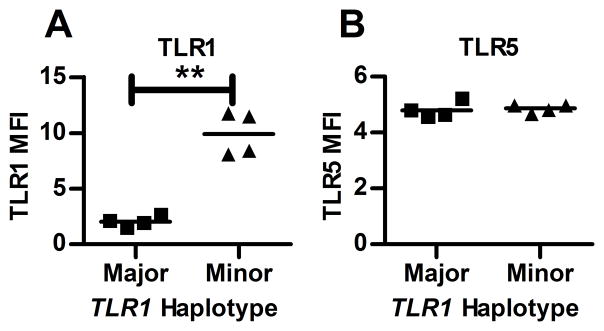
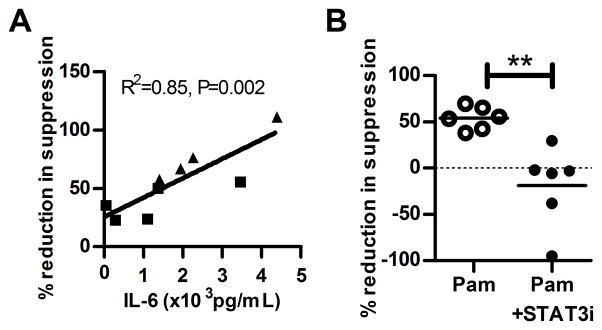
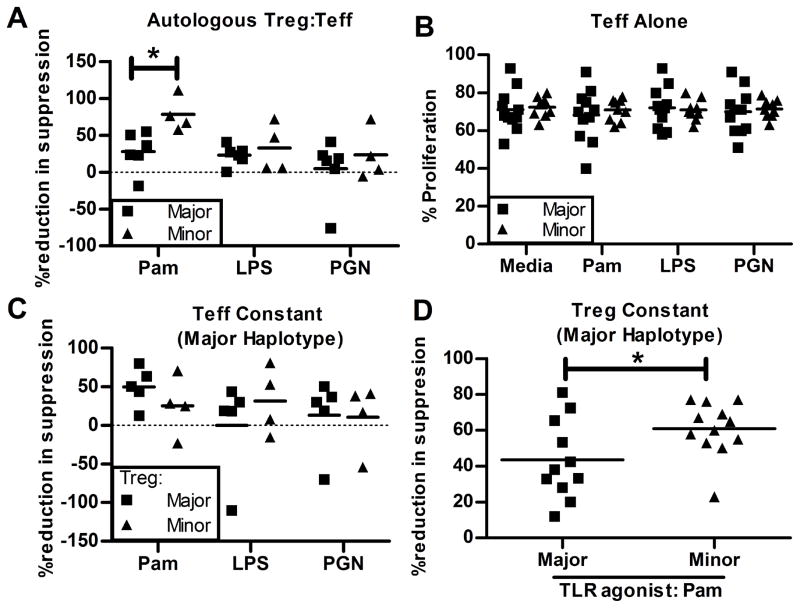
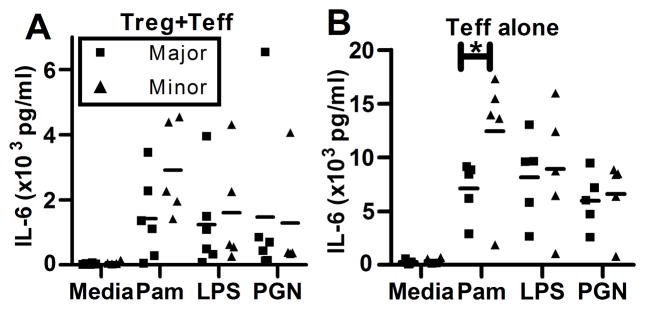
TLR play essential roles in the initiation and modulation of immune responses. TLR1/TLR2 heterodimers recognize triacylated bacterial lipopeptides, including the synthetic TLR1/2 lipopeptide Pam3CSK4. Genetic variation in TLR1 is associated with outcomes in diseases in which regulatory T cells (Treg) play a role, including asthma and allergy. To determine whether genetic polymorphisms in TLR1 are associated with alterations in Treg suppression of effector T cells (Teff), we performed in vitro suppression assays in healthy individuals with various haplotypes in TLR1. We show that functional genetic polymorphisms in TLR1 modify surface expression of TLR1 on T lymphocytes and confer enhanced Teff resistance to Treg suppression in the presence of Pam3CSK4. These effects are mediated, in part, by IL-6 and inhibited by blocking IL-6 signaling through STAT3. These findings suggest that TLR1 polymorphisms could influence immune-related disease through Teff resistance to Treg suppression.
Toll样受体(TLR)在免疫反应的启动和调节中发挥着重要作用。TLR1/TLR2异二聚体可识别三酰化细菌脂肽,包括合成的TLR1/2脂肽Pam3CSK4。TLR1的基因变异与调节性T细胞(Treg)发挥作用的疾病(包括哮喘和过敏)的预后相关。为了确定TLR1基因多态性是否与Treg对效应T细胞(Teff)抑制作用的改变相关,我们对具有TLR1不同单倍型的健康个体进行了体外抑制试验。我们发现,TLR1的功能性基因多态性可改变T淋巴细胞表面TLR1的表达,并在Pam3CSK4存在的情况下使Teff对Treg抑制作用的抗性增强。这些效应部分由白细胞介素-6(IL-6)介导,并通过信号转导和转录激活因子3(STAT3)阻断IL-6信号传导而受到抑制。这些发现表明,TLR1多态性可能通过Teff对Treg抑制作用的抗性影响免疫相关疾病。