Becerra Lino, Sava Simona, Simons Laura E, Drosos Athena M, Sethna Navil, Berde Charles, Lebel Alyssa A, Borsook David
Pain/Analgesia Imaging Neuroscience (P.A.I.N.) Group, Boston Children's Hospital, 300 Longwood Ave., Boston, MA 02115, USA ; Department of Anesthesiology, Boston Children's Hospital, 300 Longwood Ave., Boston, MA 02115, USA ; Department of Radiology, Boston Children's Hospital, 300 Longwood Ave., Boston, MA 02115, USA.
Pain/Analgesia Imaging Neuroscience (P.A.I.N.) Group, Boston Children's Hospital, 300 Longwood Ave., Boston, MA 02115, USA.
Neuroimage Clin. 2014 Aug 10;6:347-69. doi: 10.1016/j.nicl.2014.07.012. eCollection 2014.
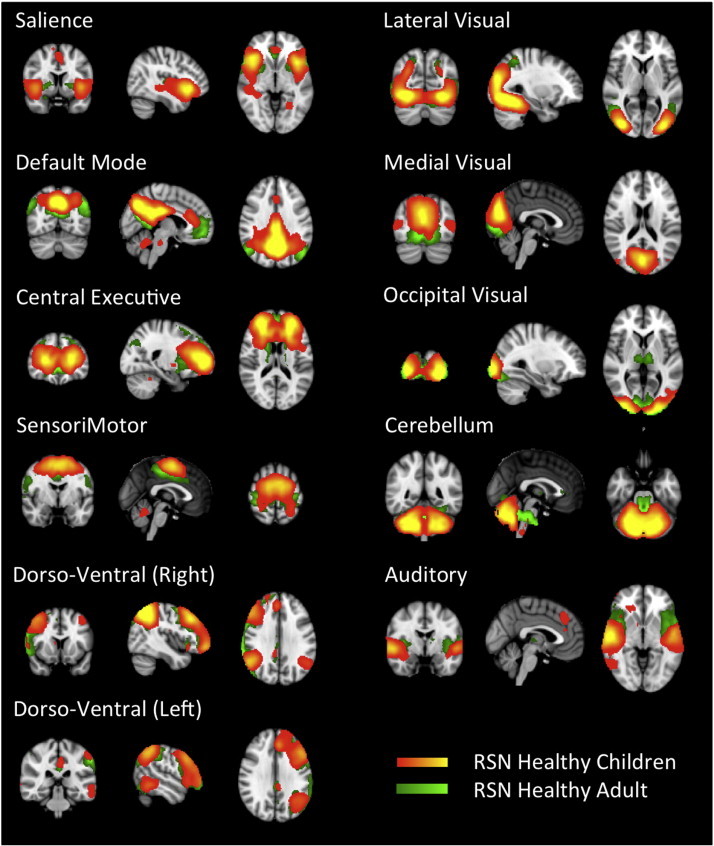
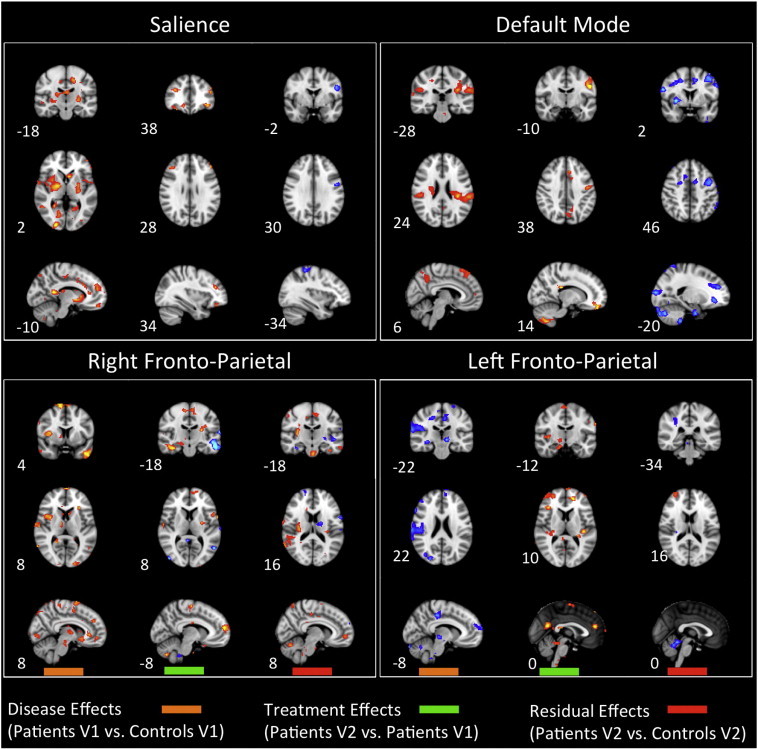
Pediatric complex regional pain syndrome (P-CRPS) offers a unique model of chronic neuropathic pain as it either resolves spontaneously or through therapeutic interventions in most patients. Here we evaluated brain changes in well-characterized children and adolescents with P-CRPS by measuring resting state networks before and following a brief (median = 3 weeks) but intensive physical and psychological treatment program, and compared them to matched healthy controls. Differences in intrinsic brain networks were observed in P-CRPS compared to controls before treatment (disease state) with the most prominent differences in the fronto-parietal, salience, default mode, central executive, and sensorimotor networks. Following treatment, behavioral measures demonstrated a reduction of symptoms and improvement of physical state (pain levels and motor functioning). Correlation of network connectivities with spontaneous pain measures pre- and post-treatment indicated concomitant reductions in connectivity in salience, central executive, default mode and sensorimotor networks (treatment effects). These results suggest a rapid alteration in global brain networks with treatment and provide a venue to assess brain changes in CRPS pre- and post-treatment, and to evaluate therapeutic effects.
小儿复杂性区域疼痛综合征(P-CRPS)提供了一种独特的慢性神经性疼痛模型,因为在大多数患者中,它要么自发缓解,要么通过治疗干预得以缓解。在此,我们通过测量经过一个短暂(中位数 = 3周)但强化的身心治疗方案前后的静息态网络,评估了患有P-CRPS的特征明确的儿童和青少年的脑部变化,并将其与匹配的健康对照组进行比较。与治疗前(疾病状态)的对照组相比,P-CRPS患者的内在脑网络存在差异,其中额顶叶、突显、默认模式、中央执行和感觉运动网络的差异最为显著。治疗后,行为指标显示症状减轻,身体状态(疼痛程度和运动功能)有所改善。治疗前后网络连通性与自发疼痛指标的相关性表明,突显、中央执行、默认模式和感觉运动网络的连通性同时降低(治疗效果)。这些结果表明,治疗可使全脑网络迅速改变,并为评估CRPS治疗前后的脑部变化以及评估治疗效果提供了一个途径。