Delgado-Gallén Selma, Soler M D, Cabello-Toscano María, Abellaneda-Pérez Kilian, Solana-Sánchez Javier, España-Irla Goretti, Roca-Ventura Alba, Bartrés-Faz David, Tormos Josep M, Pascual-Leone Alvaro, Cattaneo Gabriele
Institut Guttmann, Institut Universitari de Neurorehabilitació adscrit a la UAB, Barcelona, Spain.
Departament de Medicina, Facultat de Medicina, Universitat Autónoma de Barcelona, Bellaterra, Spain.
Front Neurosci. 2023 Mar 16;17:1148176. doi: 10.3389/fnins.2023.1148176. eCollection 2023.
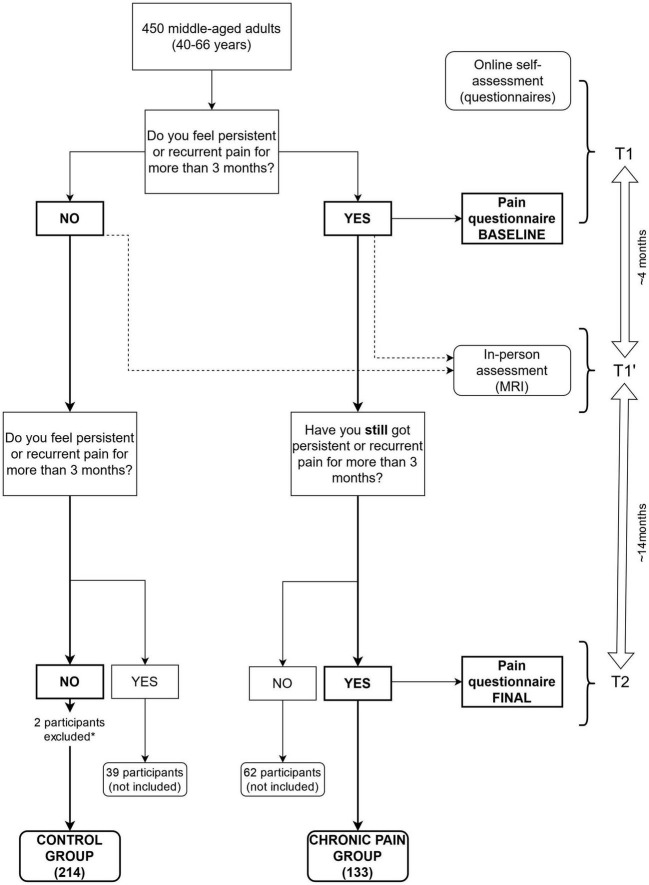
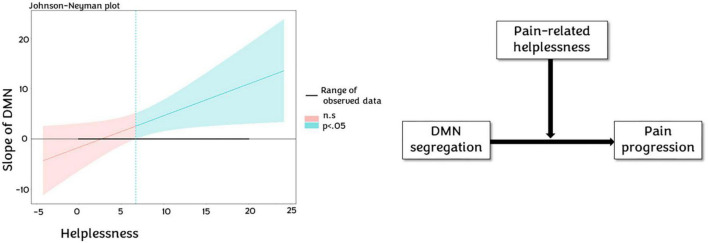
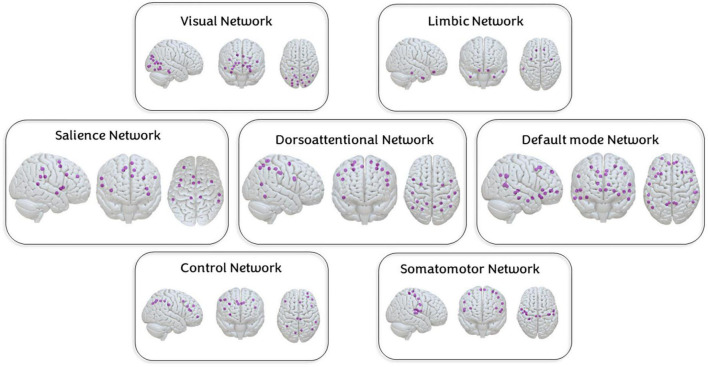
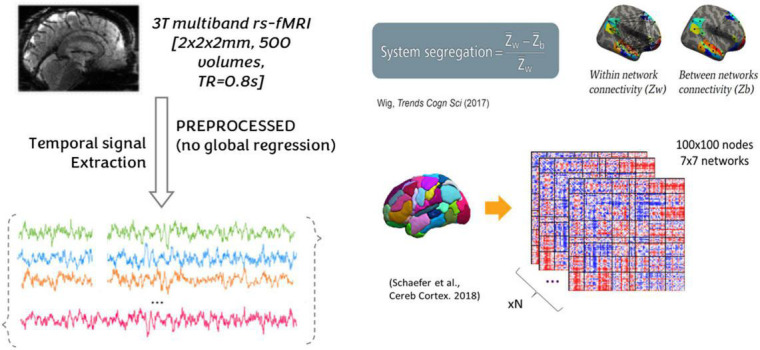
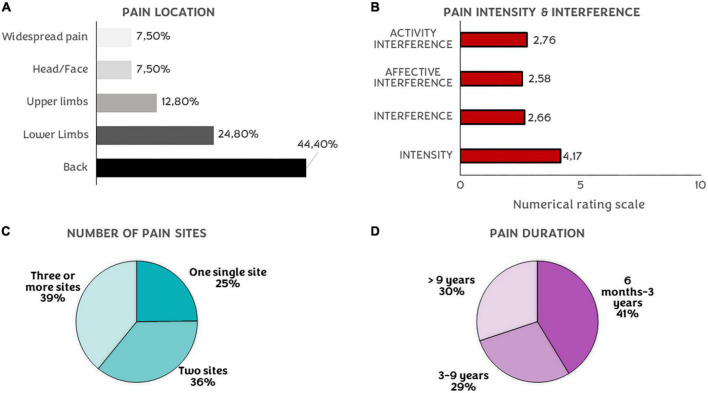
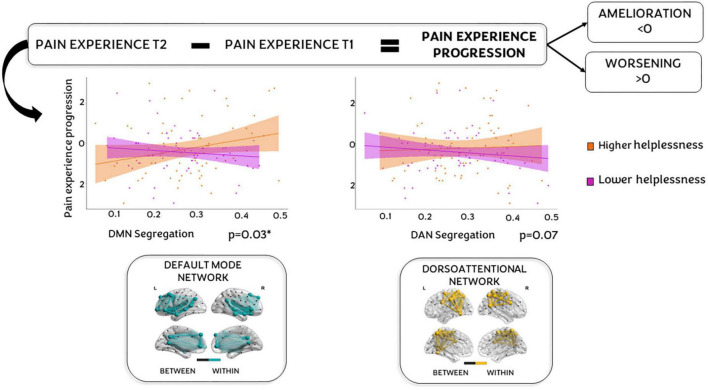
Pain processing involves emotional and cognitive factors that can modify pain perception. Increasing evidence suggests that pain catastrophizing (PC) is implicated, through pain-related self-thoughts, in the maladaptive plastic changes related to the maintenance of chronic pain (CP). Functional magnetic resonance imaging (fMRI) studies have shown an association between CP and two main networks: default mode (DMN) and dorsoattentional (DAN). Brain system segregation degree (SyS), an fMRI framework used to quantify the extent to which functional networks are segregated from each other, is associated with cognitive abilities in both healthy individuals and neurological patients. We hypothesized that individuals suffering from CP would show worst health-related status compared to healthy individuals and that, within CP individuals, longitudinal changes in pain experience (pain intensity and affective interference), could be predicted by SyS and PC subdomains (rumination, magnification, and helplessness). To assess the longitudinal progression of CP, two pain surveys were taken before and after an in-person assessment (physical evaluation and fMRI). We first compared the sociodemographic, health-related, and SyS data in the whole sample (no pain and pain groups). Secondly, we ran linear regression and a moderation model only in the pain group, to see the predictive and moderator values of PC and SyS in pain progression. From our sample of 347 individuals (mean age = 53.84, 55.2% women), 133 responded to having CP, and 214 denied having CP. When comparing groups, results showed significant differences in health-related questionnaires, but no differences in SyS. Within the pain group, helplessness (β = 0.325; = 0.003), higher DMN (β = 0.193; = 0.037), and lower DAN segregation (β = 0.215; = 0.014) were strongly associated with a worsening in pain experience over time. Moreover, helplessness moderated the association between DMN segregation and pain experience progression ( = 0.003). Our findings indicate that the efficient functioning of these networks and catastrophizing could be used as predictors of pain progression, bringing new light to the influence of the interplay between psychological aspects and brain networks. Consequently, approaches focusing on these factors could minimize the impact on daily life activities.
疼痛处理涉及可改变疼痛感知的情绪和认知因素。越来越多的证据表明,通过与疼痛相关的自我想法,灾难化思维(PC)与慢性疼痛(CP)维持相关的适应不良可塑性变化有关。功能磁共振成像(fMRI)研究表明,CP与两个主要网络之间存在关联:默认模式网络(DMN)和背侧注意网络(DAN)。脑系统分离度(SyS)是一种用于量化功能网络彼此分离程度的fMRI框架,它与健康个体和神经疾病患者的认知能力相关。我们假设,与健康个体相比,患有CP的个体健康相关状况会更差,并且在CP个体中,疼痛体验(疼痛强度和情感干扰)的纵向变化可由SyS和PC子域(反刍、放大和无助感)预测。为了评估CP的纵向进展,在一次面对面评估(体格检查和fMRI)前后进行了两项疼痛调查。我们首先比较了整个样本(无疼痛组和疼痛组)的社会人口统计学、健康相关和SyS数据。其次,我们仅在疼痛组中进行线性回归和调节模型分析,以观察PC和SyS在疼痛进展中的预测和调节值。在我们的347名个体样本(平均年龄 = 53.84岁,55.2%为女性)中,133人报告患有CP,214人否认患有CP。在比较组间时,结果显示健康相关问卷存在显著差异,但SyS无差异。在疼痛组中,无助感(β = 0.325;P = 0.003)、较高的DMN(β = 0.193;P = 0.037)和较低的DAN分离度(β = 0.215;P = 0.014)与疼痛体验随时间恶化密切相关。此外,无助感调节了DMN分离度与疼痛体验进展之间的关联(P = 0.003)。我们的研究结果表明,这些网络的有效功能和灾难化思维可用作疼痛进展的预测指标,为心理因素与脑网络之间相互作用的影响带来了新的认识。因此,关注这些因素的方法可将对日常生活活动的影响降至最低。