Sun X H, Baltimore D
Whitehead Institute for Biomedical Research, MA 02142.
Proc Natl Acad Sci U S A. 1989 Apr;86(7):2143-6. doi: 10.1073/pnas.86.7.2143.
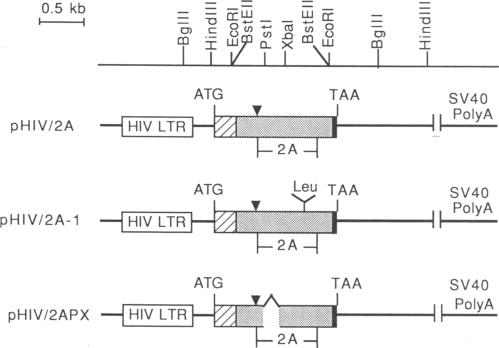
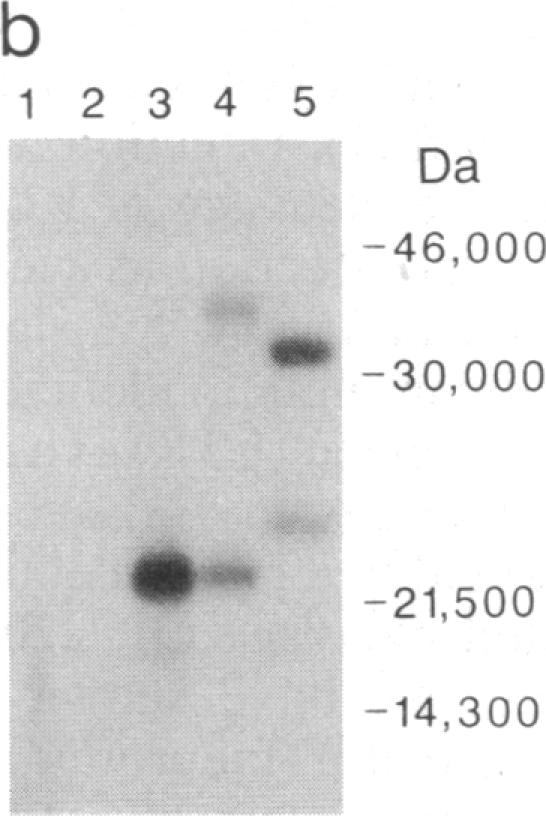
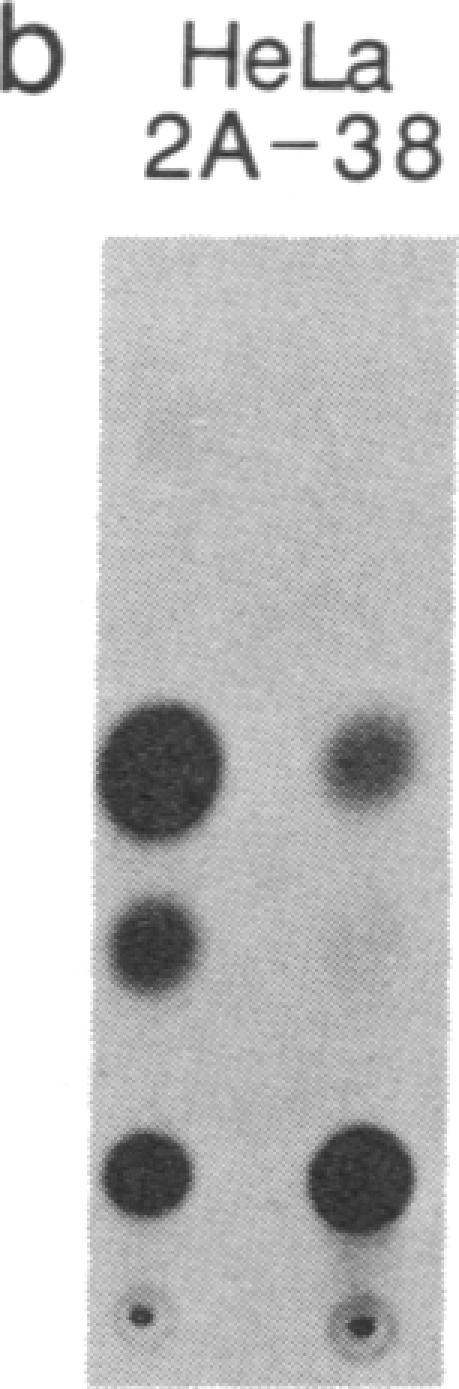
To study the effect of poliovirus protein 2A on cellular RNA translation, the tat control system of human immunodeficiency virus (HIV) was used. Protein 2A was expressed from a plasmid construct (pHIV/2A) incorporating the HIV long terminal repeat. Protein synthesis was measured by using chloramphenicol acetyltransferase as a reporter gene driven by the Rous sarcoma virus long terminal repeat. When HIV/2A was cotransfected with the reporter, addition of a tat-producing plasmid caused at least a 50-fold drop in chloramphenicol acetyltransferase synthesis. A HeLa cell line carrying HIV/2A was established. In it, tat expression caused more than a 10-fold drop in chloramphenicol acetyltransferase synthesis from the reporter plasmid. Furthermore, 2A induction by tat caused cleavage of the cellular translation factor P220, a part of eukaryotic translation initiation factor 4F. Thus protein 2A can, by itself, carry out the inhibition of cellular protein synthesis characteristic of a poliovirus infection. Also, the HIV tat activation provides a very effective method to control gene expression in mammalian cells.
为研究脊髓灰质炎病毒蛋白2A对细胞RNA翻译的影响,使用了人类免疫缺陷病毒(HIV)的tat控制系统。蛋白2A由一个整合了HIV长末端重复序列的质粒构建体(pHIV/2A)表达。通过使用氯霉素乙酰转移酶作为由劳氏肉瘤病毒长末端重复序列驱动的报告基因来测量蛋白质合成。当HIV/2A与报告基因共转染时,添加产生tat的质粒会导致氯霉素乙酰转移酶合成至少下降50倍。建立了携带HIV/2A的HeLa细胞系。在该细胞系中,tat表达导致报告质粒的氯霉素乙酰转移酶合成下降超过10倍。此外,tat诱导的2A导致细胞翻译因子P220(真核翻译起始因子4F的一部分)裂解。因此,蛋白2A自身就能实现脊髓灰质炎病毒感染所特有的对细胞蛋白质合成的抑制。而且,HIV tat激活为控制哺乳动物细胞中的基因表达提供了一种非常有效的方法。