Castelló Alfredo, Alvarez Enrique, Carrasco Luis
European Molecular Biology Laboratory (EMBL), Heidelberg, Germany.
J Biomed Biotechnol. 2011;2011:369648. doi: 10.1155/2011/369648. Epub 2011 Apr 14.
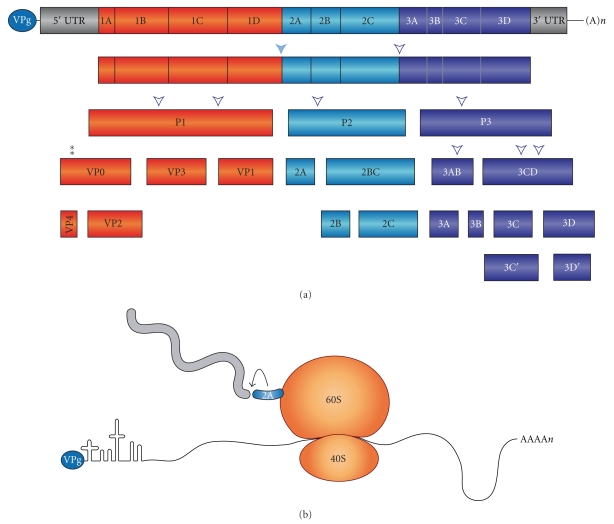
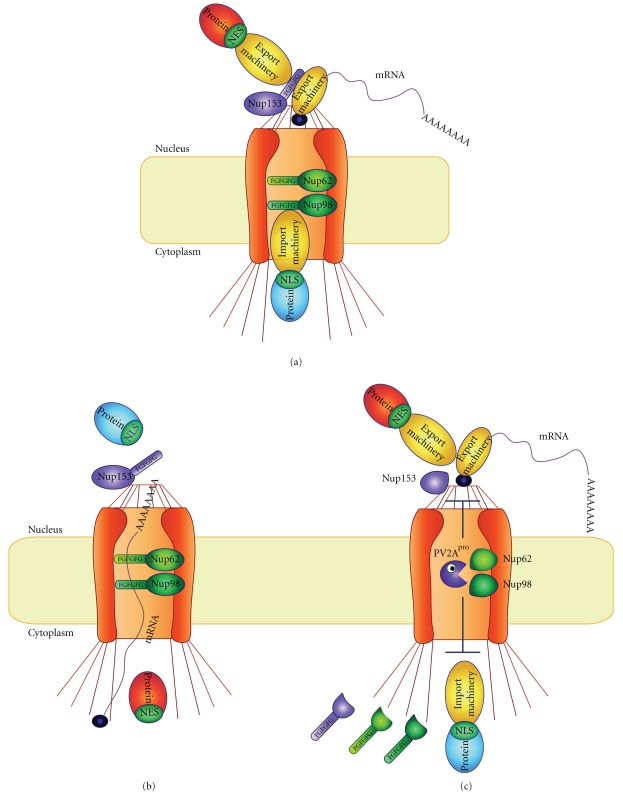
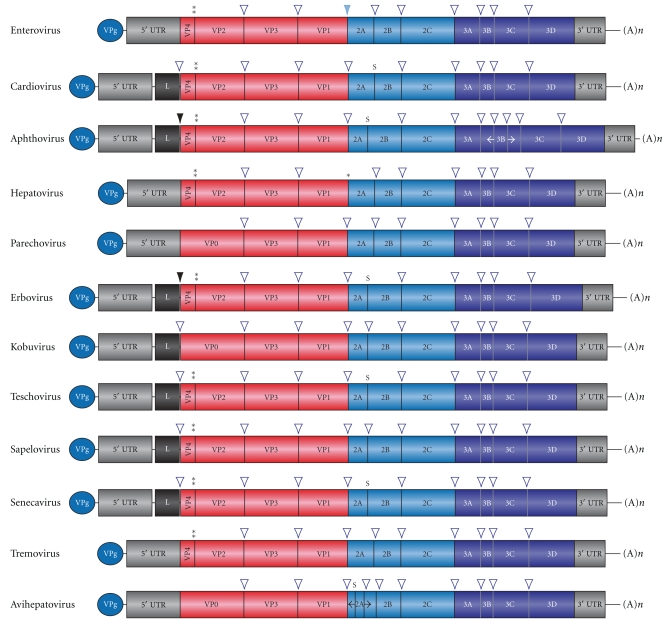
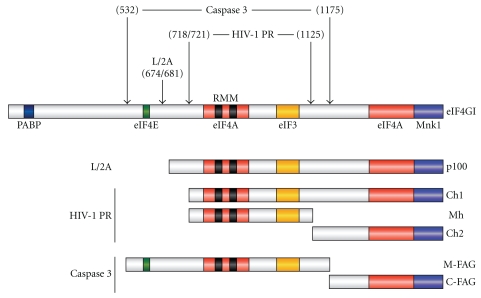
After entry into animal cells, most viruses hijack essential components involved in gene expression. This is the case of poliovirus, which abrogates cellular translation soon after virus internalization. Abrogation is achieved by cleavage of both eIF4GI and eIF4GII by the viral protease 2A. Apart from the interference of poliovirus with cellular protein synthesis, other gene expression steps such as RNA and protein trafficking between nucleus and cytoplasm are also altered. Poliovirus 2A(pro) is capable of hydrolyzing components of the nuclear pore, thus preventing an efficient antiviral response by the host cell. Here, we compare in detail poliovirus 2A(pro) with other viral proteins (from picornaviruses and unrelated families) as regard to their activity on key host factors that control gene expression. It is possible that future analyses to determine the cellular proteins targeted by 2A(pro) will uncover other cellular functions ablated by poliovirus infection. Further understanding of the cellular proteins hydrolyzed by 2A(pro) will add further insight into the molecular mechanism by which poliovirus and other viruses interact with the host cell.
进入动物细胞后,大多数病毒会劫持参与基因表达的关键成分。脊髓灰质炎病毒就是如此,它在病毒内化后不久就会废除细胞翻译。这种废除是通过病毒蛋白酶2A切割eIF4GI和eIF4GII来实现的。除了脊髓灰质炎病毒对细胞蛋白质合成的干扰外,其他基因表达步骤,如细胞核与细胞质之间的RNA和蛋白质运输也会发生改变。脊髓灰质炎病毒2A(pro)能够水解核孔的成分,从而阻止宿主细胞产生有效的抗病毒反应。在这里,我们详细比较了脊髓灰质炎病毒2A(pro)与其他病毒蛋白(来自小核糖核酸病毒和不相关的病毒家族)对控制基因表达的关键宿主因子的活性。未来确定2A(pro)靶向的细胞蛋白的分析有可能揭示脊髓灰质炎病毒感染所消除的其他细胞功能。对2A(pro)水解的细胞蛋白的进一步了解将进一步深入了解脊髓灰质炎病毒和其他病毒与宿主细胞相互作用的分子机制。