Estévez Sara, Marrero María Teresa, Quintana José, Estévez Francisco
Department of Biochemistry and Molecular Biology, University of Las Palmas de Gran Canaria, Las Palmas de Gran Canaria, Spain.
PLoS One. 2014 Nov 12;9(11):e112536. doi: 10.1371/journal.pone.0112536. eCollection 2014.
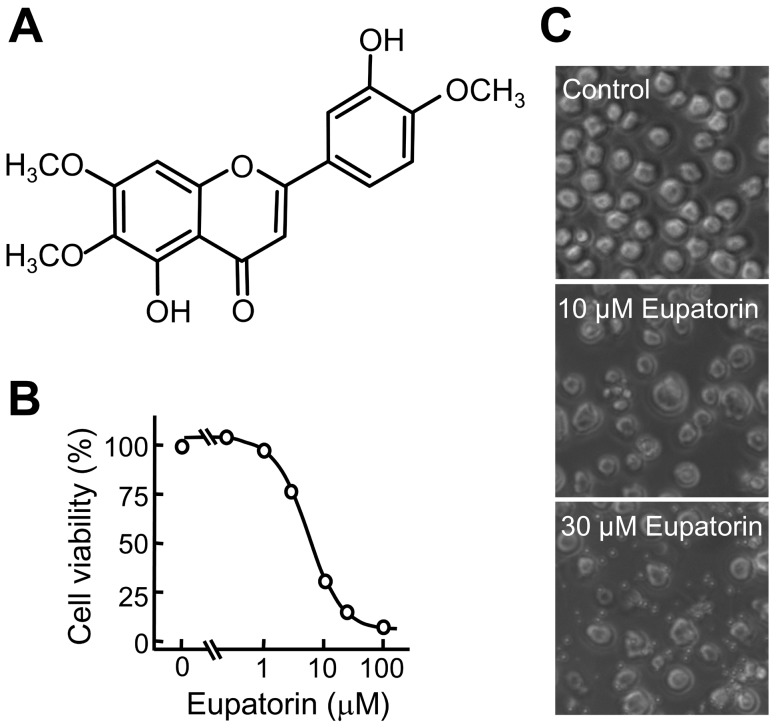
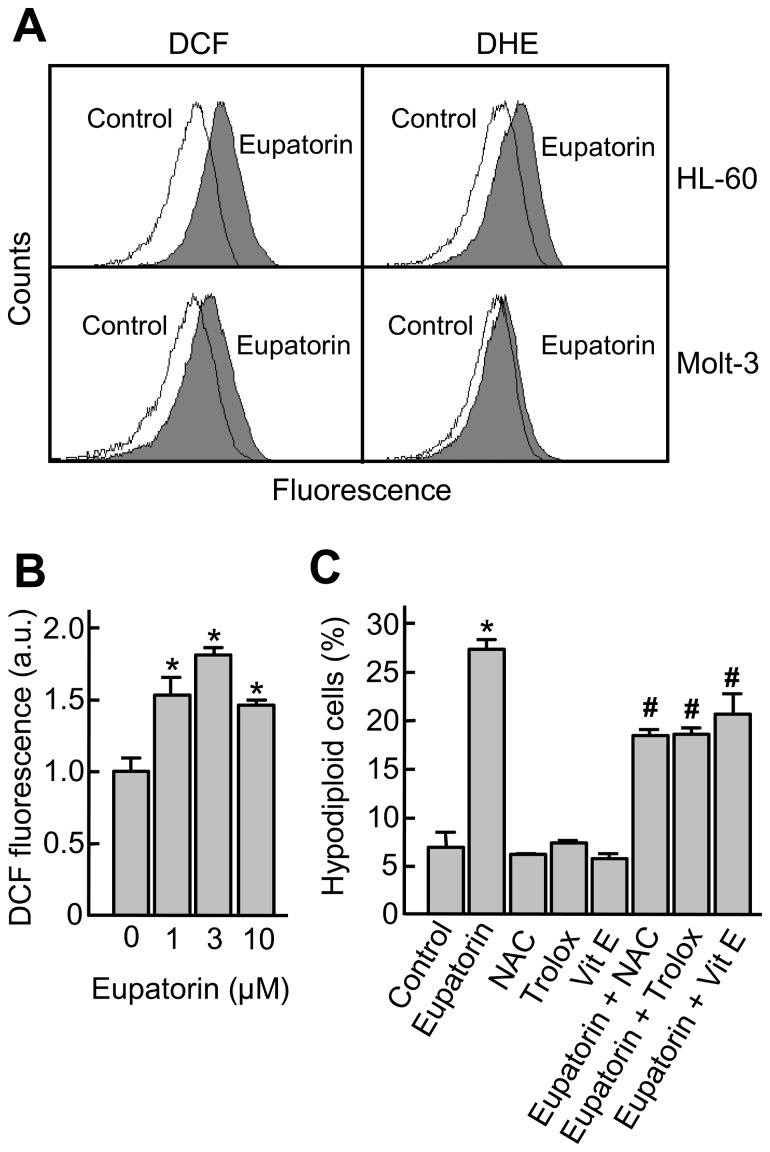
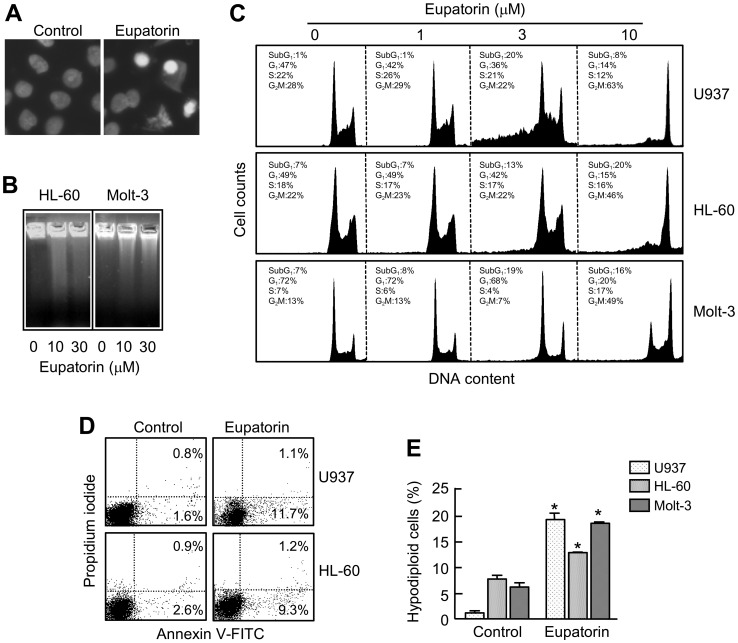
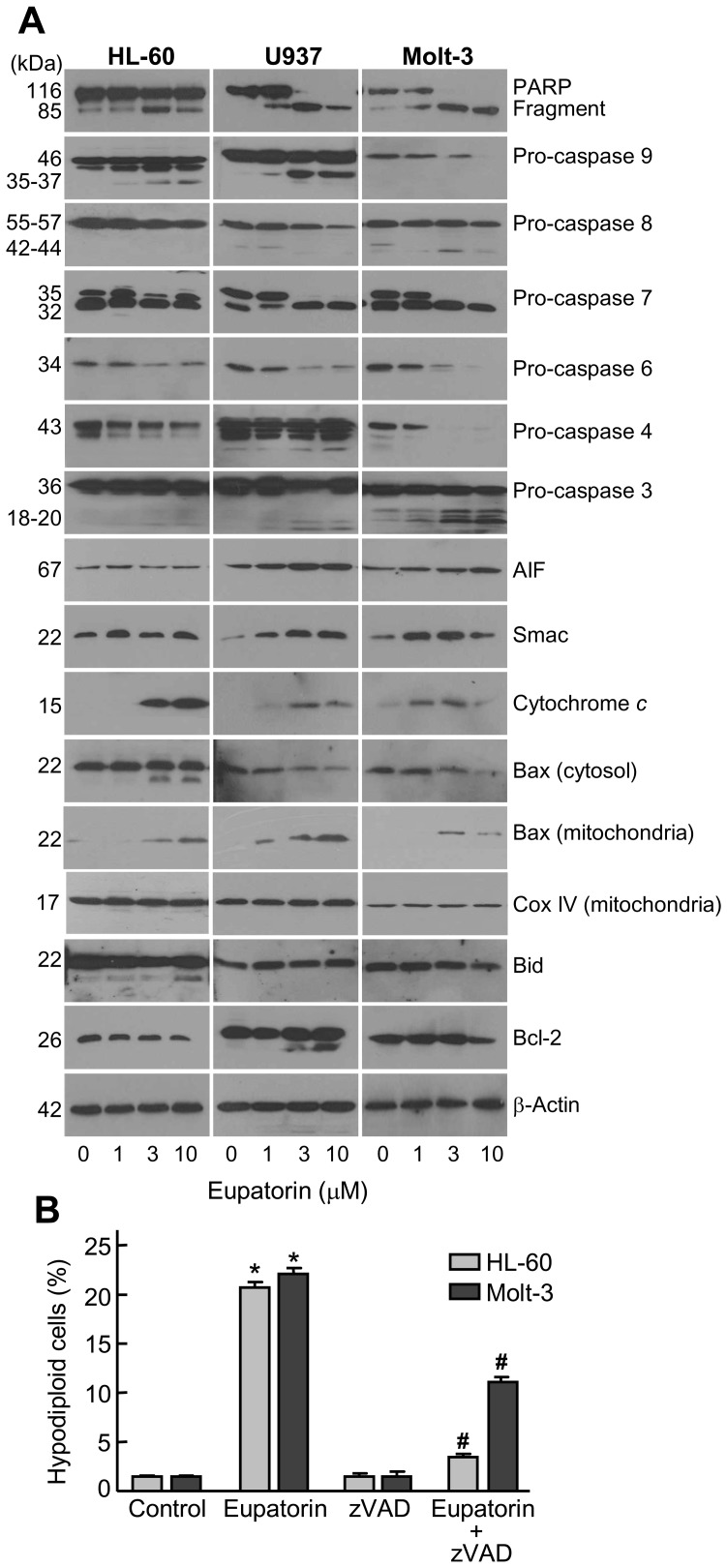
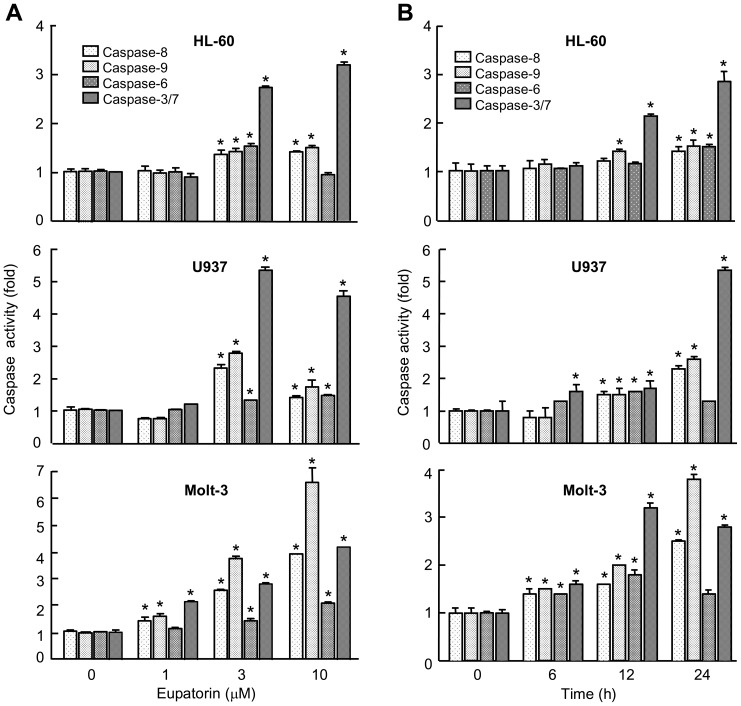
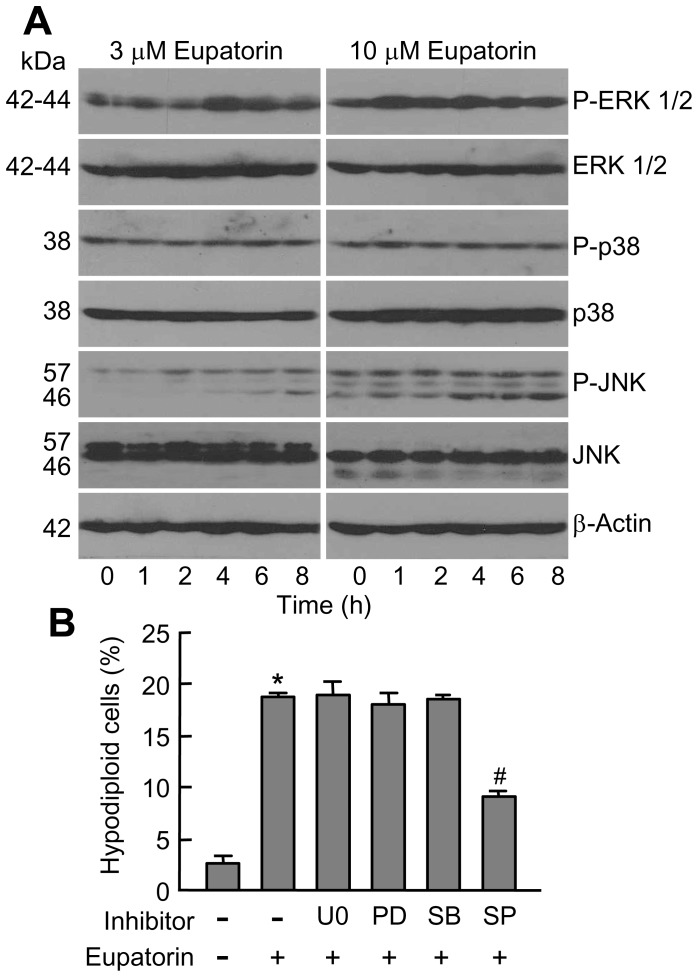
Eupatorin is a naturally occurring flavone that inhibits cell proliferation in human tumor cells. Here we demonstrate that eupatorin arrests cells at the G2-M phase of the cell cycle and induces apoptotic cell death involving activation of multiple caspases, mitochondrial release of cytochrome c and poly(ADP-ribose) polymerase cleavage in human leukemia cells. This flavonoid induced the phosphorylation of members of the mitogen-activated protein kinases and cell death was attenuated by inhibition of c-jun N-terminal kinases/stress activated protein kinases. Eupatorin-induced cell death is mediated by both the extrinsic and the intrinsic apoptotic pathways and through a mechanism dependent on reactive oxygen species generation.
泽兰黄酮是一种天然存在的黄酮,可抑制人类肿瘤细胞的增殖。在此我们证明,泽兰黄酮使细胞停滞于细胞周期的G2-M期,并在人类白血病细胞中诱导凋亡性细胞死亡,这涉及多种半胱天冬酶的激活、细胞色素c从线粒体释放以及聚(ADP-核糖)聚合酶的裂解。这种类黄酮诱导丝裂原活化蛋白激酶成员的磷酸化,并且通过抑制c-jun氨基末端激酶/应激激活蛋白激酶可减弱细胞死亡。泽兰黄酮诱导的细胞死亡是由外源性和内源性凋亡途径介导的,并且通过一种依赖于活性氧生成的机制介导。