Ogihara Kikumi, Naya Yuko, Okamoto Yoshiharu, Hata Keishi
School of Life and Environmental Science, Azabu University, 1-17-71 Fuchinobe, Chuo-ku, Sagamihara, Kanagawa, 252-5201 Japan.
Department of Veterinary Clinical Medicine, School of Veterinary Medicine, Faculty of Agriculture, Tottori University, 4-101, Koyama-Minami, Tottori, 680-8553 Japan.
Springerplus. 2014 Oct 25;3:632. doi: 10.1186/2193-1801-3-632. eCollection 2014.
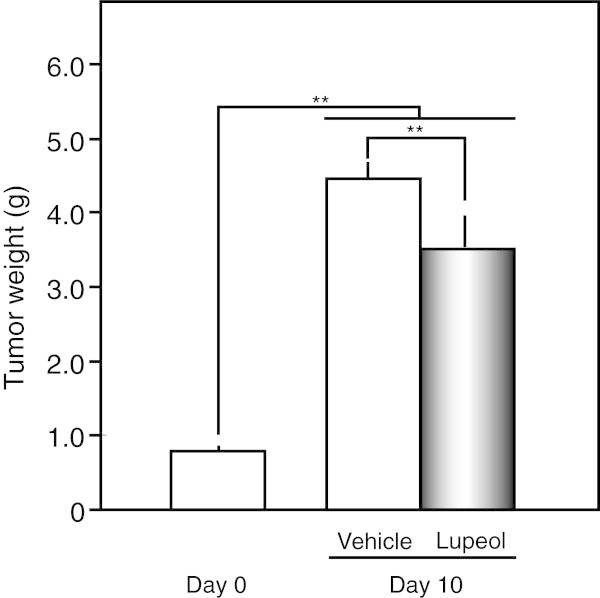
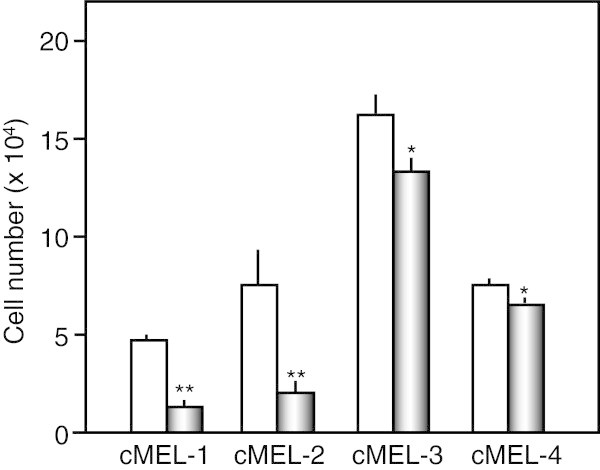
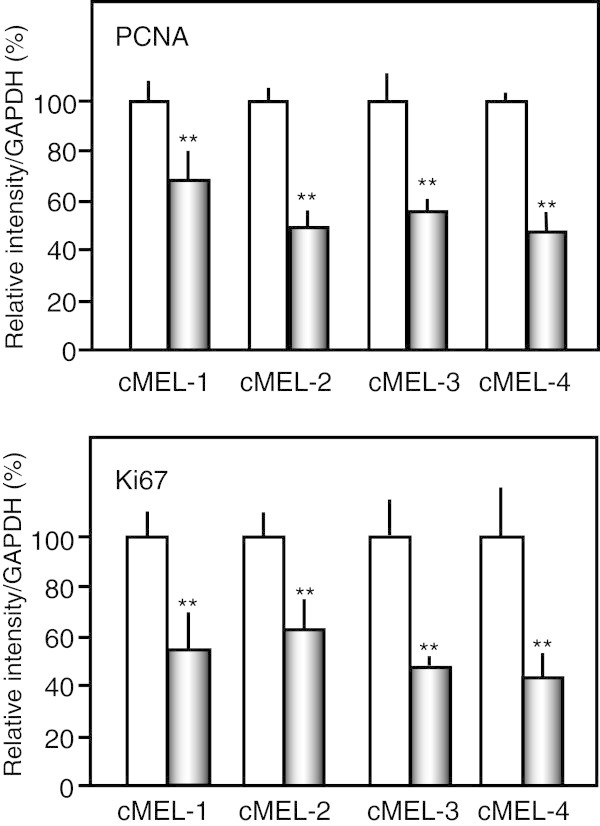
Canine melanoma is the most common oral malignant tumor reported in the field of veterinary medicine. We found that lupeol, a lupine triterpene, inhibited mouse melanoma cell growth in vitro and in vivo by inducing cell differentiation. In the present study, we examined the differentiation-inducing activities of lupeol on 4 canine melanoma cells in vitro and in vivo. The induction of canine melanoma cell differentiation by lupeol was confirmed by evaluating some differentiation markers such as tyrosinase with real-time RT-PCR. Furthermore, we transplanted canine melanoma cells into a severe combined immunodeficiency mouse, and studied the anti-progressive effects of lupeol on tumor tissue. The gene expression of microphthalmia-associated transcription factor, tyrosinase, and tyrosinase-related protein-2, which are markers of pigment cell differentiation, was induced in 4 canine oral malignant melanoma cells by lupeol, and the agent markedly inhibited tumor progression in canine melanoma-bearing mice.
犬黑色素瘤是兽医学领域报道的最常见的口腔恶性肿瘤。我们发现羽扇豆醇,一种羽扇豆三萜,通过诱导细胞分化在体外和体内抑制小鼠黑色素瘤细胞生长。在本研究中,我们检测了羽扇豆醇在体外和体内对4种犬黑色素瘤细胞的诱导分化活性。通过实时逆转录聚合酶链反应评估一些分化标志物如酪氨酸酶,证实了羽扇豆醇对犬黑色素瘤细胞分化的诱导作用。此外,我们将犬黑色素瘤细胞移植到严重联合免疫缺陷小鼠体内,研究羽扇豆醇对肿瘤组织的抗进展作用。羽扇豆醇在4种犬口腔恶性黑色素瘤细胞中诱导了小眼相关转录因子、酪氨酸酶和酪氨酸酶相关蛋白2的基因表达,这些是色素细胞分化的标志物,并且该药物显著抑制了荷犬黑色素瘤小鼠的肿瘤进展。