Department of Neurosurgery, Sir Charles Gairdner Hospital, Perth, Western Australia, Australia.
Department of Radiology, Gold Coast Hospital, Gold Coast, Queensland, Australia.
Global Spine J. 2014 Dec;4(4):229-32. doi: 10.1055/s-0034-1387808. Epub 2014 Sep 10.
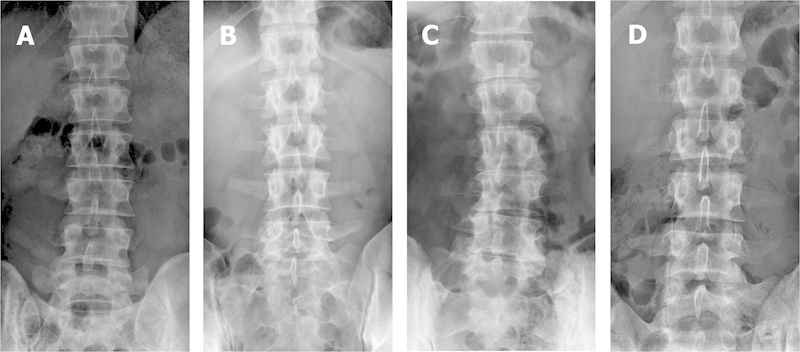
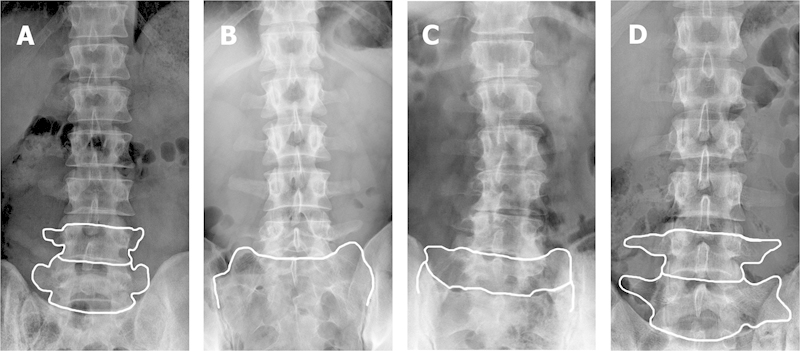
Study Design Retrospective cohort study. Objective Lumbosacral transitional vertebrae (LSTV) are a common congenital anomaly, and they can be accurately identified on anteroposterior (AP) radiographs of the lumbosacral spine. This study attempts to determine the prevalence of this congenital anomaly and to increase awareness among all clinicians to reduce the risk of surgical and procedural errors in patients with LSTV. Methods A retrospective review of 5,941 AP and lateral lumbar radiographs was performed. Transitional vertebrae were identified and categorized under the Castellvi classification. Results The prevalence of LSTV in the study population was 9.9%. Lumbarized S1 and sacralized L5 were seen in 5.8 and 4.1% of patients, respectively. Conclusion LSTV are a common normal variant and can be a factor in spinal surgery at incorrect levels. It is essential that all clinicians are aware of this common congenital anomaly.
回顾性队列研究。目的:腰骶移行椎(LSTV)是一种常见的先天性异常,在腰骶脊柱的前后位(AP)射线照片上可以准确识别。本研究试图确定这种先天性异常的发生率,并提高所有临床医生的认识,以降低 LSTV 患者手术和程序错误的风险。方法:对 5941 例腰骶部 AP 和侧位腰椎 X 线片进行回顾性分析。移行椎在 Castellvi 分类下被识别并分类。结果:研究人群中 LSTV 的患病率为 9.9%。腰椎化 S1 和骶骨化 L5 分别见于 5.8%和 4.1%的患者。结论:LSTV 是一种常见的正常变异,可能是脊柱手术中不正确水平的一个因素。所有临床医生都必须意识到这种常见的先天性异常。