Kasap Zerrin, Er Evren
Department of Physical Medicine and Rehabilitation, Giresun University Faculty of Medicine, Giresun, Türkiye.
Arch Rheumatol. 2025 Jun 23;40(2):242-248. doi: 10.5152/ArchRheumatol.2025.11106.
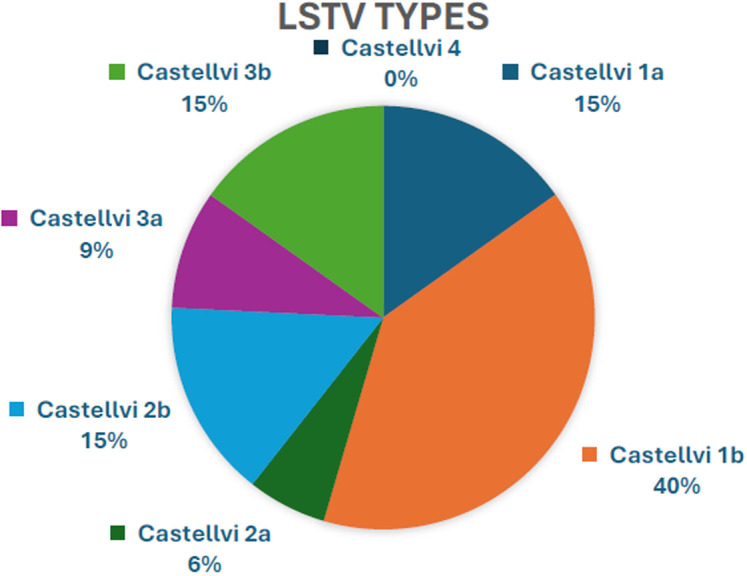
Background/Aims: Axial spondyloarthritis (axSpA) is characterized by low back pain and sacroiliitis. It is important to exclude other causes of sacroiliitis before diagnosing axSpA. It was hypothesized that as one of the reasons for low back pain and sacroiliitis, the presence of lumbosacral transitional vertebra (LSTV) could lead to diagnostic confusion in axSpA. This study aimed to investigate the prevalence of LSTV in axSpA patients and whether LSTV caused any differences in disease characteristics compared to patients without LSTV. Materials and Methods: This was a retrospective study. Patients with axSpA who had available pelvic and lumbosacral spine radiographs and were over 18 years old were included. They were divided into 2 groups based on the presence of LSTV. These groups were compared in terms of age, sex, r-axSpA prevalence, biologic disease-modifying antirheumatic drugs (DMARDs) usage rates, and C-reactive protein (CRP)/erythrocyte sedimentation rate (ESR) levels. Likewise, patients with available diseasespecific clinical scores (Ankylosing Spondylitis Disease Activity Score with C-reactive protein, Bath Ankylosing Spondylitis Disease Activity Index, Bath Ankylosing Spondylitis Functional Index, Bath Ankylosing Spondylitis Metrology Index [BASMI]) and those using biologic DMARDs were also divided into 2 groups based on the presence of LSTV and were analyzed accordingly. Results: A total of 130 patients (82 males, 48 females) were included. Ninety-five patients were using biologic DMARDs and 41 patients had available disease-specific clinical scores (only 19 had BASMI scores). The rate of presence of LSTV was 25.4% (n = 33). The most common type was Castellvi type 1b (39.4%). No significant differences were observed between axSpA patients with and without LSTV in terms of age, sex, r-axSpA prevalence, biologic DMARD usage, CRP/ESR levels, the number of different biologic DMARDs they had used, disease activity, physical function, and mobility. Conclusion: No diagnostic concerns were identified in axSpA patients with LSTV in this study. However, due to the high rate reported in this study, it is recommended that patients with LSTV undergo a more thorough evaluation prior to an axSpA diagnosis, with a diagnosis approach extending beyond simply meeting a set number of the Assessment in SpondyloArthritis international Society (ASAS) criteria.
背景/目的:中轴型脊柱关节炎(axSpA)的特征为腰背痛和骶髂关节炎。在诊断axSpA之前,排除骶髂关节炎的其他病因很重要。据推测,作为腰背痛和骶髂关节炎的原因之一,腰骶部移行椎(LSTV)的存在可能会导致axSpA诊断出现混淆。本研究旨在调查axSpA患者中LSTV的患病率,以及与无LSTV的患者相比,LSTV是否会导致疾病特征出现差异。材料与方法:这是一项回顾性研究。纳入年龄超过18岁且有可用骨盆和腰骶部脊柱X线片的axSpA患者。根据LSTV的存在情况将他们分为两组。比较两组在年龄、性别、放射学axSpA患病率、生物性改善病情抗风湿药物(DMARDs)使用率以及C反应蛋白(CRP)/红细胞沉降率(ESR)水平方面的差异。同样,对于有可用疾病特异性临床评分(C反应蛋白强直性脊柱炎疾病活动评分、巴斯强直性脊柱炎疾病活动指数、巴斯强直性脊柱炎功能指数、巴斯强直性脊柱炎测量指数[BASMI])的患者以及使用生物性DMARDs的患者,也根据LSTV的存在情况分为两组并进行相应分析。结果:共纳入130例患者(男性82例,女性48例)。95例患者使用生物性DMARDs,41例患者有可用的疾病特异性临床评分(只有19例有BASMI评分)。LSTV的存在率为25.4%(n = 33)。最常见的类型是Castellvi 1b型(39.4%)。在年龄、性别、放射学axSpA患病率、生物性DMARD使用情况、CRP/ESR水平、使用过的不同生物性DMARDs数量、疾病活动度、身体功能和活动能力方面,有LSTV和无LSTV的axSpA患者之间未观察到显著差异。结论:本研究中,LSTV的axSpA患者未发现诊断方面的问题。然而,由于本研究报告的发生率较高,建议LSTV患者在诊断axSpA之前接受更全面的评估,诊断方法不应仅仅局限于简单满足脊柱关节炎国际协会(ASAS)标准中的一定数量标准。