El-Ansary Afaf, Al-Ayadhi Laila
Biochemistry Department, Science College, King Saud University, PO box 22452, 11495, Riyadh, Saudi Arabia.
Autism Research and Treatment Center, Riyadh, Saudi Arabia.
J Neuroinflammation. 2014 Nov 19;11:189. doi: 10.1186/s12974-014-0189-0.
Autism spectrum disorder (ASD) is characterized by three core behavioral domains: social deficits, impaired communication, and repetitive behaviors. Glutamatergic/GABAergic imbalance has been found in various preclinical models of ASD. Additionally, autoimmunity immune dysfunction, and neuroinflammation are also considered as etiological mechanisms of this disorder. This study aimed to elucidate the relationship between glutamatergic/ GABAergic imbalance and neuroinflammation as two recently-discovered autism-related etiological mechanisms.
Twenty autistic patients aged 3 to 15 years and 19 age- and gender-matched healthy controls were included in this study. The plasma levels of glutamate, GABA and glutamate/GABA ratio as markers of excitotoxicity together with TNF-α, IL-6, IFN-γ and IFI16 as markers of neuroinflammation were determined in both groups.
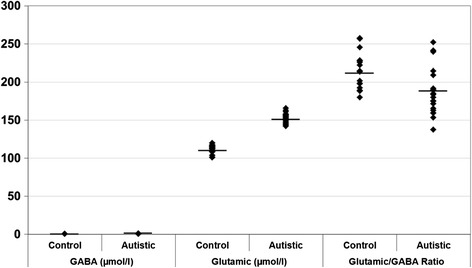
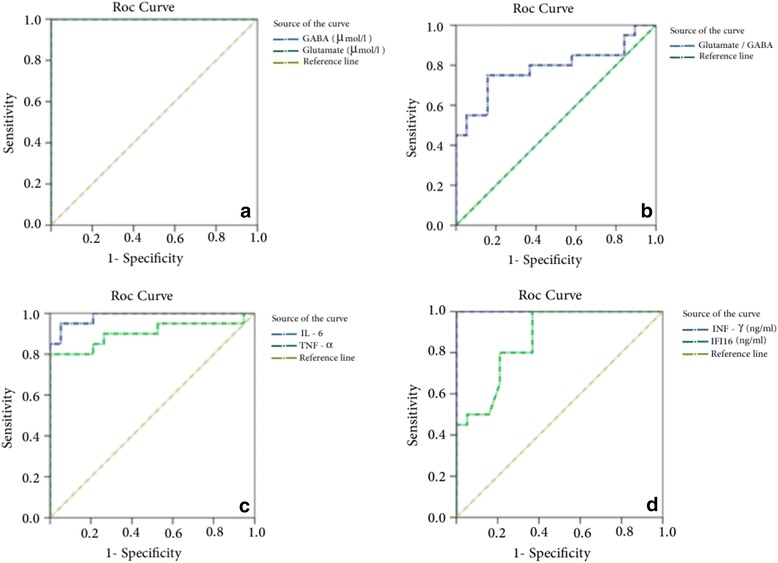
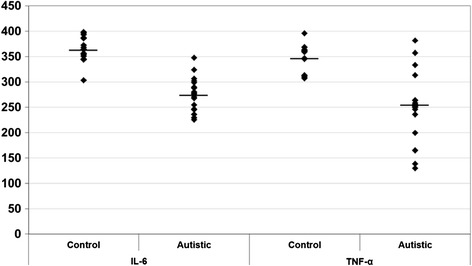
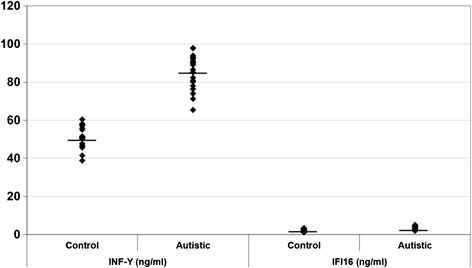
Autistic patients exhibited glutamate excitotoxicity based on a much higher glutamate concentration in the autistic patients than in the control subjects. Unexpectedly higher GABA and lower glutamate/GABA levels were recorded in autistic patients compared to control subjects. TNF-α and IL-6 were significantly lower, whereas IFN-γ and IFI16 were remarkably higher in the autistic patients than in the control subjects.
Multiple regression analysis revealed associations between reduced GABA level, neuroinflammation and glutamate excitotoxicity. This study indicates that autism is a developmental synaptic disorder showing imbalance in GABAergic and glutamatergic synapses as a consequence of neuroinflammation.
自闭症谱系障碍(ASD)的特征在于三个核心行为领域:社交缺陷、沟通障碍和重复行为。在ASD的各种临床前模型中发现了谷氨酸能/γ-氨基丁酸能(GABAergic)失衡。此外,自身免疫、免疫功能障碍和神经炎症也被认为是该疾病的病因机制。本研究旨在阐明谷氨酸能/GABAergic失衡与神经炎症这两种最近发现的与自闭症相关的病因机制之间的关系。
本研究纳入了20名3至15岁的自闭症患者和19名年龄及性别匹配的健康对照。测定了两组中作为兴奋性毒性标志物的谷氨酸、GABA和谷氨酸/GABA比值的血浆水平,以及作为神经炎症标志物的肿瘤坏死因子-α(TNF-α)、白细胞介素-6(IL-6)、干扰素-γ(IFN-γ)和IFI16。
自闭症患者表现出谷氨酸兴奋性毒性,因为自闭症患者的谷氨酸浓度比对照受试者高得多。与对照受试者相比,自闭症患者的GABA水平意外升高,谷氨酸/GABA水平降低。自闭症患者的TNF-α和IL-6显著低于对照受试者,而IFN-γ和IFI16则显著高于对照受试者。
多元回归分析揭示了GABA水平降低、神经炎症与谷氨酸兴奋性毒性之间的关联。本研究表明,自闭症是一种发育性突触障碍,由于神经炎症导致GABA能和谷氨酸能突触失衡。