Coimbra Institute for Biomedical Imaging and Translational Research (CIBIT), University of Coimbra, Coimbra, Portugal.
Institute of Nuclear Sciences Applied to Health (ICNAS), University of Coimbra, Coimbra, Portugal.
Biol Sex Differ. 2023 Apr 26;14(1):24. doi: 10.1186/s13293-023-00509-8.
Neurofibromatosis type 1 (NF1) is an inherited neurocutaneous disorder associated with neurodevelopmental disorders including autism spectrum disorder (ASD). This condition has been associated with an increase of gamma-aminobutyric acid (GABA) neurotransmission and, consequently, an excitation/inhibition imbalance associated with autistic-like behavior in both human and animal models. Here, we explored the influence of biological sex in the GABAergic system and behavioral alterations induced by the Nf1 mutation in a murine model.
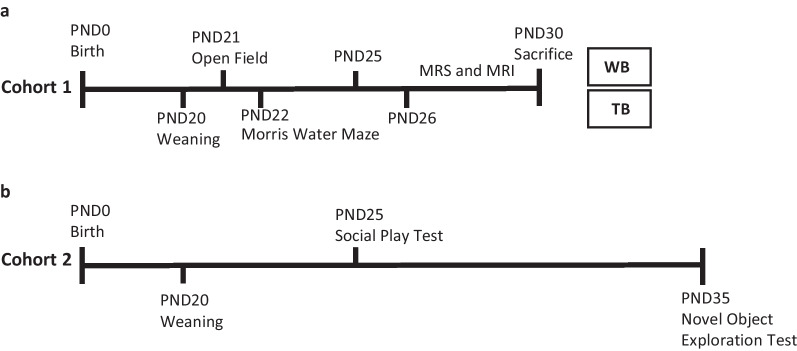
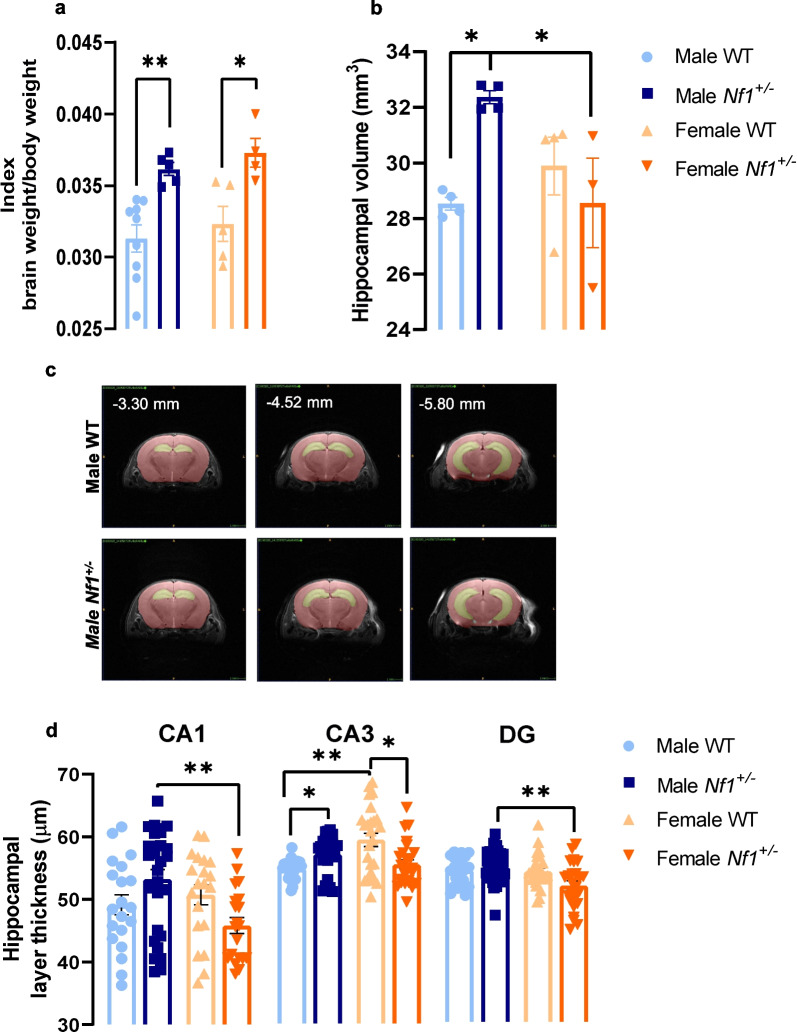
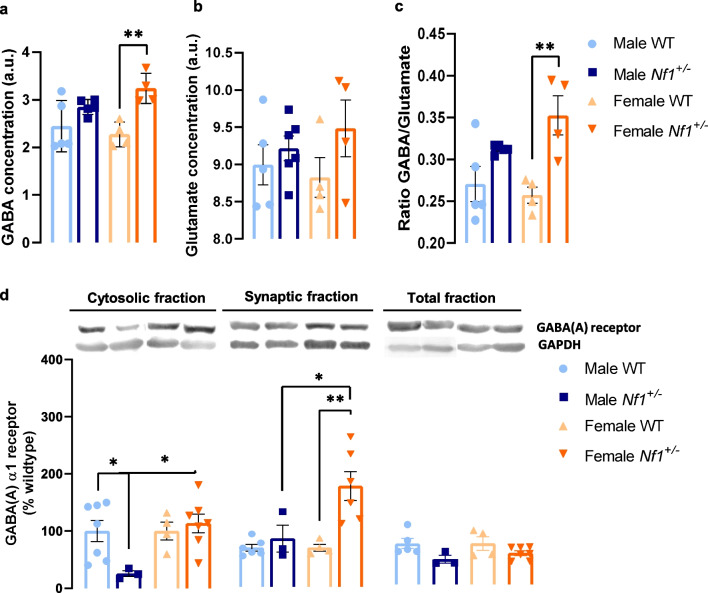
Juvenile male and female Nf1 mice and their wild-type (WT) littermates were used. Hippocampus size was assessed by conventional toluidine blue staining and structural magnetic resonance imaging (MRI). Hippocampal GABA and glutamate levels were determined by magnetic resonance spectroscopy (MRS), which was complemented by western blot for the GABA(A) receptor. Behavioral evaluation of on anxiety, memory, social communication, and repetitive behavior was performed.
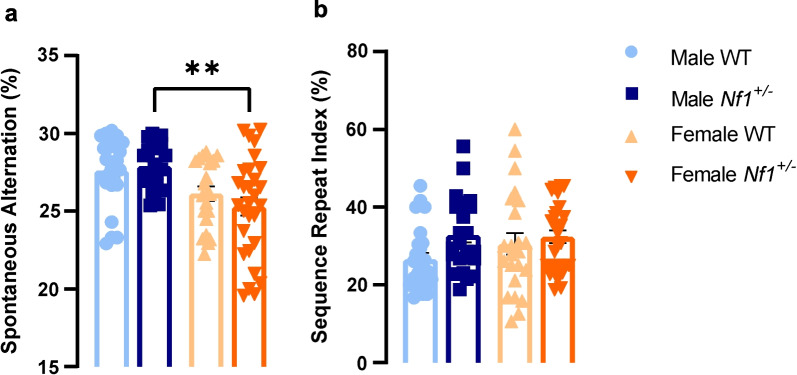
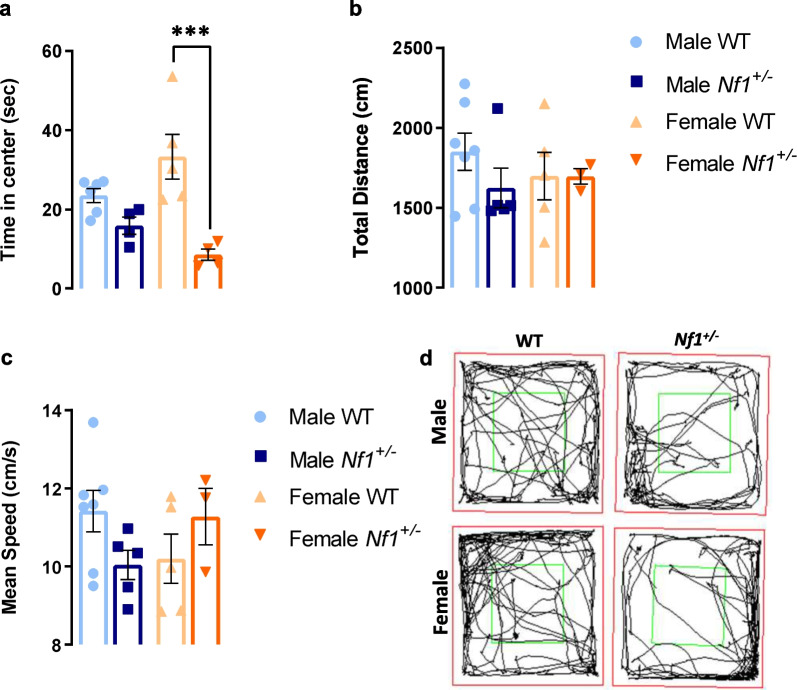
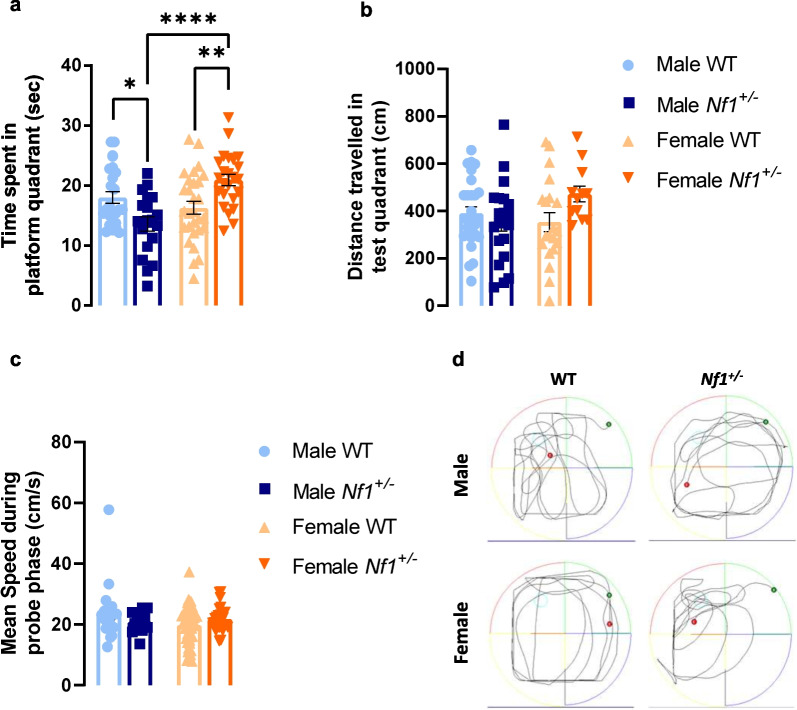
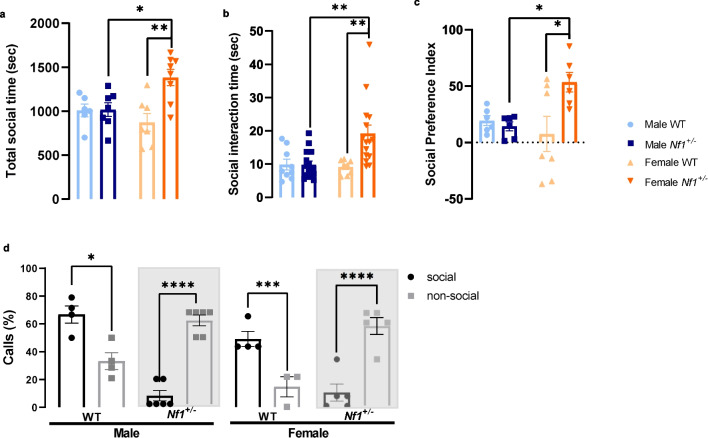
We found that juvenile female Nf1 mice exhibited increased hippocampal GABA levels. Moreover, mutant female displays a more prominent anxious-like behavior together with better memory performance and social behavior. On the other hand, juvenile Nf1 male mice showed increased hippocampal volume and thickness, with a decrease in GABA(A) receptor levels. We observed that mutant males had higher tendency for repetitive behavior.
Our results suggested a sexually dimorphic impact of Nf1 mutation in hippocampal neurochemistry, and autistic-like behaviors. For the first time, we identified a "camouflaging"-type behavior in females of an animal model of ASD, which masked their autistic traits. Accordingly, like observed in human disorder, in this animal model of ASD, females show larger anxiety levels but better executive functions and production of normative social patterns, together with an imbalance of inhibition/excitation ratio. Contrary, males have more externalizing disorders, such as hyperactivity and repetitive behaviors, with memory deficits. The ability of females to camouflage their autistic traits creates a phenotypic evaluation challenge that mimics the diagnosis difficulty observed in humans. Thus, we propose the study of the Nf1 mouse model to better understand the sexual dimorphisms of ASD phenotypes and to create better diagnostic tools.
神经纤维瘤病 1 型(NF1)是一种遗传性神经皮肤疾病,与包括自闭症谱系障碍(ASD)在内的神经发育障碍有关。这种情况与γ-氨基丁酸(GABA)神经递质的增加有关,因此,在人类和动物模型中,与自闭症样行为相关的兴奋/抑制失衡。在这里,我们研究了生物性别对 GABA 能系统的影响,以及 Nf1 突变在小鼠模型中引起的行为改变。
使用幼年雄性和雌性 Nf1 小鼠及其野生型(WT)同窝仔鼠。通过常规甲苯胺蓝染色和结构磁共振成像(MRI)评估海马体大小。通过磁共振波谱(MRS)测定海马 GABA 和谷氨酸水平,并通过 Western blot 测定 GABA(A)受体。进行焦虑、记忆、社会交流和重复行为的行为评估。
我们发现幼年雌性 Nf1 小鼠表现出海马 GABA 水平升高。此外,突变雌性表现出更明显的焦虑样行为,同时具有更好的记忆表现和社会行为。另一方面,幼年 Nf1 雄性小鼠表现出海马体积和厚度增加,GABA(A)受体水平降低。我们观察到突变雄性的重复行为倾向更高。
我们的结果表明 Nf1 突变对海马神经化学和自闭症样行为有性别二态的影响。我们首次在 ASD 动物模型的雌性中发现了一种“伪装”行为,掩盖了它们的自闭症特征。因此,与在人类疾病中观察到的一样,在这种 ASD 动物模型中,女性表现出更高的焦虑水平,但执行功能和产生正常社会模式的能力更好,同时抑制/兴奋比失衡。相反,男性有更多的外化障碍,如多动和重复行为,以及记忆缺陷。女性掩盖自闭症特征的能力造成了表型评估的挑战,这模仿了在人类中观察到的诊断困难。因此,我们建议研究 Nf1 小鼠模型,以更好地理解 ASD 表型的性别二态性,并创建更好的诊断工具。