Didiasova Miroslava, Wujak Lukasz, Wygrecka Malgorzata, Zakrzewicz Dariusz
Department of Biochemistry, Faculty of Medicine, University of Giessen Lung Center, Friedrichstrasse 24, 35392 Giessen, Germany.
Int J Mol Sci. 2014 Nov 17;15(11):21229-52. doi: 10.3390/ijms151121229.
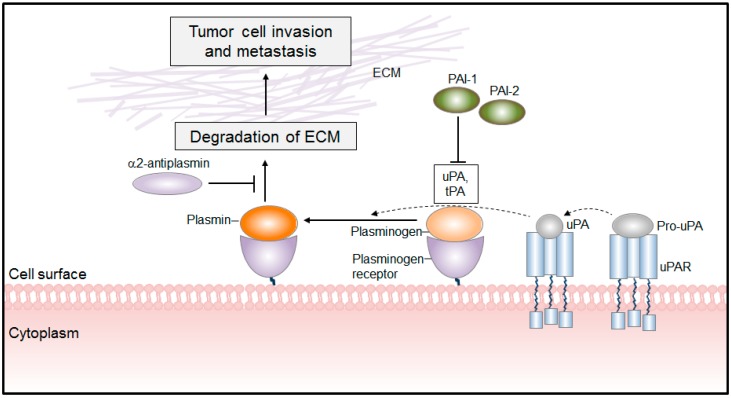
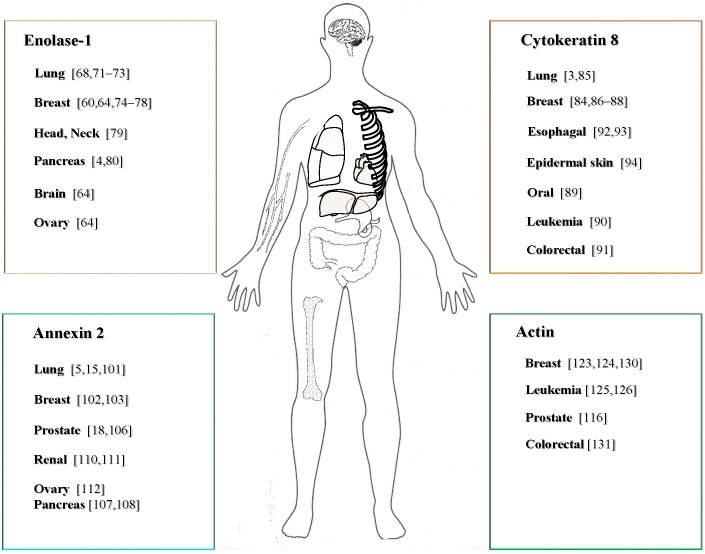
Cell surface-associated proteolysis mediated by plasmin (PLA) is an essential feature of wound healing, angiogenesis and cell invasion, processes that are dysregulated in cancer development, progression and systemic spread. The generation of PLA, initiated by the binding of its precursor plasminogen (PLG) to the cell surface, is regulated by an array of activators, inhibitors and receptors. In this review, we will highlight the importance of the best-characterized components of the PLG/PLA cascade in the pathogenesis of cancer focusing on the role of the cell surface-PLG receptors (PLG-R). PLG-R overexpression has been associated with poor prognosis of cancer patients and resistance to chemotherapy. We will also discuss recent findings on the molecular mechanisms regulating cell surface expression and distribution of PLG-R.
纤溶酶(PLA)介导的细胞表面相关蛋白水解是伤口愈合、血管生成和细胞侵袭的一个基本特征,而这些过程在癌症发展、进展和全身扩散中会失调。PLA由其前体纤溶酶原(PLG)与细胞表面结合引发产生,受一系列激活剂、抑制剂和受体调节。在本综述中,我们将重点关注细胞表面PLG受体(PLG-R)的作用,强调PLG/PLA级联中特征最明确的成分在癌症发病机制中的重要性。PLG-R过表达与癌症患者的不良预后和化疗耐药性相关。我们还将讨论调节PLG-R细胞表面表达和分布的分子机制的最新研究结果。