Limongi Roberto, Tomio Ailin, Ibanez Agustin
UDP-INECO Foundation Core on Neuroscience (UIFCoN), Diego Portales University Santiago, Chile.
Laboratory of Experimental Psychology and Neuroscience (LPEN), Institute of Cognitive Neurology (INECO), Favaloro University Buenos Aires, Argentina.
Front Behav Neurosci. 2014 Nov 4;8:380. doi: 10.3389/fnbeh.2014.00380. eCollection 2014.
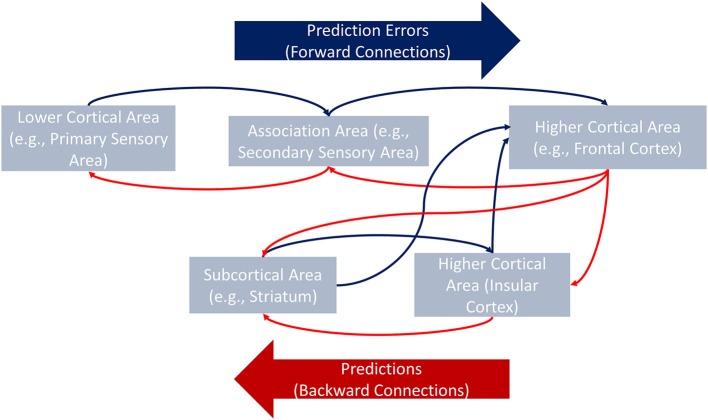
The insular cortex (IC) is considered a rich hub for context-sensitive emotions/social cognition. Patients with focal IC stroke provide unique opportunities to study socio-emotional processes. Nevertheless, Couto et al. (2013b) have recently reported controversial results regarding IC involvement in emotion and social cognition. Similarly, patients with similar lesions show high functional variability, ranging from almost totally preserved to strongly impaired behavior. Critical evidence suggests that the variability of these patients in the above domains can be explained by enhanced neuroplasticity, compensatory processes, and functional remapping after stroke. Therefore, socio-emotional processes would depend on long-distance connections between the IC and frontotemporal regions. We propose that predictive coding and effective connectivity represent a novel approach to explore functional connectivity and assess compensatory, contralateral, and subsidiary network differences among focal stroke patients. This approach would help explain why socio-emotional performance is so variable within this population.
岛叶皮质(IC)被认为是一个丰富的枢纽,用于处理情境敏感的情绪/社会认知。患有局灶性IC中风的患者为研究社会情感过程提供了独特的机会。然而,库托等人(2013年b)最近报告了关于IC参与情绪和社会认知的有争议的结果。同样,具有相似病变的患者表现出高度的功能变异性,行为从几乎完全保留到严重受损不等。关键证据表明,这些患者在上述领域的变异性可以通过中风后增强的神经可塑性、代偿过程和功能重新映射来解释。因此,社会情感过程将取决于IC与额颞叶区域之间的长距离连接。我们提出,预测编码和有效连接性代表了一种探索功能连接性并评估局灶性中风患者之间代偿性、对侧性和辅助性网络差异的新方法。这种方法将有助于解释为什么该人群中的社会情感表现如此多变。