Freimann Remo, Bürgmann Helmut, Findlay Stuart E G, Robinson Christopher T
Institute of Molecular Health Sciences, Professorship of Genetics, ETH Zurich, Zurich, Switzerland; Department of Aquatic Ecology, Swiss Federal Institute of Aquatic Science and Technology, Eawag, Dübendorf, Switzerland and Institute of Integrative Biology, ETH-Zurich, Zurich, Switzerland.
Department of Surface Waters - Research and Management, Swiss Federal Institute of Aquatic Science and Technology, Eawag, Kastanienbaum, Switzerland.
PLoS One. 2014 Nov 19;9(11):e113524. doi: 10.1371/journal.pone.0113524. eCollection 2014.
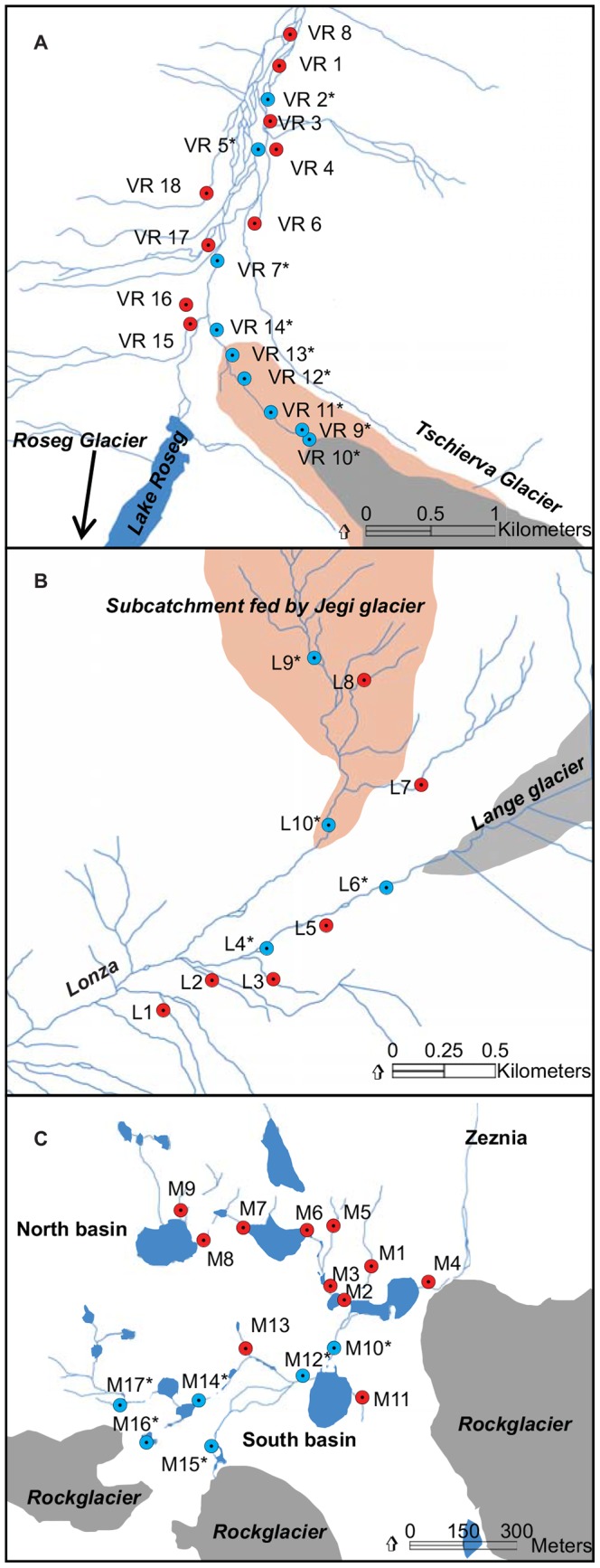
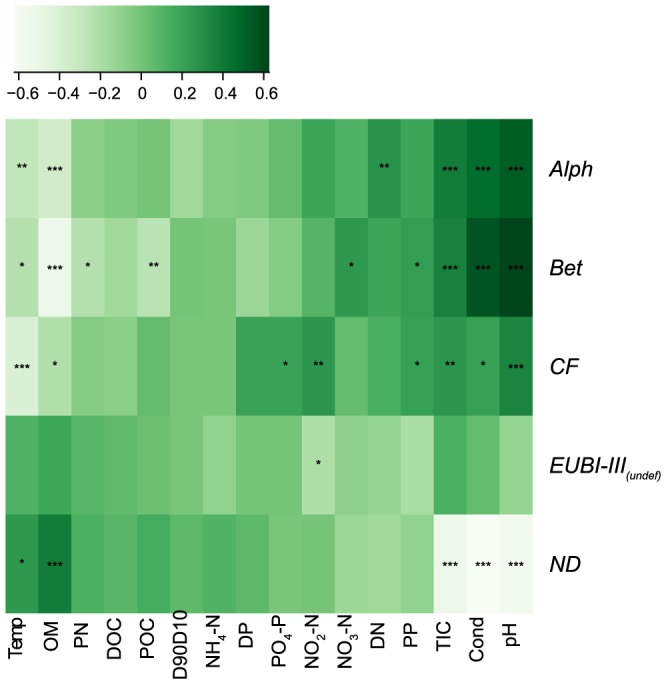
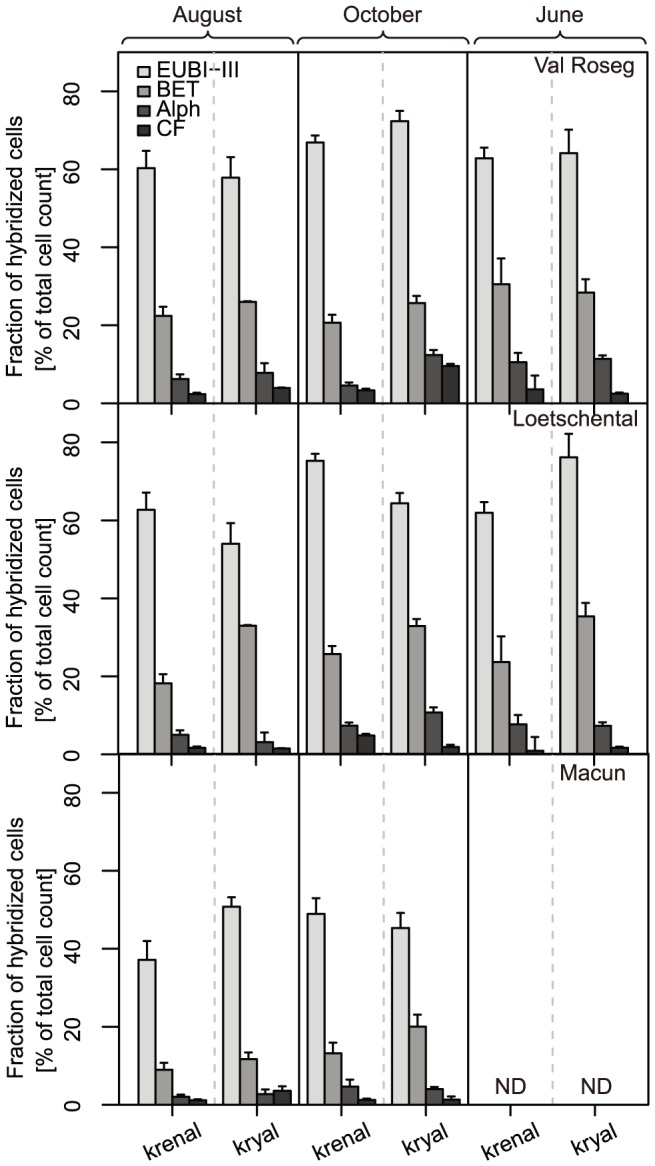
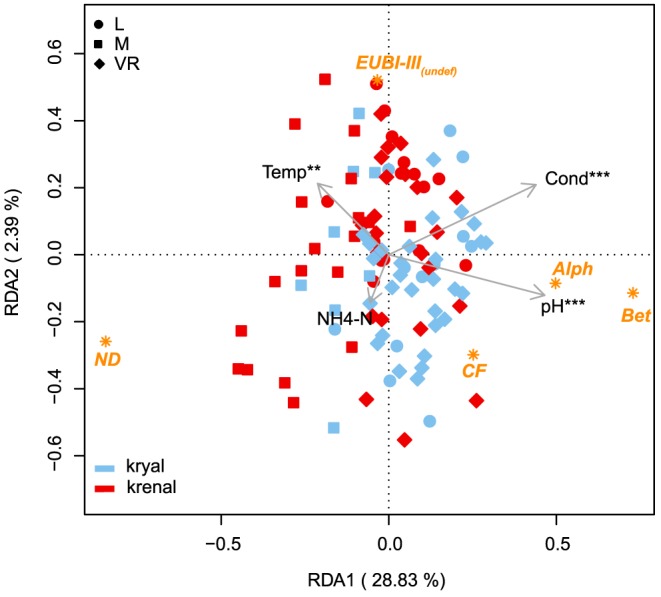
Glacial alpine landscapes are undergoing rapid transformation due to changes in climate. The loss of glacial ice mass has directly influenced hydrologic characteristics of alpine floodplains. Consequently, hyporheic sediment conditions are likely to change in the future as surface waters fed by glacial water (kryal) become groundwater dominated (krenal). Such environmental shifts may subsequently change bacterial community structure and thus potential ecosystem functioning. We quantitatively investigated the structure of major bacterial groups in glacial and groundwater-fed streams in three alpine floodplains during different hydrologic periods. Our results show the importance of several physico-chemical variables that reflect local geological characteristics as well as water source in structuring bacterial groups. For instance, Alpha-, Betaproteobacteria and Cytophaga-Flavobacteria were influenced by pH, conductivity and temperature as well as by inorganic and organic carbon compounds, whereas phosphorous compounds and nitrate showed specific influence on single bacterial groups. These results can be used to predict future bacterial group shifts, and potential ecosystem functioning, in alpine landscapes under environmental transformation.
由于气候变化,冰川高山景观正在经历快速转变。冰川冰量的损失直接影响了高山洪泛平原的水文特征。因此,随着由冰川水补给的地表水(低温水)转变为以地下水为主(中温水),未来潜流沉积物条件可能会发生变化。这种环境变化可能随后改变细菌群落结构,进而影响潜在的生态系统功能。我们定量研究了三个高山洪泛平原在不同水文时期冰川补给河流和地下水补给河流中主要细菌类群的结构。我们的结果表明,几个反映当地地质特征以及水源的物理化学变量在构建细菌类群方面具有重要意义。例如,α-变形菌纲、β-变形菌纲以及噬纤维菌-黄杆菌纲受pH值、电导率、温度以及无机和有机碳化合物的影响,而磷化合物和硝酸盐对单个细菌类群有特定影响。这些结果可用于预测环境转变下高山景观中未来细菌类群的变化以及潜在的生态系统功能。