Coulter Rachel Anastasia, Bade Annette, Tea Yin, Fecho Gregory, Amster Deborah, Jenewein Erin, Rodena Jacqueline, Lyons Kara Kelley, Mitchell G Lynn, Quint Nicole, Dunbar Sandra, Ricamato Michele, Trocchio Jennie, Kabat Bonnie, Garcia Chantel, Radik Irina
*OD, MS, FAAO †OD, FAAO ‡OD §PsyD ∥MAS, FAAO **DrOT, OTR/L ††DPA, OTR/L ‡‡MA, CCC-SLP §§PhD ∥∥BA College of Optometry (RAC, AB, YT, GF, DA, EJ, JR, CG, IR), and College of Health Care Sciences (NQ, SD), Nova Southeastern University, Fort Lauderdale, Florida; Neurocognitive Consultants, North Miami, Florida (KKL); The Ohio State University College of Optometry, Columbus, Ohio (GLM); Soaring Eagle Academy, Burr Ridge, Illinois (MR); CasaBlanca Academy, Hollywood, Florida (JT); and Educational Specialist, Fort Lauderdale, Florida (BK).
Optom Vis Sci. 2015 Jan;92(1):31-43. doi: 10.1097/OPX.0000000000000442.
To compare testability of vision and eye tests in an examination protocol of 9- to 17-year-old patients with autism spectrum disorder (ASD) to typically developing (TD) peers.
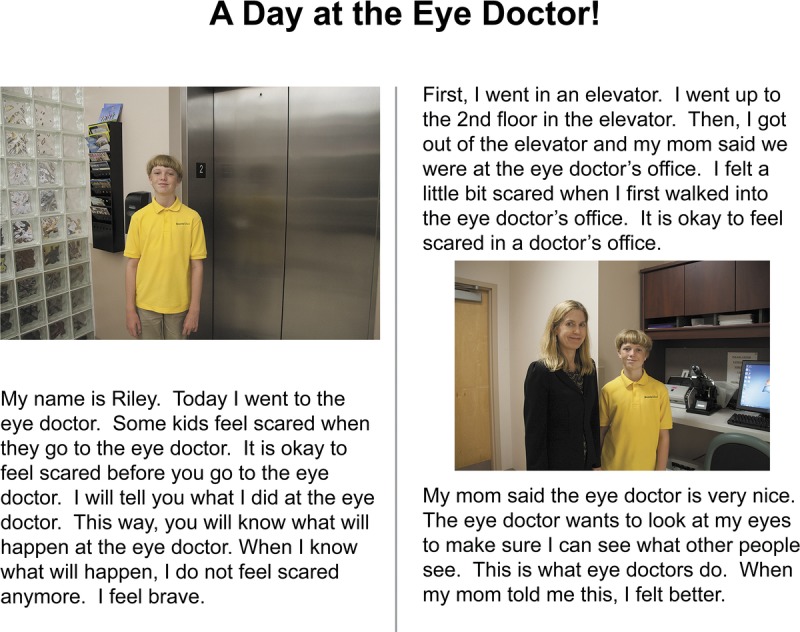
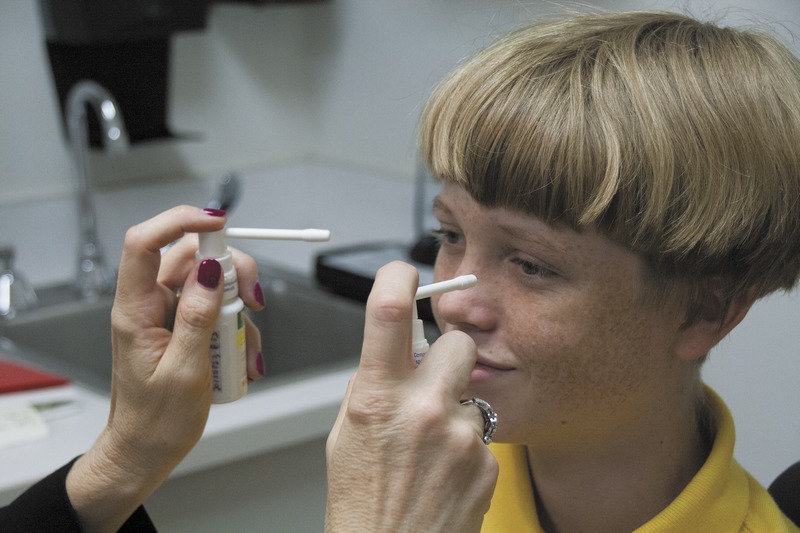
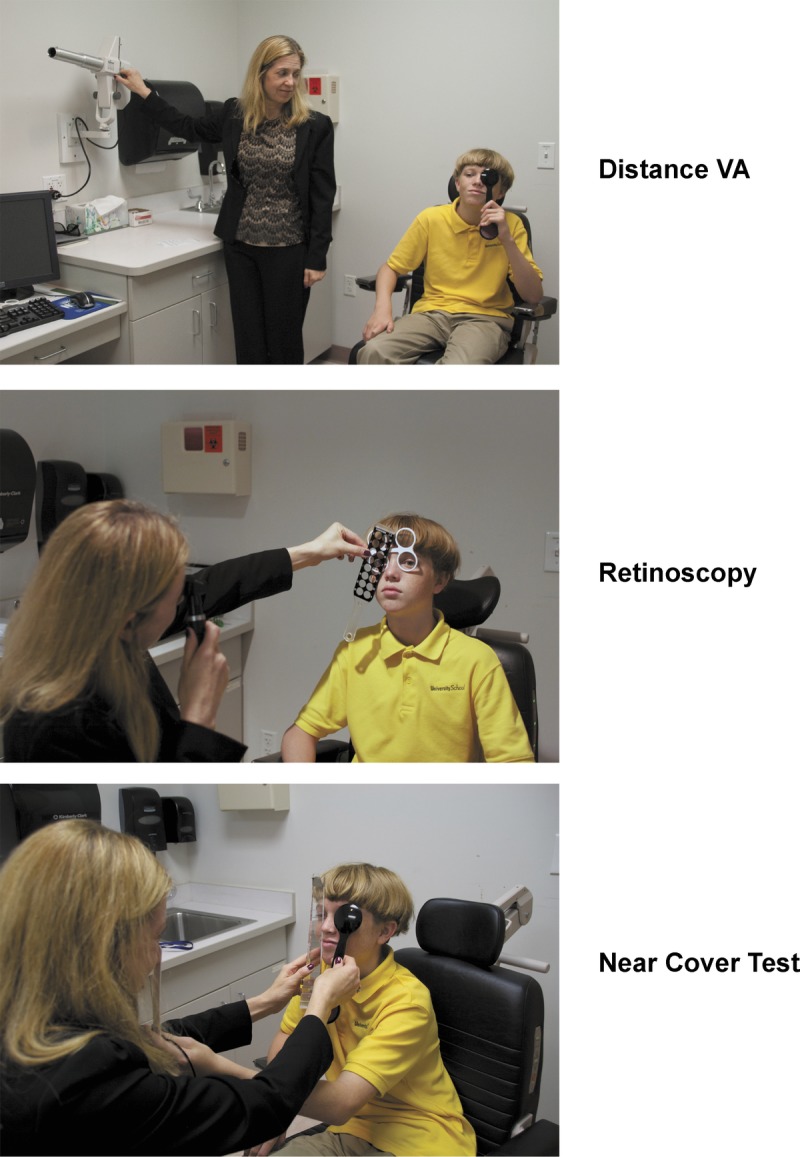
In a prospective pilot study, 61 children and adolescents (34 with ASD and 27 who were TD) aged 9 to 17 years completed an eye examination protocol including tests of visual acuity, refraction, convergence (eye teaming), stereoacuity (depth perception), ocular motility, and ocular health. Patients who required new refractive correction were retested after wearing their updated spectacle prescription for 1 month. The specialized protocol incorporated visual, sensory, and communication supports. A psychologist determined group status/eligibility using DSM-IV-TR (Diagnostic and Statistical Manual of Mental Disorders, Fourth Edition, Text Revision) criteria by review of previous evaluations and parent responses on the Social Communication Questionnaire. Before the examination, parents provided information regarding patients' sex, race, ethnicity, and, for ASD patients, verbal communication level (nonverbal, uses short words, verbal). Parents indicated whether the patient wore a refractive correction, whether the patient had ever had an eye examination, and the age at the last examination. Chi-square tests compared testability results for TD and ASD groups.
Typically developing and ASD groups did not differ by age (p = 0.54), sex (p = 0.53), or ethnicity (p = 0.22). Testability was high on most tests (TD, 100%; ASD, 88 to 100%), except for intraocular pressure (IOP), which was reduced for both the ASD (71%) and the TD (89%) patients. Among ASD patients, IOP testability varied greatly with verbal communication level (p < 0.001). Although IOP measurements were completed on all verbal patients, only 37.5% of nonverbal and 44.4% of ASD patients who used short words were successful.
Patients with ASD can complete most vision and eye tests within an examination protocol. Testability of IOPs is reduced, particularly for nonverbal patients and patients who use short words to communicate.
比较9至17岁自闭症谱系障碍(ASD)患者与发育正常(TD)同龄人在视力和眼部检查方案中的可测试性。
在一项前瞻性试点研究中,61名9至17岁的儿童和青少年(34名患有ASD,27名发育正常)完成了一项眼部检查方案,包括视力、验光、集合(双眼协同)、立体视(深度感知)、眼球运动和眼部健康测试。需要新的屈光矫正的患者在佩戴更新后的眼镜处方1个月后重新进行测试。该专门方案纳入了视觉、感觉和沟通支持。一名心理学家通过回顾先前的评估和家长在社交沟通问卷上的回答,使用《精神疾病诊断与统计手册》第四版修订本(DSM-IV-TR)标准确定组别状态/资格。在检查前,家长提供了有关患者的性别、种族、民族的信息,对于患有ASD的患者,还提供了语言沟通水平(非语言型、使用简短词汇、语言型)的信息。家长指出患者是否佩戴屈光矫正眼镜,患者是否曾进行过眼部检查,以及上次检查的年龄。卡方检验比较了TD组和ASD组的可测试性结果。
发育正常组和ASD组在年龄(p = 0.54)、性别(p = 0.53)或民族(p = 0.22)方面没有差异。除眼压(IOP)测试外,大多数测试的可测试性都很高(TD组为100%;ASD组为88%至100%),ASD患者(71%)和TD患者(89%)的眼压测试可测试性均降低。在ASD患者中,眼压测试的可测试性因语言沟通水平而有很大差异(p < 0.001)。虽然所有语言型患者都完成了眼压测量,但只有37.5%的非语言型患者和44.4%使用简短词汇的ASD患者测量成功。
ASD患者可以在检查方案内完成大多数视力和眼部测试。眼压测试的可测试性降低,特别是对于非语言型患者和使用简短词汇进行沟通的患者。