Levy Moshe, Rizansky Nir Adi
School of Business, The Hebrew University, Jerusalem, Israel.
PLoS One. 2014 Nov 25;9(11):e113894. doi: 10.1371/journal.pone.0113894. eCollection 2014.
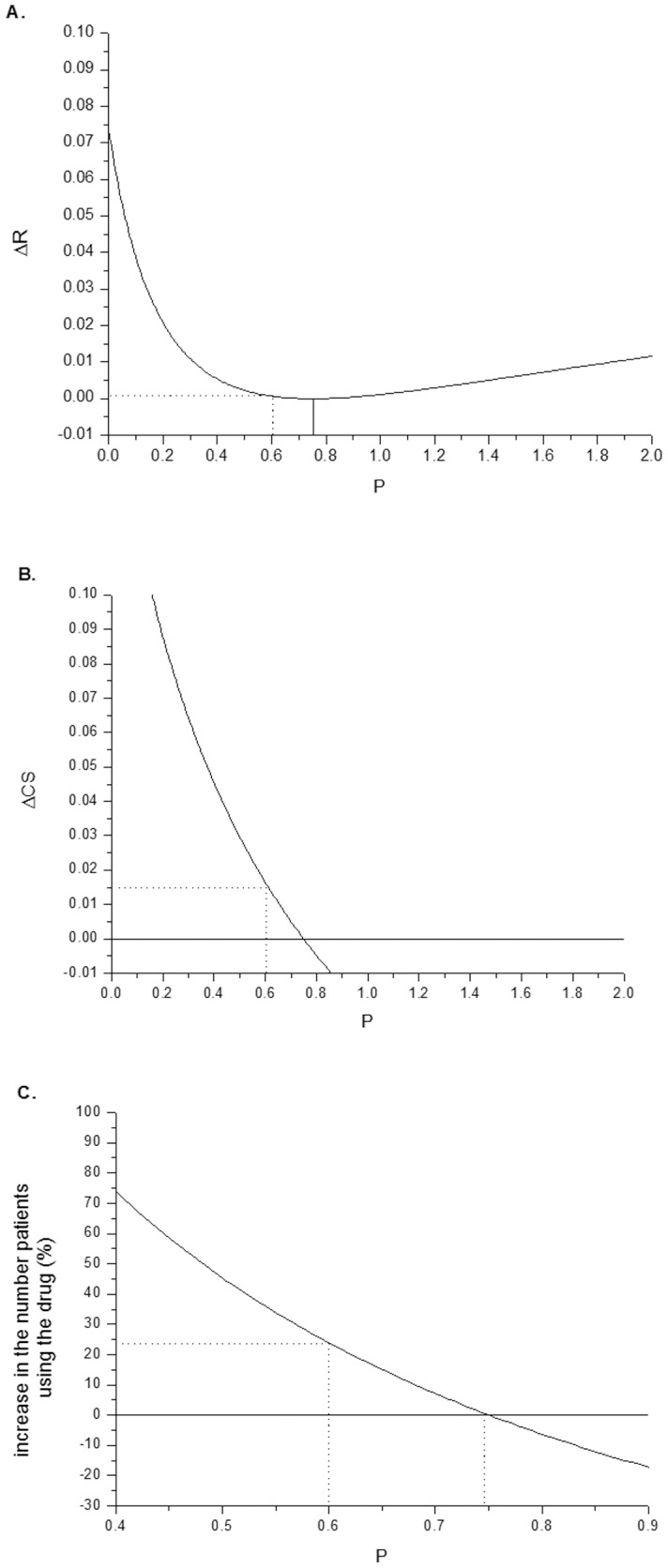
Pharmaceutical sales exceed $850 billion a year, of which 84% are accounted for by brand drugs. Drug prices are the focus of an ongoing heated debate. While some argue that pharmaceutical companies exploit monopolistic power granted by patent protection to set prices that are "too high", others claim that these prices are necessary to motivate the high R&D investments required in the pharmaceutical industry. This paper employs a recently documented utility function of health and wealth to derive the theoretically optimal pricing of monopolistic breakthrough drugs. This model provides a framework for a quantitative discussion of drug price regulation. We show that mild price regulation can substantially increase consumer surplus and the number of patients who purchase the drug, while having only a marginal effect on the revenues of the pharmaceutical company.
药品销售额每年超过8500亿美元,其中84%由品牌药占据。药品价格是当前激烈辩论的焦点。一些人认为制药公司利用专利保护赋予的垄断权力设定“过高”的价格,而另一些人则声称这些价格对于推动制药行业所需的高额研发投资是必要的。本文采用最近记录的健康与财富效用函数来推导垄断性突破性药物的理论最优定价。该模型为药品价格监管的定量讨论提供了一个框架。我们表明,温和的价格监管可以大幅增加消费者剩余和购买该药物的患者数量,而对制药公司的收入仅有微不足道的影响。