Laboratorio de Neurobiología, Departamento Fisiología, Facultad de Ciencias Biológicas, Pontificia Universidad Católica de Chile Santiago, Chile ; Laboratory of Cardiorespiratory Control, Center of Biomedical Research, Universidad Autónoma de Chile Santiago, Chile.
Laboratorio de Neurobiología, Departamento Fisiología, Facultad de Ciencias Biológicas, Pontificia Universidad Católica de Chile Santiago, Chile.
Front Physiol. 2014 Nov 12;5:434. doi: 10.3389/fphys.2014.00434. eCollection 2014.
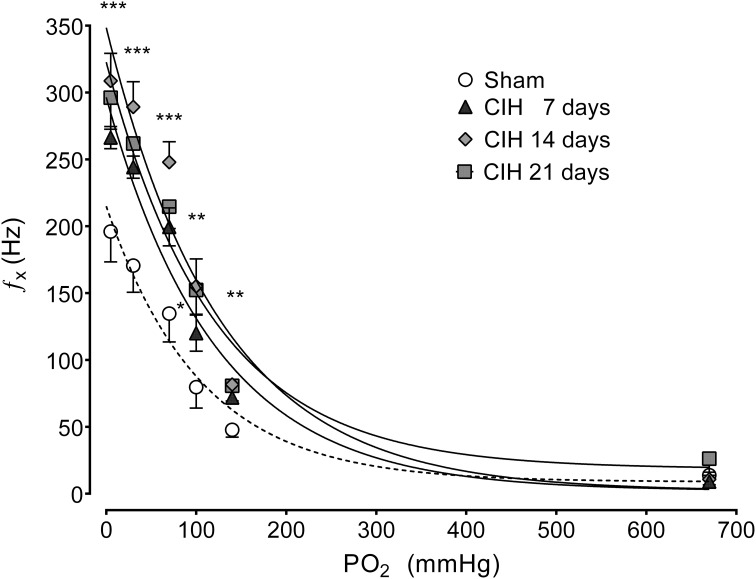
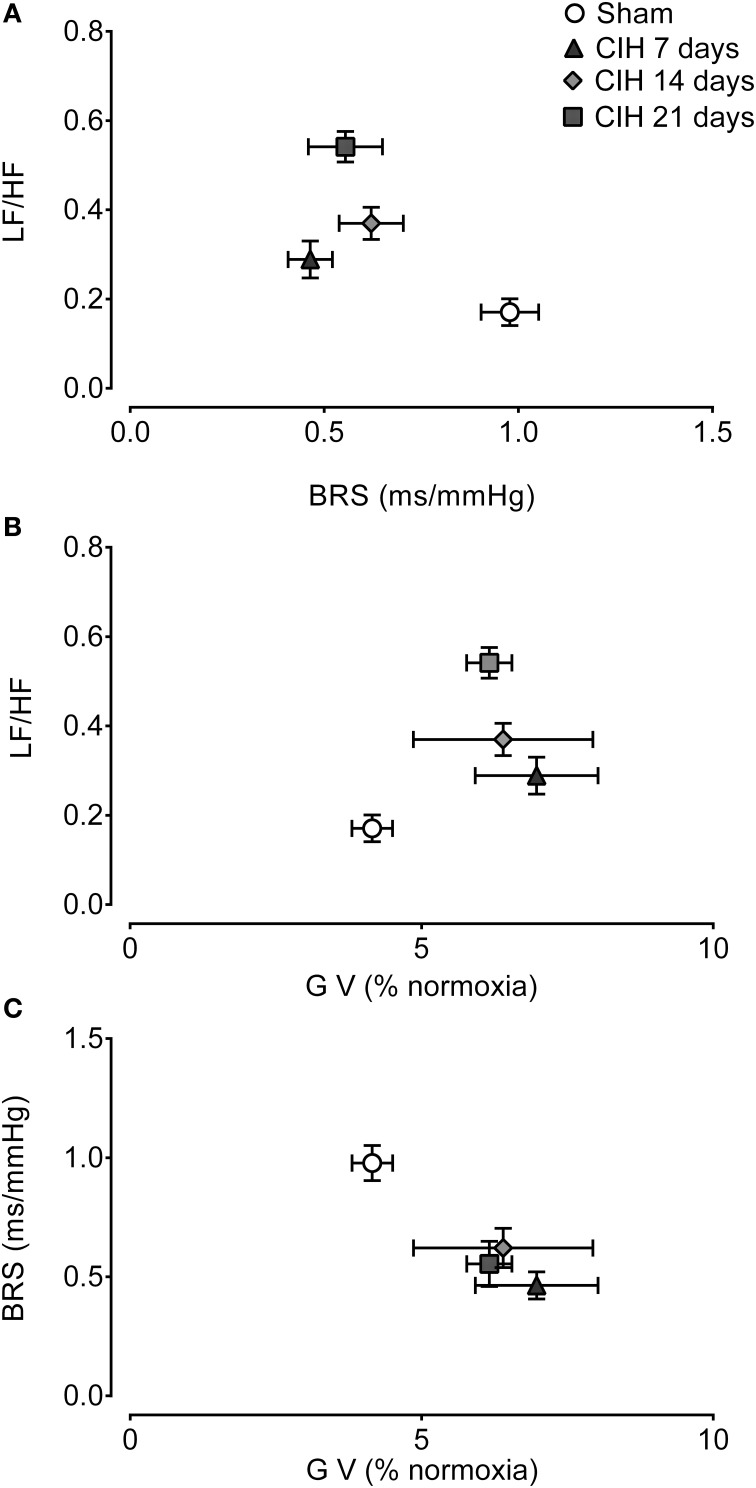
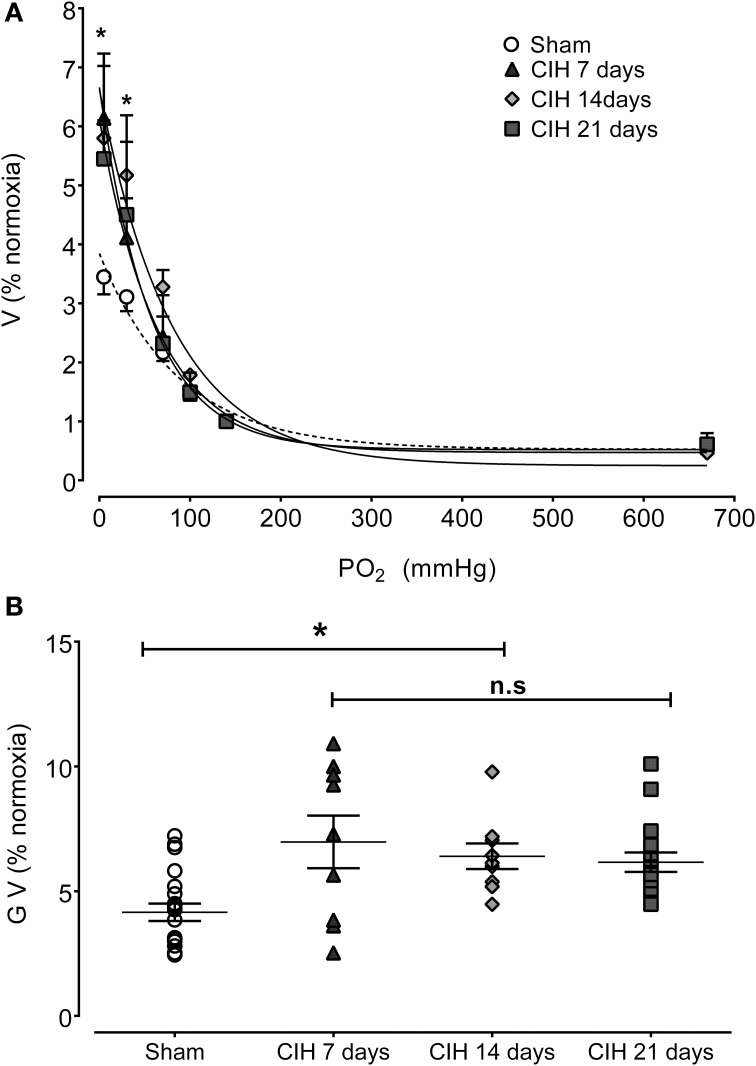
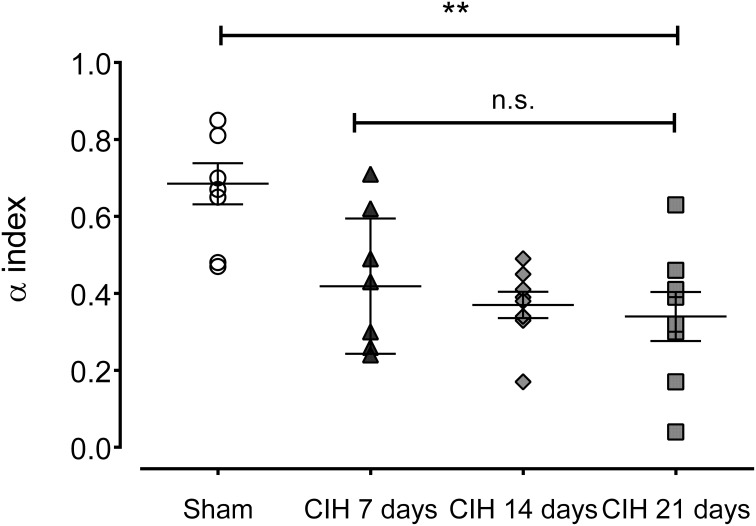
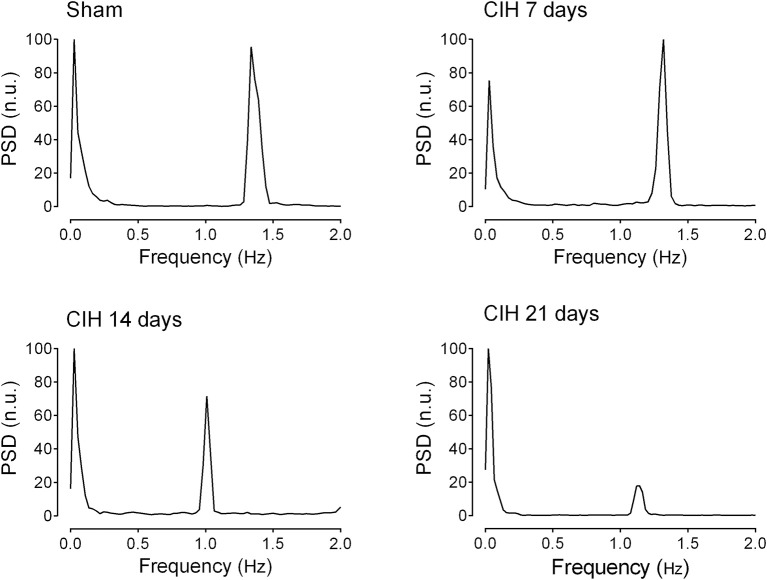
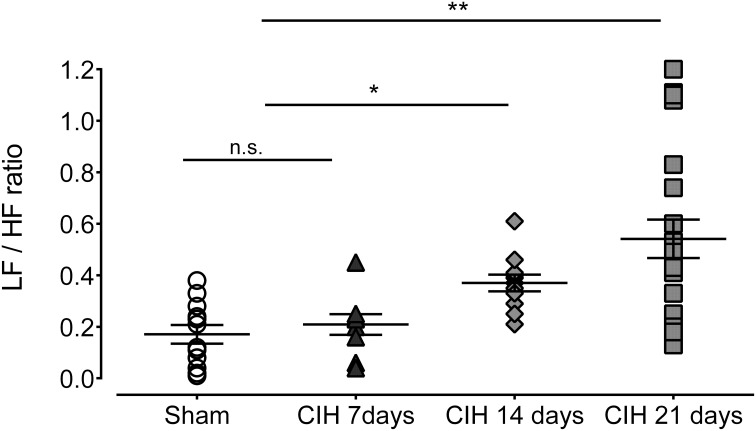
Autonomic dysfunction is involved in the development of hypertension in humans with obstructive sleep apnea, and animals exposed to chronic intermittent hypoxia (CIH). It has been proposed that a crucial step in the development of the hypertension is the potentiation of the carotid body (CB) chemosensory responses to hypoxia, but the temporal progression of the CB chemosensory, autonomic and hypertensive changes induced by CIH are not known. We tested the hypothesis that CB potentiation precedes the autonomic imbalance and the hypertension in rats exposed to CIH. Thus, we studied the changes in CB chemosensory and ventilatory responsiveness to hypoxia, the spontaneous baroreflex sensitivity (BRS), heart rate variability (HRV) and arterial blood pressure in pentobarbital anesthetized rats exposed to CIH for 7, 14, and 21 days. After 7 days of CIH, CB chemosensory and ventilatory responses to hypoxia were enhanced, while BRS was significantly reduced by 2-fold in CIH-rats compared to sham-rats. These alterations persisted until 21 days of CIH. After 14 days, CIH shifted the HRV power spectra suggesting a predominance of sympathetic over parasympathetic tone. In contrast, hypertension was found after 21 days of CIH. Concomitant changes between the gain of spectral HRV, BRS, and ventilatory hypoxic chemoreflex showed that the CIH-induced BRS attenuation preceded the HRV changes. CIH induced a simultaneous decrease of the BRS gain along with an increase of the hypoxic ventilatory gain. Present results show that CIH-induced persistent hypertension was preceded by early changes in CB chemosensory control of cardiorespiratory and autonomic function.
自主神经功能障碍与阻塞性睡眠呼吸暂停患者高血压的发展以及暴露于慢性间歇性低氧(CIH)的动物有关。有人提出,高血压发展的关键步骤是颈动脉体(CB)对低氧的化学感受反应增强,但 CIH 引起的 CB 化学感受、自主神经和高血压变化的时间进展尚不清楚。我们检验了以下假设:即在 CIH 暴露的大鼠中,CB 增强先于自主神经失衡和高血压。因此,我们研究了暴露于 CIH 7、14 和 21 天后,大鼠 CB 化学感受和对低氧的通气反应、自发性血压反射敏感性(BRS)、心率变异性(HRV)和动脉血压的变化。在 CIH 大鼠中,与假手术大鼠相比,7 天后 CIH 使 CB 化学感受和通气对低氧的反应增强,而 BRS 显著降低了 2 倍。这些改变持续到 CIH 21 天。在 14 天后,CIH 改变了 HRV 功率谱,表明交感神经张力超过副交感神经张力。相反,在 21 天后发现 CIH 引起高血压。与 HRV 功率谱、BRS 和通气低氧化学感受增益的同时变化表明,CIH 引起的 BRS 衰减先于 HRV 变化。CIH 同时降低了 BRS 增益,增加了低氧通气增益。目前的结果表明,CIH 引起的持续性高血压先于 CB 化学感受对心肺和自主神经功能控制的早期变化。