Czerniawski Jennifer, Miyashita Teiko, Lewandowski Gail, Guzowski John F
Department of Neurobiology & Behavior, and Center for the Neurobiology of Learning and Memory, University of California, Irvine, Irvine, CA 92697-3800, USA.
Department of Anatomy and Neurobiology, University of California, Irvine, Irvine, CA 92697-3800, USA.
Brain Behav Immun. 2015 Feb;44:159-66. doi: 10.1016/j.bbi.2014.09.014. Epub 2014 Oct 19.
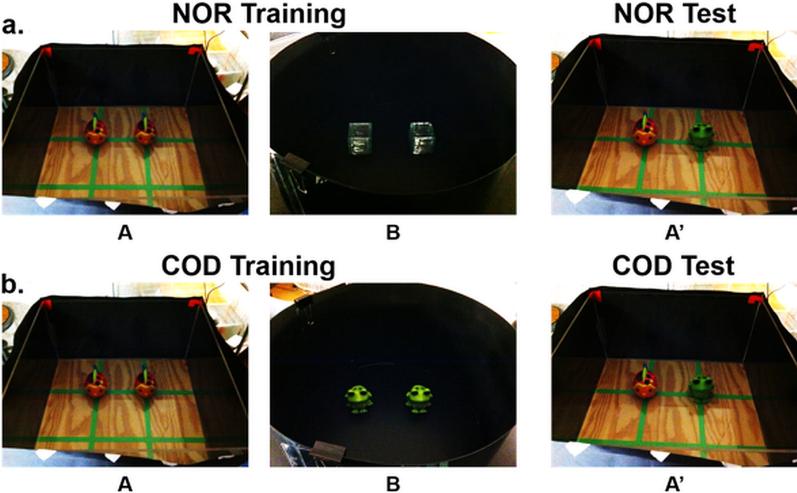
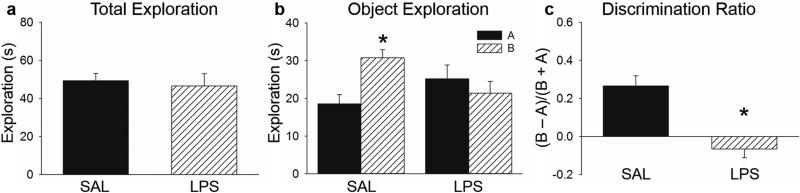
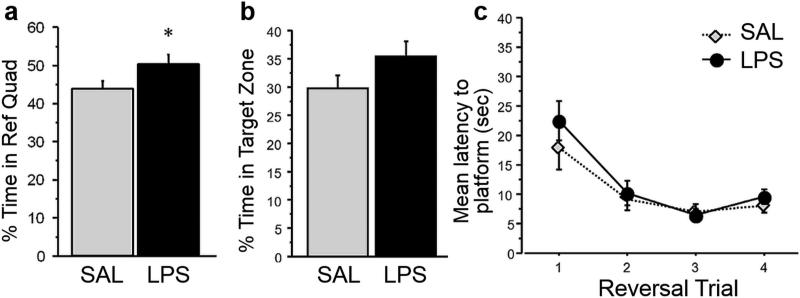
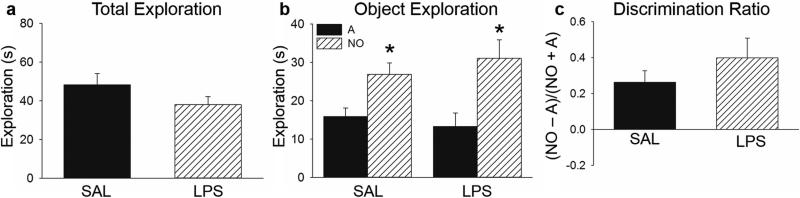
Neuroinflammation is implicated in impairments in neuronal function and cognition that arise with aging, trauma, and/or disease. Therefore, understanding the underlying basis of the effect of immune system activation on neural function could lead to therapies for treating cognitive decline. Although neuroinflammation is widely thought to preferentially impair hippocampus-dependent memory, data on the effects of cytokines on cognition are mixed. One possible explanation for these inconsistent results is that cytokines may disrupt specific neural processes underlying some forms of memory but not others. In an earlier study, we tested the effect of systemic administration of bacterial lipopolysaccharide (LPS) on retrieval of hippocampus-dependent context memory and neural circuit function in CA3 and CA1 (Czerniawski and Guzowski, 2014). Paralleling impairment in context discrimination memory, we observed changes in neural circuit function consistent with disrupted pattern separation function. In the current study we tested the hypothesis that acute neuroinflammation selectively disrupts memory retrieval in tasks requiring hippocampal pattern separation processes. Male Sprague-Dawley rats given LPS systemically prior to testing exhibited intact performance in tasks that do not require hippocampal pattern separation processes: novel object recognition and spatial memory in the water maze. By contrast, memory retrieval in a task thought to require hippocampal pattern separation, context-object discrimination, was strongly impaired in LPS-treated rats in the absence of any gross effects on exploratory activity or motivation. These data show that LPS administration does not impair memory retrieval in all hippocampus-dependent tasks, and support the hypothesis that acute neuroinflammation impairs context discrimination memory via disruption of pattern separation processes in hippocampus.
神经炎症与衰老、创伤和/或疾病引起的神经元功能和认知障碍有关。因此,了解免疫系统激活对神经功能影响的潜在机制可能会带来治疗认知衰退的疗法。尽管人们普遍认为神经炎症会优先损害依赖海马体的记忆,但关于细胞因子对认知影响的数据却参差不齐。这些不一致结果的一个可能解释是,细胞因子可能会破坏某些形式记忆所依赖的特定神经过程,而不会影响其他形式的记忆。在早期的一项研究中,我们测试了全身注射细菌脂多糖(LPS)对海马体依赖的情境记忆提取以及CA3和CA1区神经回路功能的影响(Czerniawski和Guzowski,2014年)。与情境辨别记忆受损相平行,我们观察到神经回路功能的变化与模式分离功能受到破坏一致。在当前的研究中,我们测试了这样一个假设:急性神经炎症会选择性地破坏需要海马体模式分离过程的任务中的记忆提取。在测试前全身注射LPS的雄性Sprague-Dawley大鼠在不需要海马体模式分离过程的任务中表现正常:新物体识别和水迷宫中的空间记忆。相比之下,在一项被认为需要海马体模式分离的任务——情境-物体辨别中,LPS处理的大鼠的记忆提取受到严重损害,而对探索活动或动机没有任何明显影响。这些数据表明,注射LPS并不会损害所有依赖海马体的任务中的记忆提取,并支持了急性神经炎症通过破坏海马体中的模式分离过程来损害情境辨别记忆的假设。