Hoyle Nathaniel P, O'Neill John S
Laboratory of Molecular Biology, Medical Research Council , Francis Crick Avenue, Cambridge CB2 0QH, U.K.
Biochemistry. 2015 Jan 20;54(2):184-93. doi: 10.1021/bi5008386. Epub 2014 Dec 30.
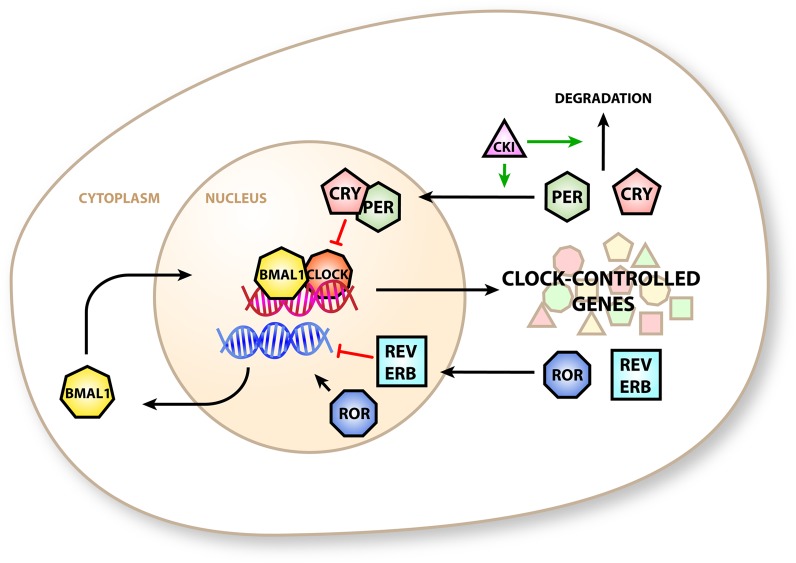
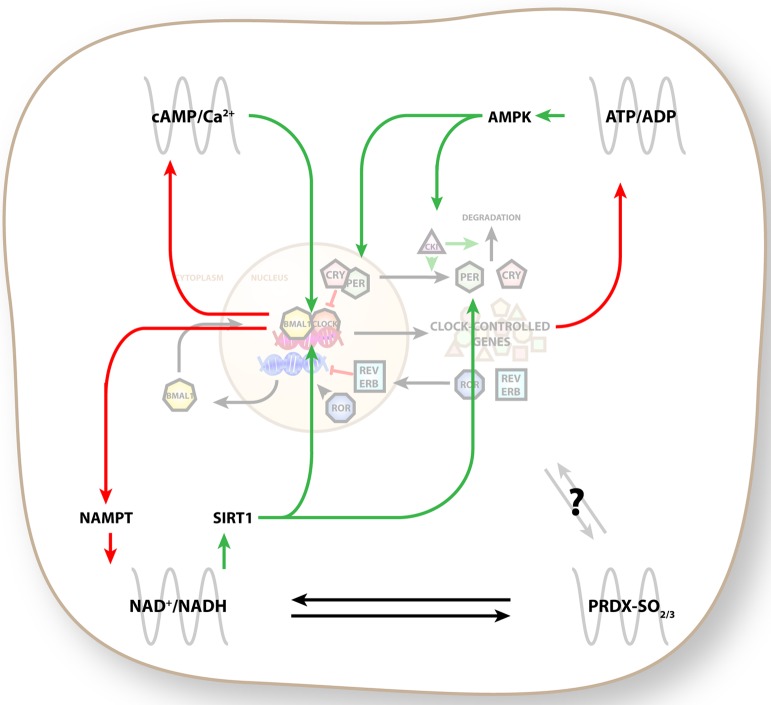
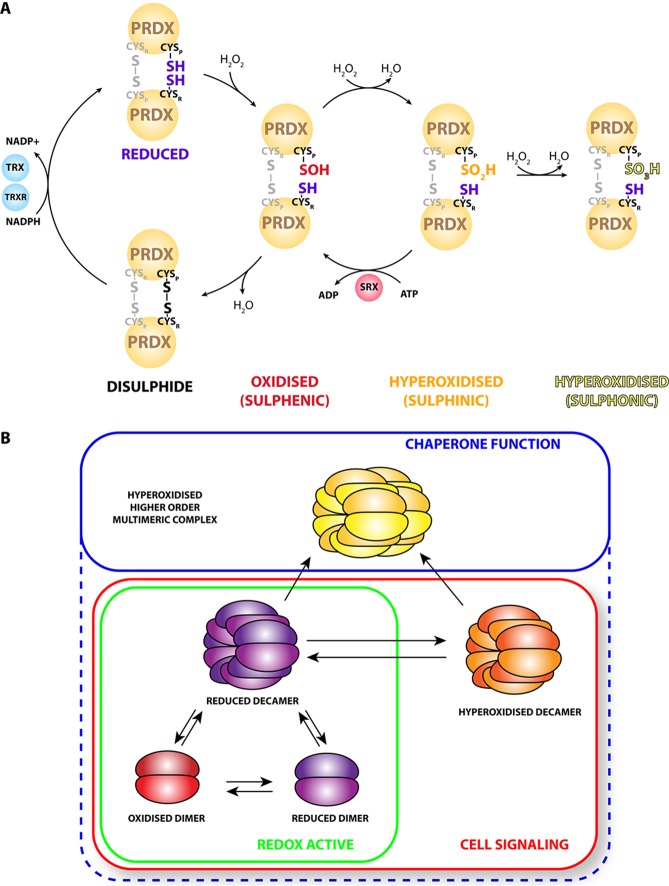
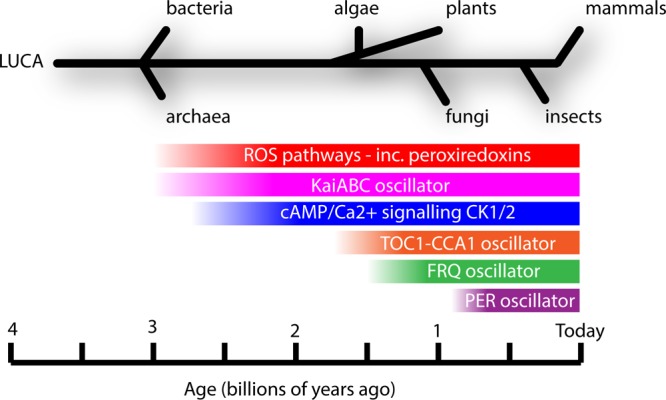
The circadian clock allows organisms to accurately predict the earth's rotation and modify their behavior as a result. Genetic analyses in a variety of organisms have defined a mechanism based largely on gene expression feedback loops. However, as we delve more deeply into the mechanisms of circadian timekeeping, we are discovering that post-translational mechanisms play a key role in defining the character of the clock. We are also discovering that these modifications are inextricably linked to cellular metabolism, including redox homeostasis. A robust circadian oscillation in the redox status of the peroxiredoxins (a major class of cellular antioxidants) was recently shown to be remarkably conserved from archaea and cyanobacteria all the way to plants and animals. Furthermore, recent findings indicate that cellular redox status is coupled not only to canonical circadian gene expression pathways but also to a noncanonical transcript-independent circadian clock. The redox rhythms observed in peroxiredoxins in the absence of canonical clock mechanisms may hint at the nature of this new and hitherto unknown aspect of circadian timekeeping.
生物钟使生物体能够准确预测地球的自转,并据此调整自身行为。对多种生物体的基因分析确定了一种主要基于基因表达反馈回路的机制。然而,随着我们更深入地探究昼夜节律计时机制,我们发现翻译后机制在决定生物钟特性方面起着关键作用。我们还发现这些修饰与细胞代谢紧密相连,包括氧化还原稳态。最近研究表明,过氧化物酶(一类主要的细胞抗氧化剂)的氧化还原状态存在强烈的昼夜节律振荡,这种振荡在从古菌、蓝细菌到植物和动物的整个进化过程中都显著保守。此外,最近的研究结果表明,细胞氧化还原状态不仅与经典的昼夜节律基因表达途径相关,还与一种非经典的、不依赖转录本的生物钟相关。在缺乏经典生物钟机制的情况下,过氧化物酶中观察到的氧化还原节律可能暗示了昼夜节律计时这一全新且迄今未知方面的本质。