Robertson Tony, Benzeval Michaela, Whitley Elise, Popham Frank
Scottish Collaboration for Public Health Research and Policy, University of Edinburgh, United Kingdom.
Institute for Social & Economic Research, University of Essex, United Kingdom; MRC/CSO Social and Public Health Sciences Unit, University of Glasgow, United Kingdom.
Brain Behav Immun. 2015 Mar;45:41-9. doi: 10.1016/j.bbi.2014.10.005. Epub 2014 Oct 22.
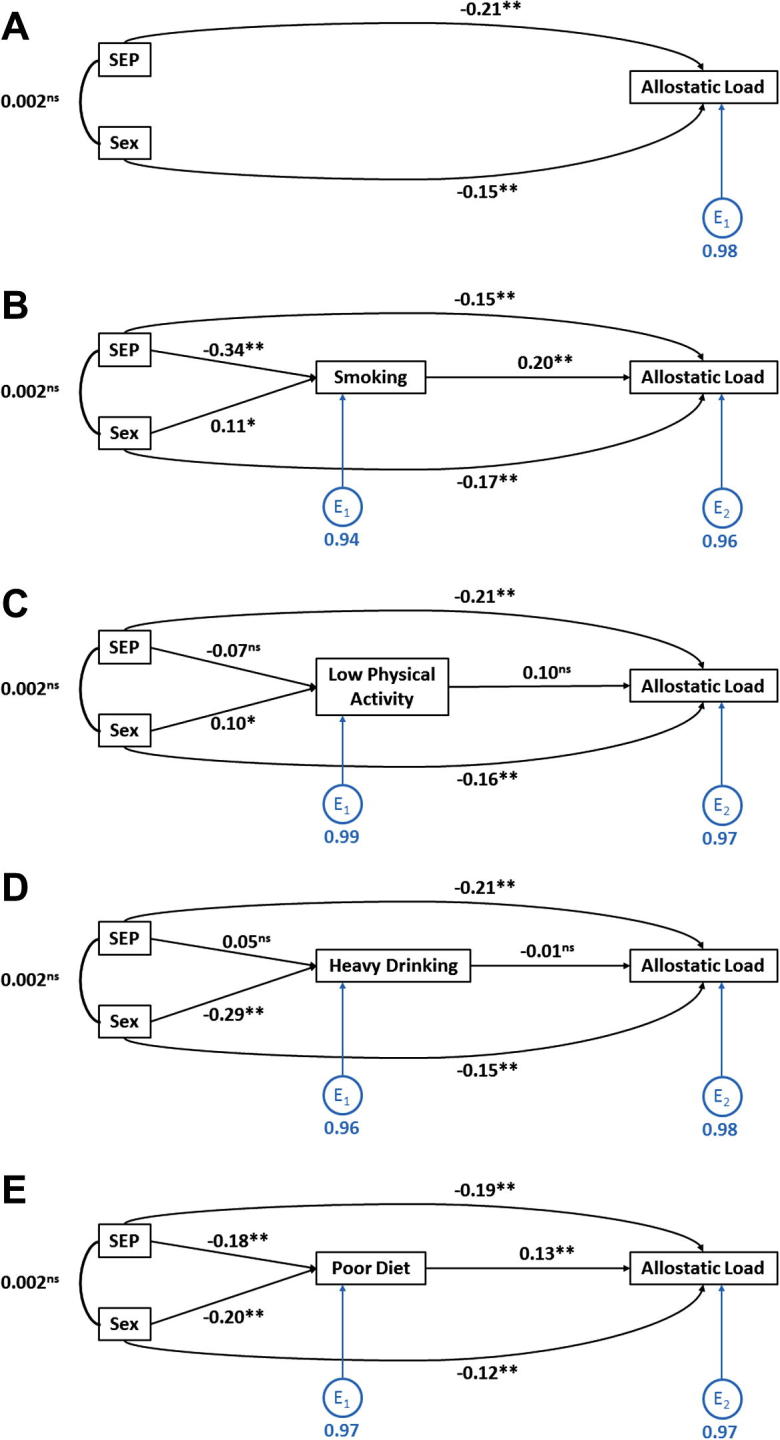
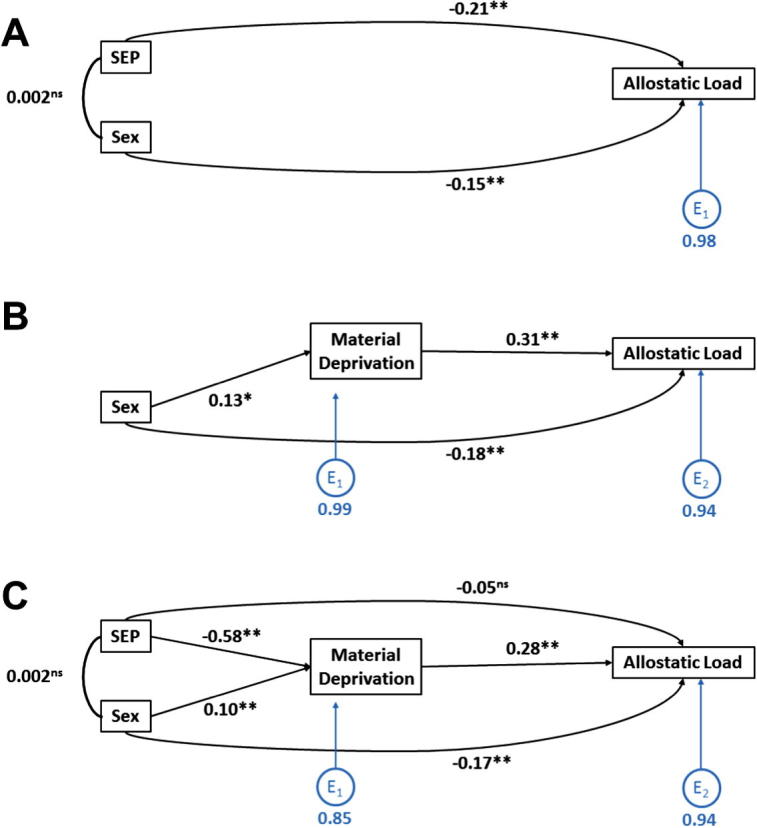
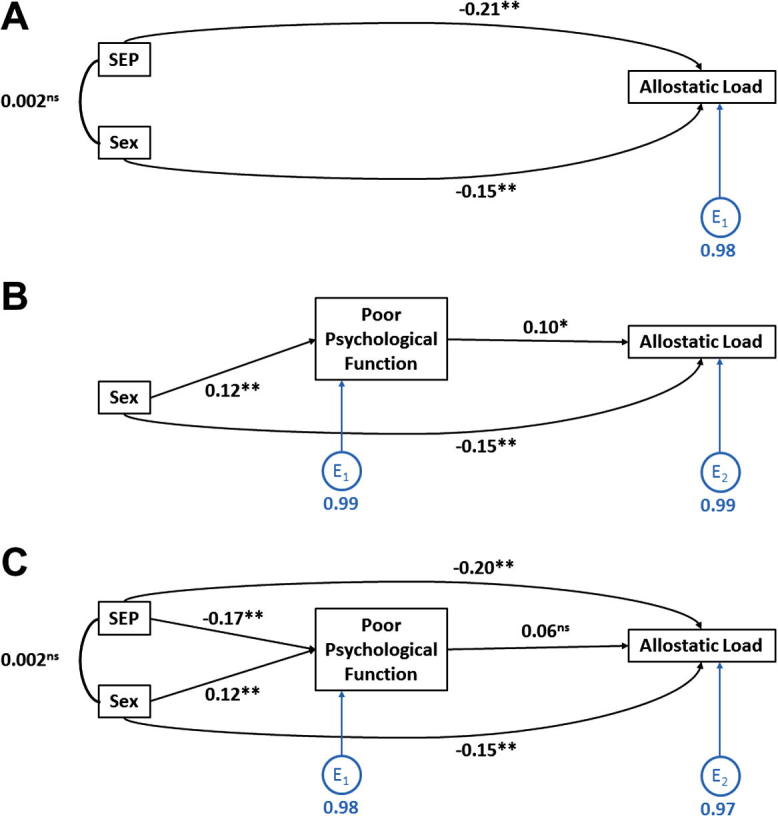
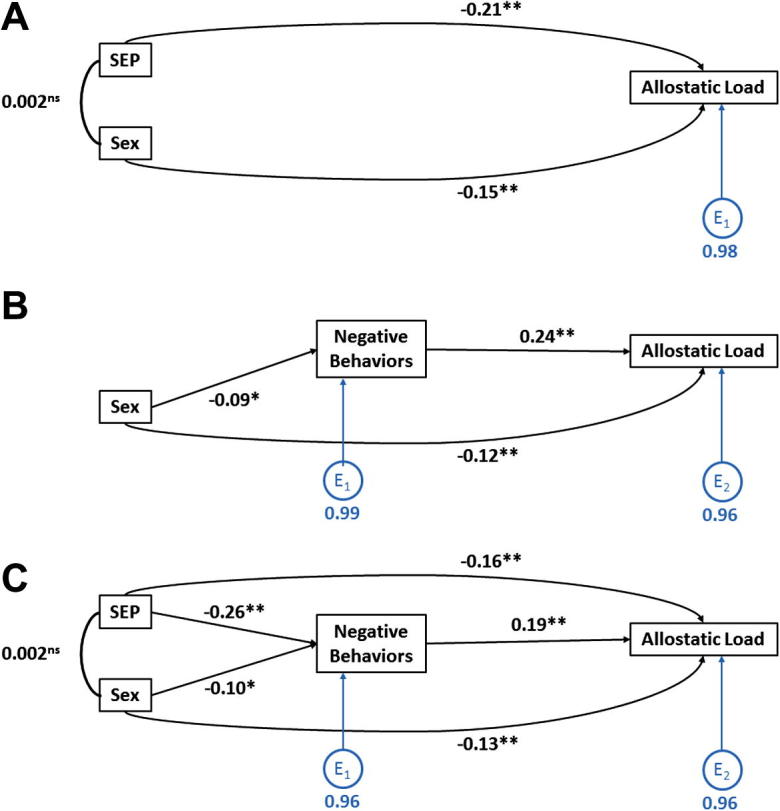
Lower socioeconomic position (SEP), both accumulated across the life course and at different life-stages, has been found to be associated with higher cumulative physiological burden, as measured by allostatic load. This study aimed to identify what factors mediate the association between SEP and allostatic load, as measured through combining cardiovascular, metabolic and inflammatory markers. We explored the role of material, psychological and behavioral factors, accumulated across two periods in time, in mediating the association between SEP and allostatic load. Data are from the West of Scotland Twenty-07 Study, with respondents followed over five waves of data collection from ages 35 to 55 (n=999). Allostatic load was measured by summing nine binary biomarker scores ('1'=in the highest-risk quartile) measured when respondents were 55years old (wave 5). SEP was measured by a person's accumulated social class over two periods All mediators and SEP were measured at baseline in 1987 and 20years later and combined to form accumulated measures of risk. Material mediators included car and home ownership, and having low income. The General Health Questionnaire (GHQ-12) was used as the psychosocial mediator. Behavioral mediators included smoking, alcohol consumption, physical activity and diet. Path analysis using linear regressions adjusting for sex were performed for each of the potential mediators to assess evidence of attenuation in the association between lower SEP and higher allostatic load. Analyses by mediator type revealed that renting one's home (approximately 78% attenuation) and having low income (approx. 62% attenuation) largely attenuated the SEP-allostatic load association. GHQ did not attenuate the association. Smoking had the strongest attenuating effect of all health behaviors (by 33%) with no other health behaviors attenuating the association substantially. Material factors, namely home tenure and income status, and smoking have important roles in explaining socioeconomic disparities in allostatic load, particularly when accumulated over time.
研究发现,无论是在整个生命历程中积累的,还是在不同生命阶段积累的较低社会经济地位(SEP),都与通过应激负荷衡量的较高累积生理负担有关。本研究旨在确定哪些因素介导了SEP与应激负荷之间的关联,应激负荷是通过综合心血管、代谢和炎症标志物来衡量的。我们探讨了在两个时间段内积累的物质、心理和行为因素在介导SEP与应激负荷之间关联中的作用。数据来自苏格兰西部2007研究,受访者在35岁至55岁期间接受了五轮数据收集(n = 999)。应激负荷通过对受访者55岁时(第5轮)测量的九个二元生物标志物得分(“1”=处于最高风险四分位数)求和来衡量。SEP通过一个人在两个时间段内积累的社会阶层来衡量。所有中介变量和SEP均在1987年基线时以及20年后进行测量,并合并形成累积风险指标。物质中介变量包括拥有汽车和住房,以及低收入。一般健康问卷(GHQ - 12)用作心理社会中介变量。行为中介变量包括吸烟、饮酒、体育活动和饮食。对每个潜在中介变量进行了使用线性回归并对性别进行调整的路径分析,以评估较低SEP与较高应激负荷之间关联减弱的证据。按中介变量类型进行的分析表明,租房(约78%的减弱)和低收入(约62%的减弱)在很大程度上减弱了SEP与应激负荷之间的关联。GHQ并未减弱这种关联。吸烟在所有健康行为中具有最强的减弱作用(33%),没有其他健康行为对这种关联有实质性减弱作用。物质因素,即住房保有情况和收入状况,以及吸烟在解释应激负荷方面的社会经济差异中具有重要作用,尤其是随着时间积累时。