Skare J T, Roof S K, Postle K
Department of Microbiology, Washington State University, Pullman 99164-4340.
J Bacteriol. 1989 Aug;171(8):4442-7. doi: 10.1128/jb.171.8.4442-4447.1989.
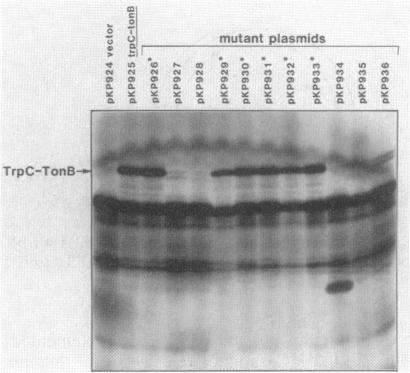
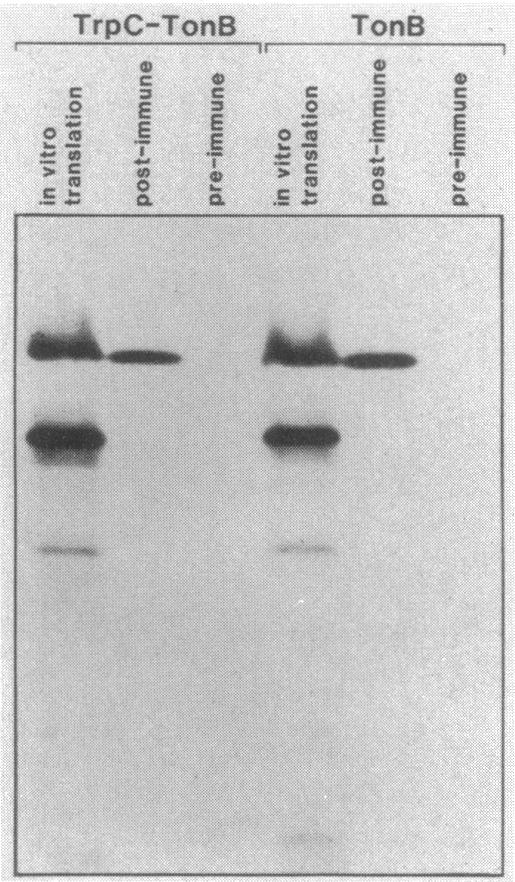
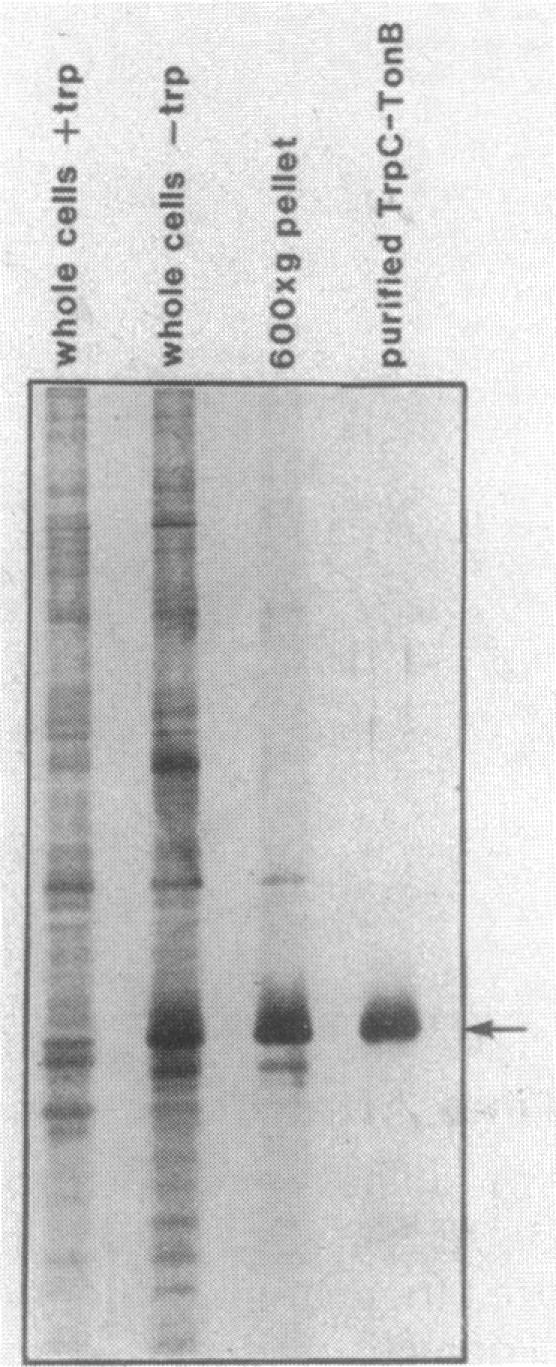
We have developed a selection for mutations in a trpC-tonB gene fusion that takes advantage of the properties of the plasmid-encoded TrpC-TonB hybrid protein. The TrpC-TonB hybrid protein consists of amino acids 1 through 25 of the normally cytoplasmic protein, TrpC, fused to amino acids 12 through 239 of TonB. It is expressed from the trp promoter and is regulated by the trpR gene and the presence or absence of tryptophan. Under repressing conditions in the presence of tryptophan, the trpC-tonB gene can restore phi 80 sensitivity to a tonB deletion mutant, which indicates that TrpC-TonB can be exported and is functional. High-level expression of TrpC-TonB protein in the absence of tryptophan results in virtually immediate cessation of growth for strains carrying the trpC-tonB plasmid. By selecting for survivors of the induced growth inhibition (overproduction lethality), we have isolated a variety of mutations. Many of the mutations decrease expression of the TrpC-TonB protein, as expected. In addition, three independently isolated mutants expressing normal levels of TrpC-TonB protein result in a Gly----Asp substitution within the hydrophobic amino terminus of TonB. The mutant proteins are designated TrpC-TonBG26D. The mutations are suppressed by prlA alleles, known to suppress export (signal sequence) mutations. TrpC-TonB proteins carrying the Gly----Asp substitution accumulate in the cytoplasm. We conclude that the Gly----Asp substitution is an export mutation. TrpC-TonBG26D protein has been purified and used to raise polyclonal antibodies that specifically recognize both TrpC-TonB protein and wild-type TonB protein.
我们利用质粒编码的TrpC-TonB融合蛋白的特性,开发了一种筛选trpC-tonB基因融合突变的方法。TrpC-TonB融合蛋白由正常位于细胞质中的TrpC蛋白的第1至25个氨基酸与TonB的第12至239个氨基酸融合而成。它由trp启动子表达,并受trpR基因以及色氨酸的存在与否调控。在色氨酸存在的抑制条件下,trpC-tonB基因可使φ80对tonB缺失突变体恢复敏感性,这表明TrpC-TonB能够被输出且具有功能。在无色氨酸的情况下,TrpC-TonB蛋白的高水平表达会导致携带trpC-tonB质粒的菌株几乎立即停止生长。通过筛选诱导生长抑制(过量生产致死)的幸存者,我们分离出了多种突变。正如预期的那样,许多突变降低了TrpC-TonB蛋白的表达。此外,三个独立分离的表达正常水平TrpC-TonB蛋白的突变体导致TonB疏水氨基末端内的甘氨酸被天冬氨酸取代。突变蛋白被命名为TrpC-TonBG26D。这些突变被已知可抑制输出(信号序列)突变的prlA等位基因所抑制。携带甘氨酸被天冬氨酸取代的TrpC-TonB蛋白在细胞质中积累。我们得出结论,甘氨酸被天冬氨酸取代是一种输出突变。已纯化TrpC-TonBG26D蛋白并用于制备特异性识别TrpC-TonB蛋白和野生型TonB蛋白的多克隆抗体。