Adams Nathan B P, Marklew Christopher J, Qian Pu, Brindley Amanda A, Davison Paul A, Bullough Per A, Hunter C Neil
*Department of Molecular Biology and Biotechnology, University of Sheffield, Sheffield S10 2TN, U.K.
Biochem J. 2014 Dec 15;464(3):315-22. doi: 10.1042/BJ20140463.
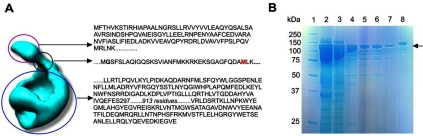
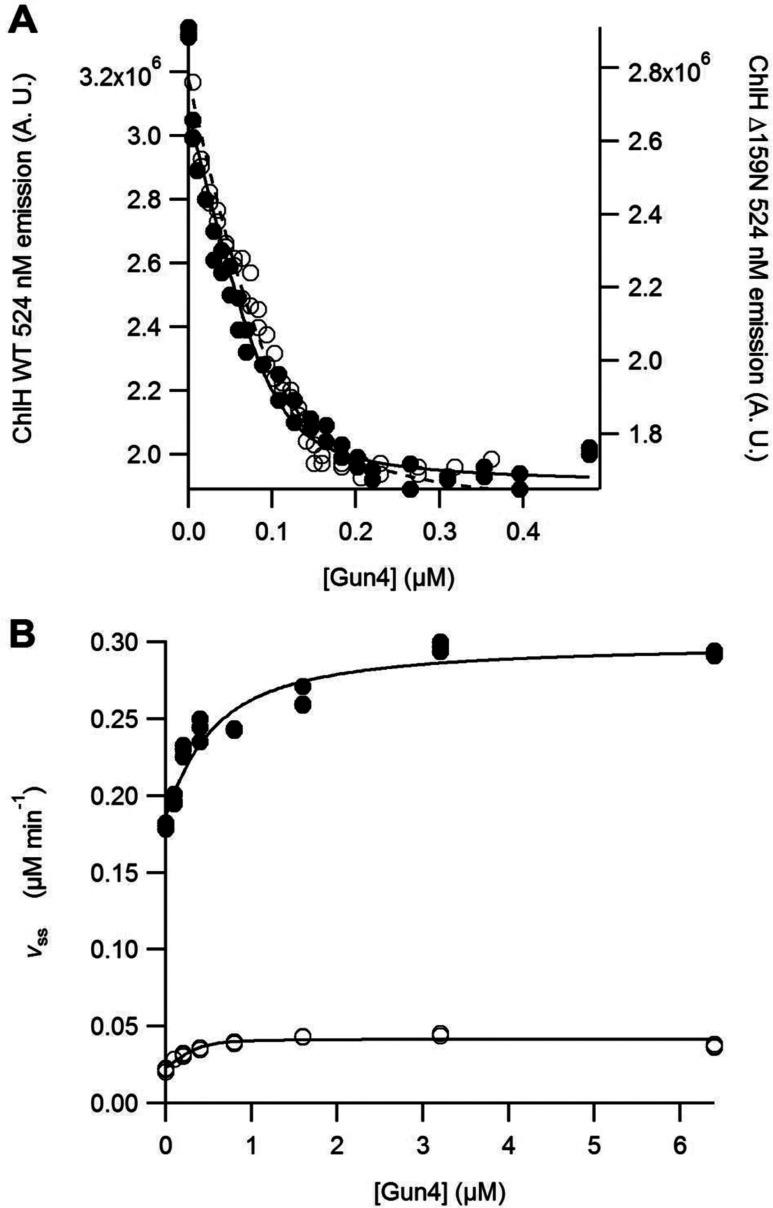
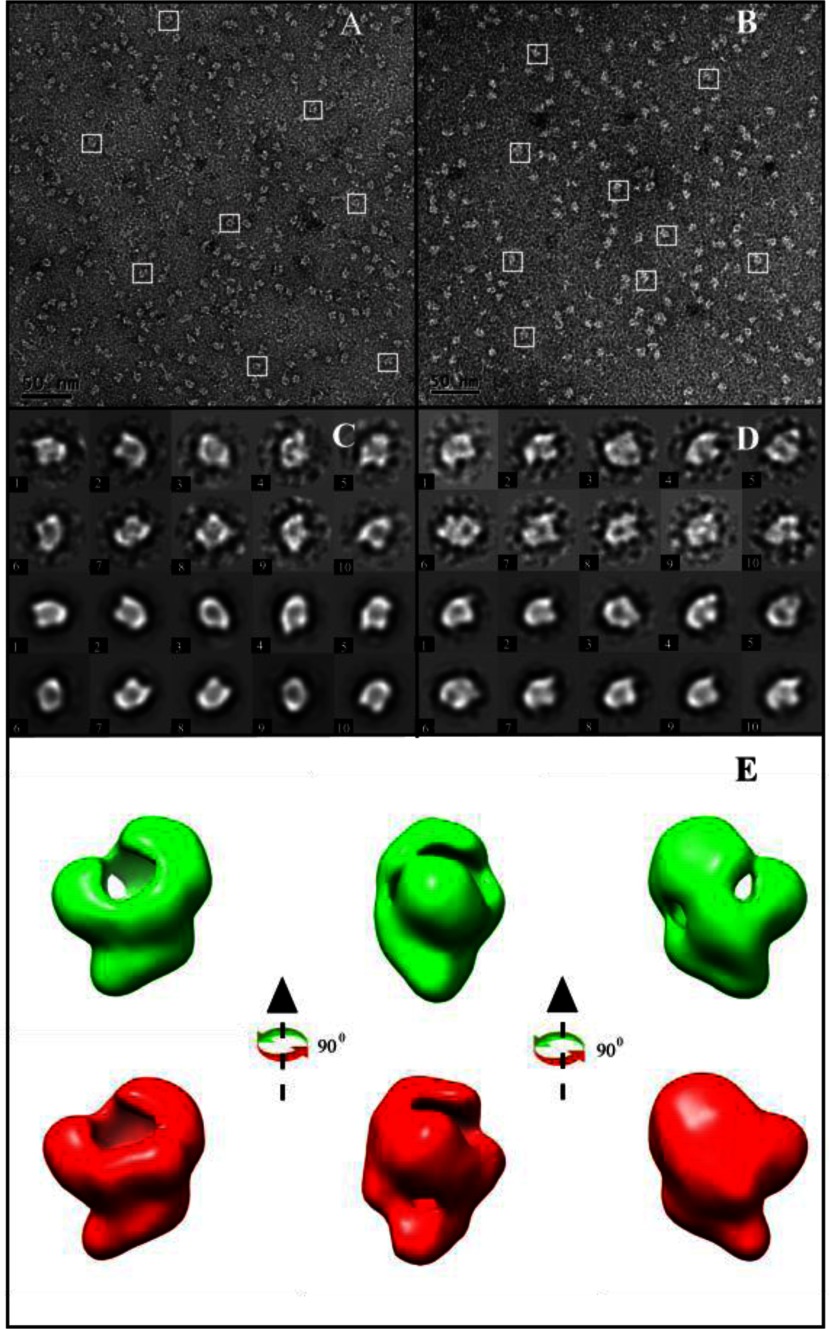
Magnesium chelatase (MgCH) initiates chlorophyll biosynthesis by catalysing the ATP-dependent insertion of Mg2+ into protoporphyrin. This large enzyme complex comprises ChlH, I and D subunits, with I and D involved in ATP hydrolysis, and H the protein that handles the substrate and product. The 148 kDa ChlH subunit has a globular N-terminal domain attached by a narrow linker to a hollow cage-like structure. Following deletion of this ~18 kDa domain from the Thermosynechoccus elongatus ChlH, we used single particle reconstruction to show that the apo- and porphyrin-bound forms of the mutant subunit consist of a hollow globular protein with three connected lobes; superposition of the mutant and native ChlH structures shows that, despite the clear absence of the N-terminal 'head' region, the rest of the protein appears to be correctly folded. Analyses of dissociation constants shows that the ΔN159ChlH mutant retains the ability to bind protoporphyrin and the Gun4 enhancer protein, although the addition of I and D subunits yields an extremely impaired active enzyme complex. Addition of the Gun4 enhancer protein, which stimulates MgCH activity significantly especially at low Mg2+ concentrations, partially reactivates the ΔN159ChlH-I-D mutant enzyme complex, suggesting that the binding site or sites for Gun4 on H do not wholly depend on the N-terminal domain.
镁螯合酶(MgCH)通过催化Mg2+以ATP依赖的方式插入原卟啉来启动叶绿素的生物合成。这种大型酶复合物由ChlH、I和D亚基组成,其中I和D参与ATP水解,而H负责处理底物和产物。148 kDa的ChlH亚基有一个球状的N端结构域,通过一个狭窄的连接子与一个中空的笼状结构相连。从嗜热栖热菌的ChlH中删除这个约18 kDa的结构域后,我们使用单颗粒重建技术表明,突变亚基的脱辅基形式和与卟啉结合的形式由一个具有三个相连叶的中空球状蛋白质组成;突变体和天然ChlH结构的叠加显示,尽管明显没有N端的“头部”区域,但蛋白质的其余部分似乎折叠正确。解离常数分析表明,ΔN159ChlH突变体保留了结合原卟啉和Gun4增强蛋白的能力,尽管添加I和D亚基会产生活性严重受损的酶复合物。添加Gun4增强蛋白(尤其是在低Mg2+浓度下能显著刺激MgCH活性)可部分重新激活ΔN159ChlH-I-D突变酶复合物,这表明H上Gun4的一个或多个结合位点并不完全依赖于N端结构域。