Payen Léa, Honorat Mylène, Guitton Jérôme, Gauthier Charlotte, Bouard Charlotte, Lecerf-Schmidt Florine, Peres Basile, Terreux Raphaël, Gervot Héloïse, Rioufol Catherine, Boumendjel Ahcène, Puisieux Alain, Di Pietro Attilio
Institut des Sciences Pharmaceutiques et Biologiques (ISPB), Université Lyon 1, Lyon 69373, France. INSERM UMR-S1052, CNRS UMR 5286, Université Lyon 1, Centre de Recherche en Cancérologie de Lyon (CRCL), LabEx DEVweCAN, Centre Léon Bérard, Lyon 69373, France. Hospices Civils of Lyon, Laboratoire de Biochimie de Lyon Sud (CBS), Lyon, France.
Institut des Sciences Pharmaceutiques et Biologiques (ISPB), Université Lyon 1, Lyon 69373, France. INSERM UMR-S1052, CNRS UMR 5286, Université Lyon 1, Centre de Recherche en Cancérologie de Lyon (CRCL), LabEx DEVweCAN, Centre Léon Bérard, Lyon 69373, France. Equipe labellisée Ligue 2014, BMSSI UMR 5086 CNRS-Université Lyon 1, IBCP, Lyon 69373, France.
Oncotarget. 2014 Dec 15;5(23):11957-70. doi: 10.18632/oncotarget.2566.
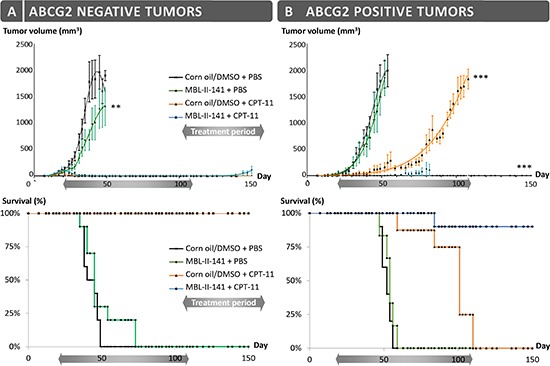
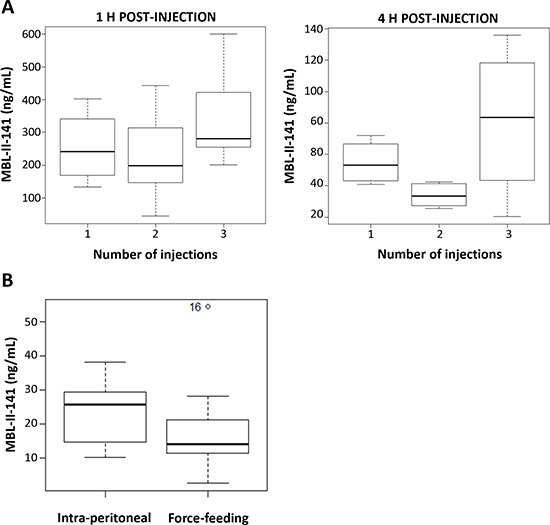
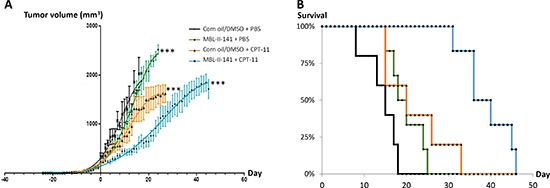
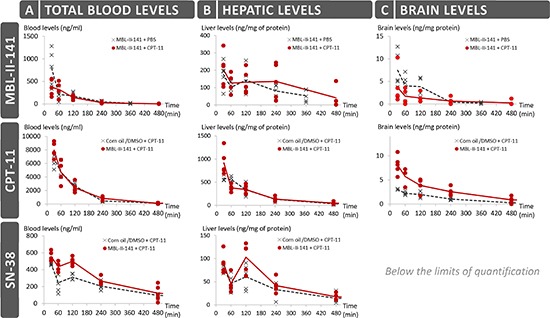
ABCG2 is responsible for the multidrug resistance (MDR) phenotype, and strongly modulates cancer outcomes. Its high expression at a number of physiological barriers, including blood-brain and intestinal barriers, impacts on drug pharmacokinetics parameters. We characterized MBL-II-141, a specific and potent ABCG2 inhibitor. Combination of 10 mg/kg MBL-II-141 with the anticancer agent CPT-11 completely blocked the growth of 90% freshly implanted ABCG2-positive tumors. Moreover, the same combination slowed the growth of already established tumors. As required for preclinical development, we defined the main pharmacokinetics parameters of MBL-II-141 and its influence on the kinetics of CPT-11 and its active metabolite SN-38 in mice. MBL-II-141 distribution into the brain occurred at a low, but detectable, level. Interestingly, preliminary data suggested that MBL-II-141 is well tolerated (at 50 mg/kg) and absorbed upon force-feeding. MBL-II-141 induced a potent sensitization of ABCG2-positive xenografts to CPT-11 through in vivo ABCG2 inhibition. MBL-II-141 strongly increased CPT-11 levels in the brain, and therefore would be a valuable agent to improve drug distribution into the brain to efficiently treat aggressive gliomas. Safety and other pharmacological data strongly support the reglementary preclinical development of MBL-II-141.
ABCG2 负责多药耐药(MDR)表型,并强烈调节癌症预后。它在包括血脑屏障和肠道屏障在内的多种生理屏障处高表达,影响药物的药代动力学参数。我们对一种特异性强效ABCG2抑制剂MBL-II-141进行了表征。10 mg/kg的MBL-II-141与抗癌药物CPT-11联合使用可完全抑制90%新植入的ABCG2阳性肿瘤的生长。此外,相同的联合用药减缓了已形成肿瘤的生长。作为临床前开发的要求,我们确定了MBL-II-141的主要药代动力学参数及其对小鼠体内CPT-11及其活性代谢物SN-38动力学的影响。MBL-II-141在脑中的分布水平较低,但可检测到。有趣的是,初步数据表明MBL-II-141耐受性良好(50 mg/kg),经强制灌胃后可被吸收。MBL-II-141通过体内抑制ABCG2使ABCG2阳性异种移植瘤对CPT-11产生强效致敏作用。MBL-II-141显著提高了脑中CPT-11的水平,因此将是一种有价值的药物,可改善药物在脑中的分布,以有效治疗侵袭性胶质瘤。安全性和其他药理学数据有力地支持了MBL-II-141的补充性临床前开发。