MRC Human Genetics Unit, Institute of Genetics and Molecular Medicine, University of Edinburgh, Crewe Road, Edinburgh EH4 2XU, UK.
Science. 2014 Dec 5;346(6214):1238-42. doi: 10.1126/science.1259587.
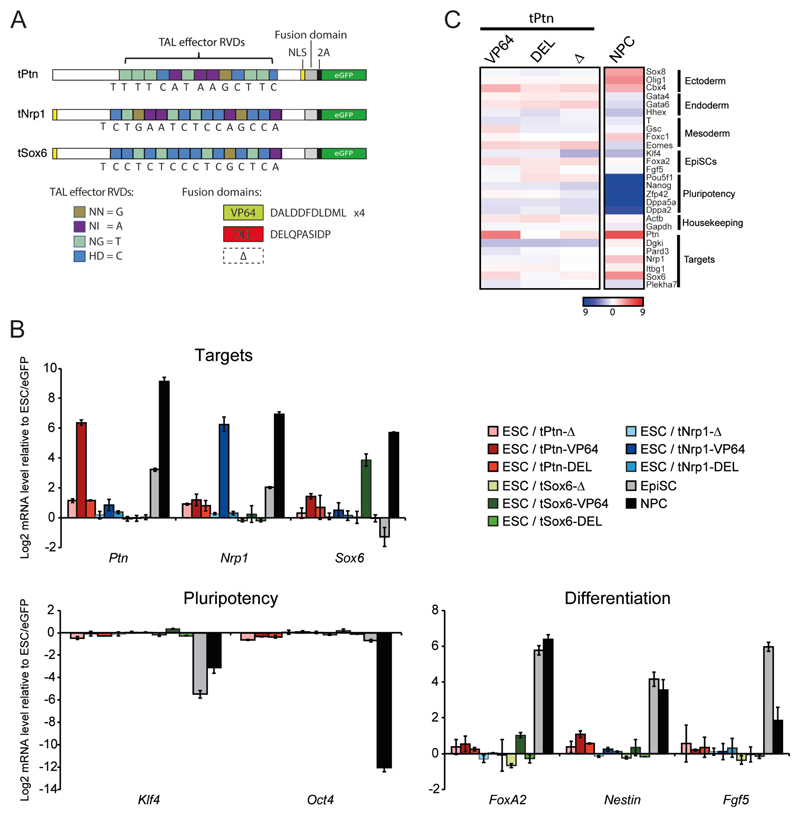
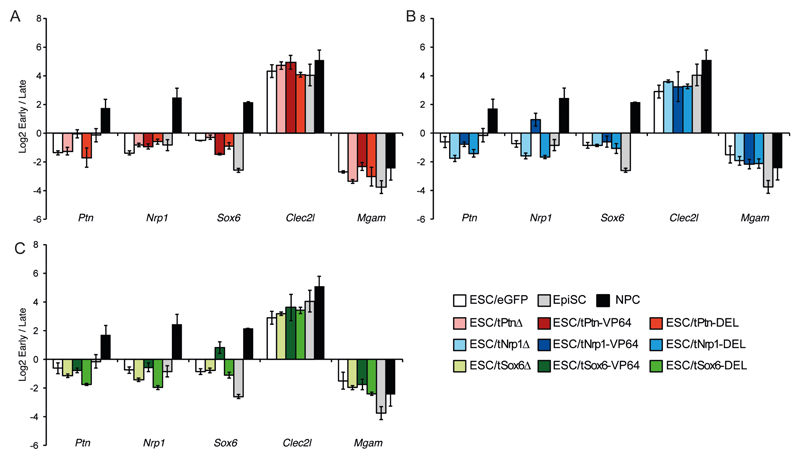
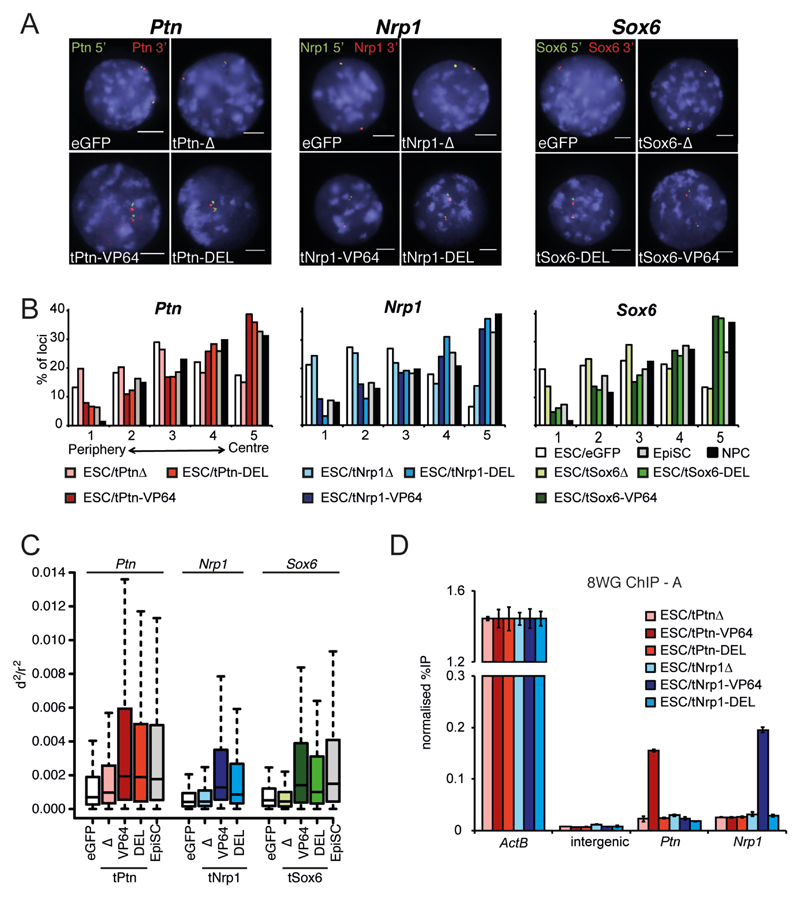
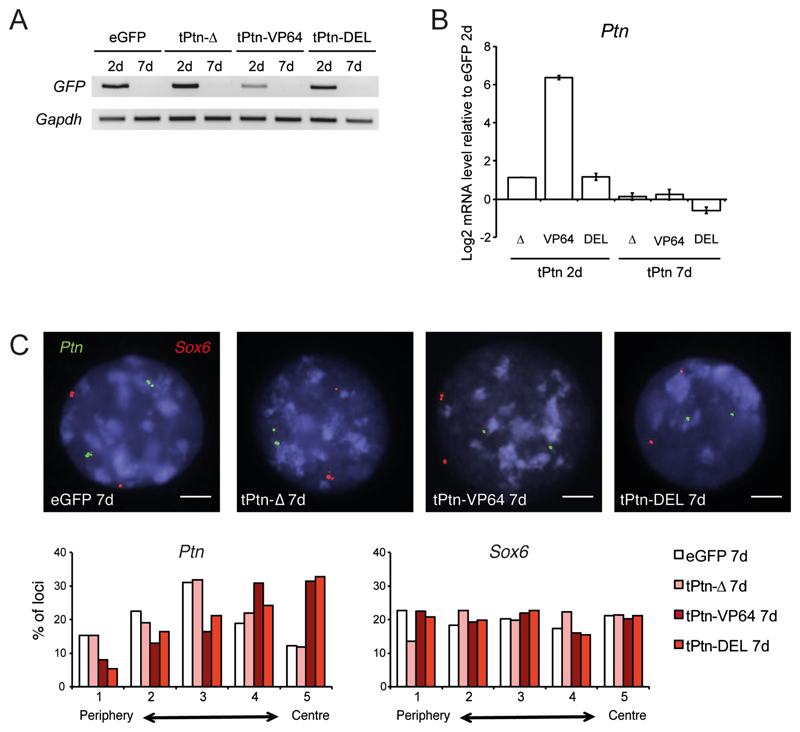
During differentiation, thousands of genes are repositioned toward or away from the nuclear envelope. These movements correlate with changes in transcription and replication timing. Using synthetic (TALE) transcription factors, we found that transcriptional activation of endogenous genes by a viral trans-activator is sufficient to induce gene repositioning toward the nuclear interior in embryonic stem cells. However, gene relocation was also induced by recruitment of an acidic peptide that decondenses chromatin without affecting transcription, indicating that nuclear reorganization is driven by chromatin remodeling rather than transcription. We identified an epigenetic inheritance of chromatin decondensation that maintained central nuclear positioning through mitosis even after the TALE transcription factor was lost. Our results also demonstrate that transcriptional activation, but not chromatin decondensation, is sufficient to change replication timing.
在分化过程中,成千上万个基因被重新定位到核膜附近或远离核膜。这些运动与转录和复制时间的变化相关。使用合成的(TALE)转录因子,我们发现病毒转录激活因子对内源性基因的转录激活足以诱导胚胎干细胞中基因向核内部重新定位。然而,募集一种使染色质去浓缩而不影响转录的酸性肽也能诱导基因重定位,这表明核重组是由染色质重塑而不是转录驱动的。我们发现了染色质去浓缩的表观遗传继承,即使在失去 TALE 转录因子后,它也能通过有丝分裂维持核的中心定位。我们的结果还表明,转录激活足以改变复制时间,但染色质去浓缩则不然。