Adeniyi Philip Adeyemi, Olatunji Babawale Peter, Ishola Azeez Olakunle, Ajonijebu Duyilemi Chris, Ogundele Olalekan Michael
Department of Anatomy, Cell Biology and Neuroscience Unit, College of Medicine and Health Sciences, College Building II, Afe Babalola University, Room G14, KM 8.5 Afe Babalola Way, PMB 5454, Ado-Ekiti, Ekiti State, Nigeria.
Department of Biological Sciences, College of Sciences, Afe Babalola University, Ado Ekiti, Nigeria.
Behav Neurol. 2014;2014:360978. doi: 10.1155/2014/360978. Epub 2014 Nov 16.
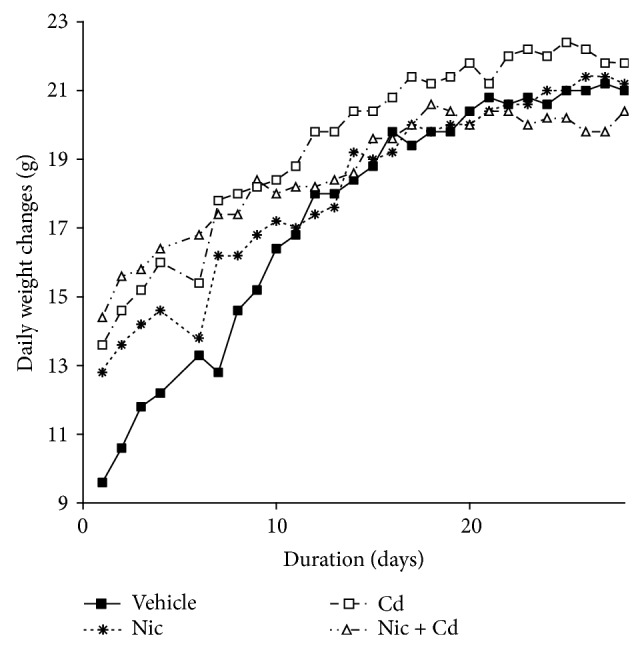
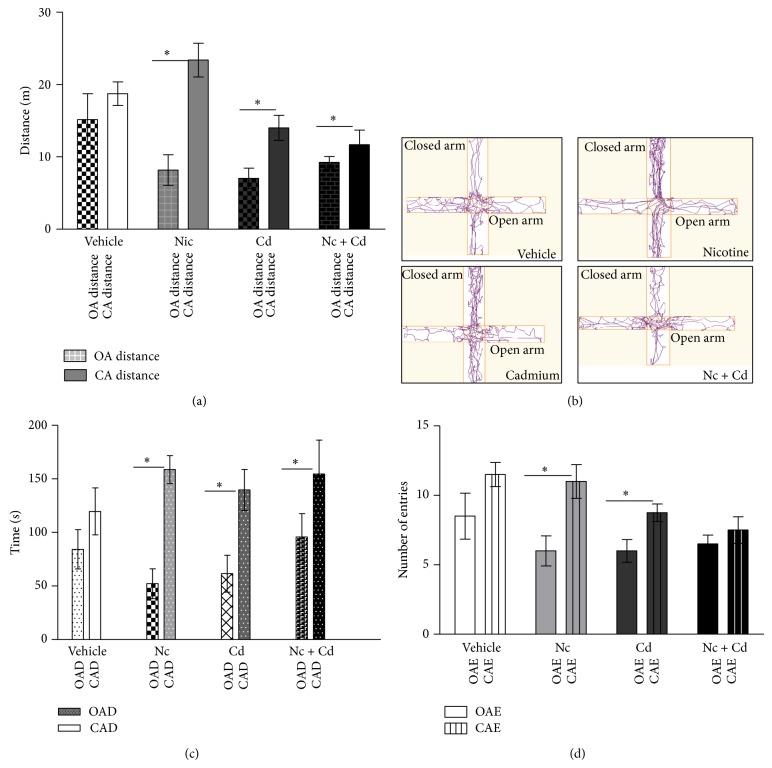
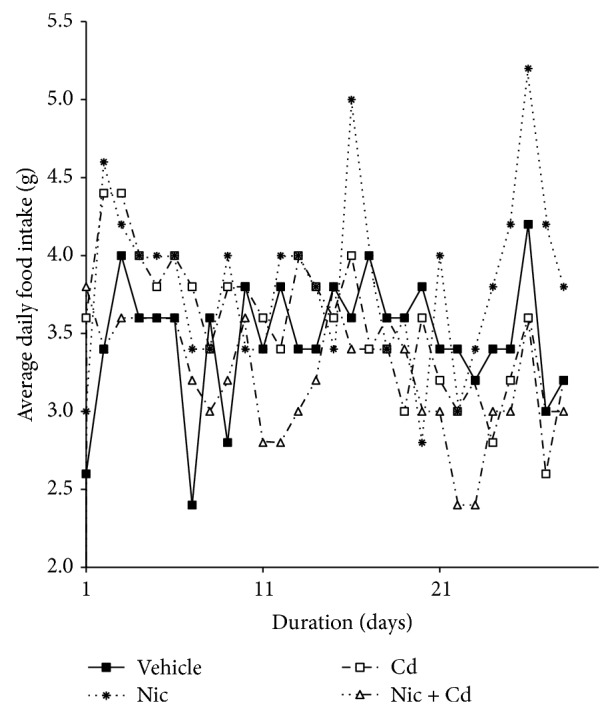
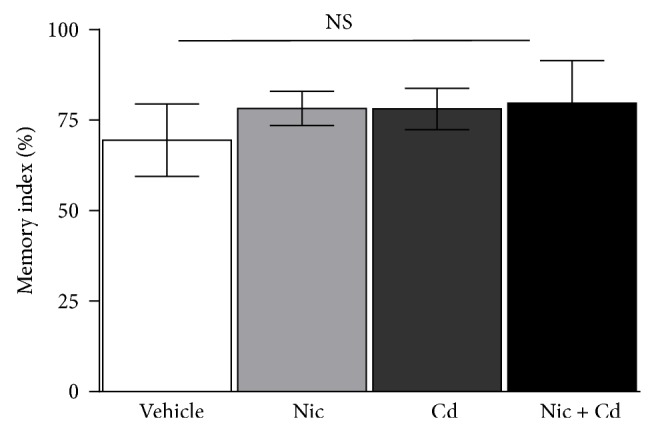
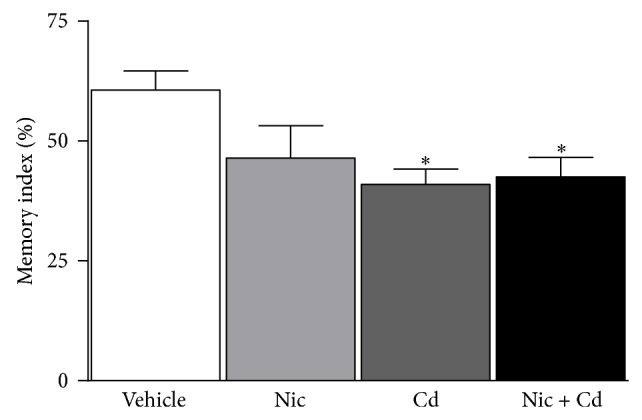
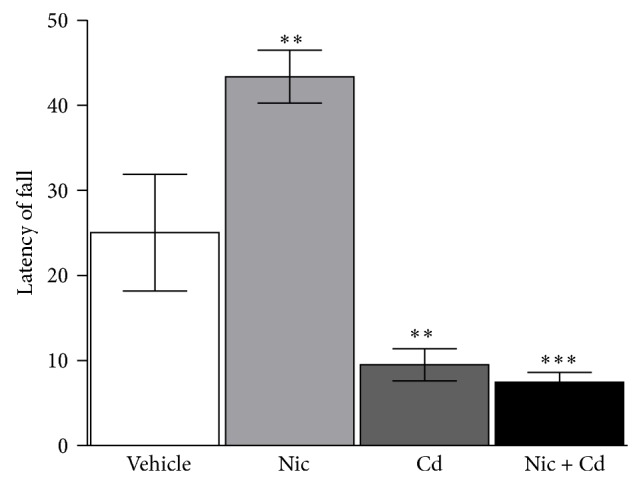
This study investigates spatial and nonspatial working memory, anxiety related behavior, and motor activities in cadmium and/or nicotine exposed female adolescent mice. P28 female adolescent mice (albino strain) were divided into four groups of five (n = 5) mice each. A set of mice (Nic) received subcutaneous nicotine (2.0 mg/kg) while a separate set (Cd) was treated with 2.0 mg/kg cadmium (subcutaneous). For the combined treatments of cadmium and nicotine, we administered 2.0 mg/kg Nicotine and 2.0 mg/kg of Cd. Subsequently, a separate group of animals (n = 5; control) received normal saline. The total duration of treatment for all groups was 28 days (P28-P56). At P56, the treatment was discontinued, after which the animals were examined in behavioural tests. Nicotine and cadmium increased the metabolism and food intake in the female adolescent mice. This also corresponded to an increase in weight when compared with the control. However, a combined nicotine-cadmium treatment induced a decline in weight of the animals versus the control. Also, nicotine administration increased the motor function, while cadmium and nicotine-cadmium treatment caused a decline in motor activity. Both nicotine and cadmium induced a reduction in memory index; however, nicotine-cadmium treatment induced the most significant decrease in nonspatial working memory.
本研究调查了镉和/或尼古丁暴露的雌性青春期小鼠的空间和非空间工作记忆、焦虑相关行为以及运动活动。28日龄的雌性青春期小鼠(白化品系)被分为四组,每组五只(n = 5)小鼠。一组小鼠(Nic)皮下注射尼古丁(2.0 mg/kg),另一组(Cd)皮下注射2.0 mg/kg镉。对于镉和尼古丁的联合处理,我们给予2.0 mg/kg尼古丁和2.0 mg/kg镉。随后,另一组动物(n = 5;对照组)接受生理盐水。所有组的总治疗持续时间为28天(28日龄至56日龄)。在56日龄时,停止治疗,之后对动物进行行为测试。尼古丁和镉增加了雌性青春期小鼠的新陈代谢和食物摄入量。与对照组相比,这也对应着体重的增加。然而,尼古丁 - 镉联合处理导致动物体重相对于对照组下降。此外,给予尼古丁增加了运动功能,而镉和尼古丁 - 镉处理导致运动活动下降。尼古丁和镉均导致记忆指数降低;然而,尼古丁 - 镉处理导致非空间工作记忆下降最为显著。