Chmielewski Stefan, Olejnik Adam, Sikorski Krzysztof, Pelisek Jaroslav, Błaszczyk Katarzyna, Aoqui Cristiane, Nowicka Hanna, Zernecke Alma, Heemann Uwe, Wesoly Joanna, Baumann Marcus, Bluyssen Hans A R
Department of Nephrology, Klinikum rechts der Isar, Technical University Munich, Munich, Germany; Department of Human Molecular Genetics, Institute of Molecular Biology and Biotechnology, Faculty of Biology, Adam Mickiewicz University Poznan, Poznan, Poland.
Department of Human Molecular Genetics, Institute of Molecular Biology and Biotechnology, Faculty of Biology, Adam Mickiewicz University Poznan, Poznan, Poland.
PLoS One. 2014 Dec 5;9(12):e113318. doi: 10.1371/journal.pone.0113318. eCollection 2014.
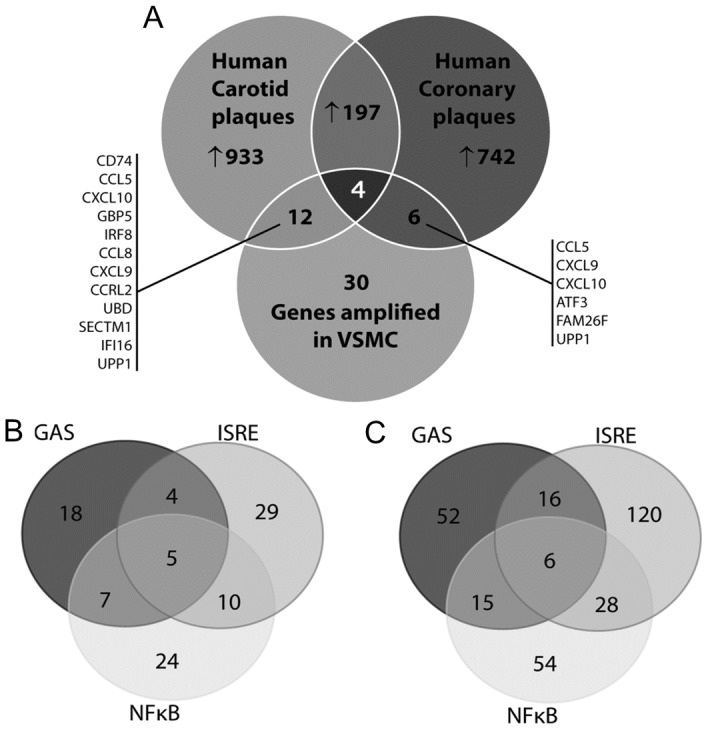
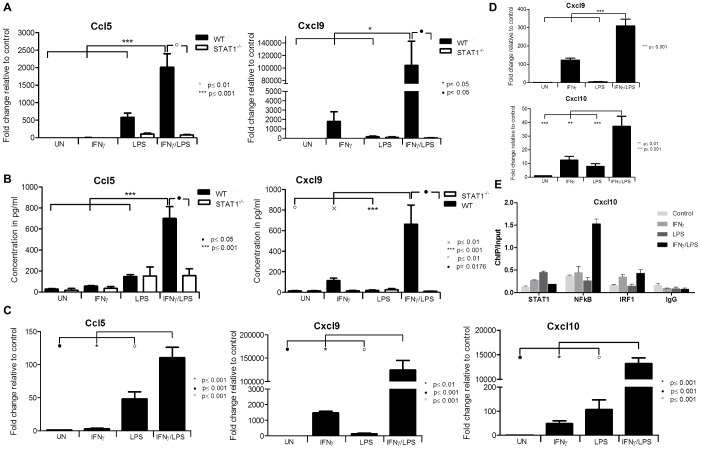
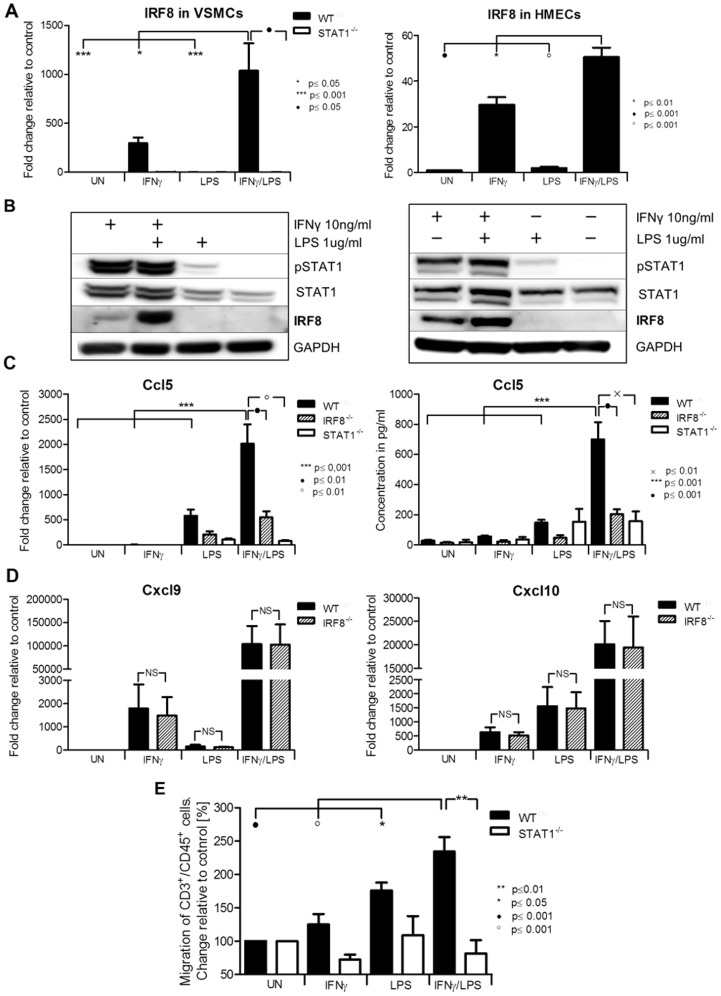
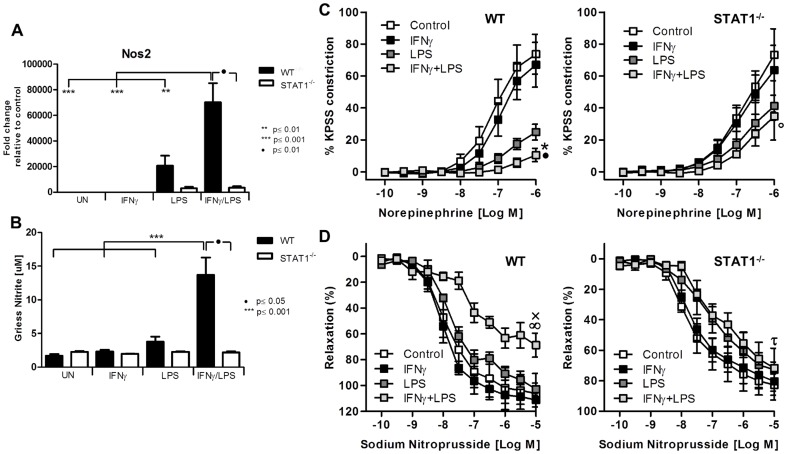
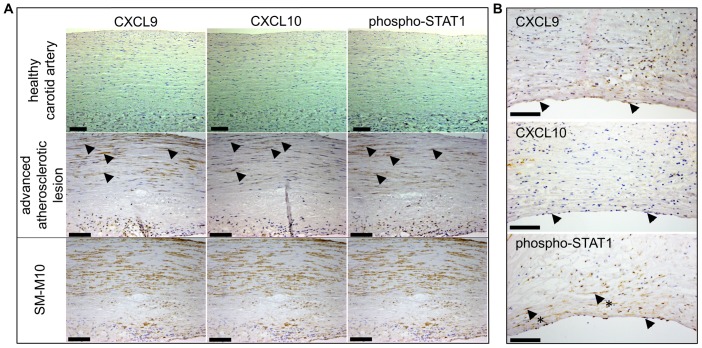
Signal integration between IFNγ and TLRs in immune cells has been associated with the host defense against pathogens and injury, with a predominant role of STAT1. We hypothesize that STAT1-dependent transcriptional changes in vascular cells involved in cross-talk between IFNγ and TLR4, reflect pro-atherogenic responses in human atherosclerosis. Genome-wide investigation identified a set of STAT1-dependent genes that were synergistically affected by interactions between IFNγ and TLR4 in VSMCs. These included the chemokines Cxcl9, Ccl12, Ccl8, Ccrl2, Cxcl10 and Ccl5, adhesion molecules Cd40, Cd74, and antiviral and antibacterial genes Rsad2, Mx1, Oasl1, Gbp5, Nos2, Batf2 and Tnfrsf11a. Among the amplified genes was also Irf8, of which Ccl5 was subsequently identified as a new pro-inflammatory target in VSMCs and ECs. Promoter analysis predicted transcriptional cooperation between STAT1, IRF1, IRF8 and NFκB, with the novel role of IRF8 providing an additional layer to the overall complexity. The synergistic interactions between IFNγ and TLR4 also resulted in increased T-cell migration and impaired aortic contractility in a STAT1-dependent manner. Expression of the chemokines CXCL9 and CXCL10 correlated with STAT1 phosphorylation in vascular cells in plaques from human carotid arteries. Moreover, using data mining of human plaque transcriptomes, expression of a selection of these STAT1-dependent pro-atherogenic genes was found to be increased in coronary artery disease (CAD) and carotid atherosclerosis. Our study provides evidence to suggest that in ECs and VSMCs STAT1 orchestrates a platform for cross-talk between IFNγ and TLR4, and identifies a STAT1-dependent gene signature that reflects a pro-atherogenic state in human atherosclerosis.
免疫细胞中IFNγ和TLR之间的信号整合与宿主抵抗病原体和损伤的防御机制相关,其中STAT1起主要作用。我们推测,参与IFNγ和TLR4相互作用的血管细胞中依赖STAT1的转录变化反映了人类动脉粥样硬化中的促动脉粥样硬化反应。全基因组研究确定了一组依赖STAT1的基因,这些基因在血管平滑肌细胞(VSMC)中受到IFNγ和TLR4相互作用的协同影响。这些基因包括趋化因子Cxcl9、Ccl12、Ccl8、Ccrl2、Cxcl10和Ccl5、黏附分子Cd40、Cd74,以及抗病毒和抗菌基因Rsad2、Mx1、Oasl1、Gbp5、Nos2、Batf2和Tnfrsf11a。扩增的基因中还有Irf8,其中Ccl5随后被确定为VSMC和内皮细胞(EC)中新的促炎靶点。启动子分析预测了STAT1、IRF1、IRF8和NFκB之间的转录协同作用,IRF8的新作用为整体复杂性增加了一个层面。IFNγ和TLR4之间的协同相互作用还以依赖STAT1的方式导致T细胞迁移增加和主动脉收缩功能受损。趋化因子CXCL9和CXCL10的表达与人类颈动脉斑块中血管细胞的STAT1磷酸化相关。此外,通过对人类斑块转录组的数据挖掘,发现这些依赖STAT1的促动脉粥样硬化基因中的一部分在冠状动脉疾病(CAD)和颈动脉粥样硬化中表达增加。我们的研究提供了证据表明,在EC和VSMC中,STAT1协调了IFNγ和TLR4之间相互作用的平台,并确定了一个依赖STAT1的基因特征,该特征反映了人类动脉粥样硬化中的促动脉粥样硬化状态。