Translational Medicine and Therapeutics, William Harvey Research Institute, Queen Mary University London, London, EC1M 6BQ, UK.
Dis Model Mech. 2014 Dec;7(12):1321-33. doi: 10.1242/dmm.016741.
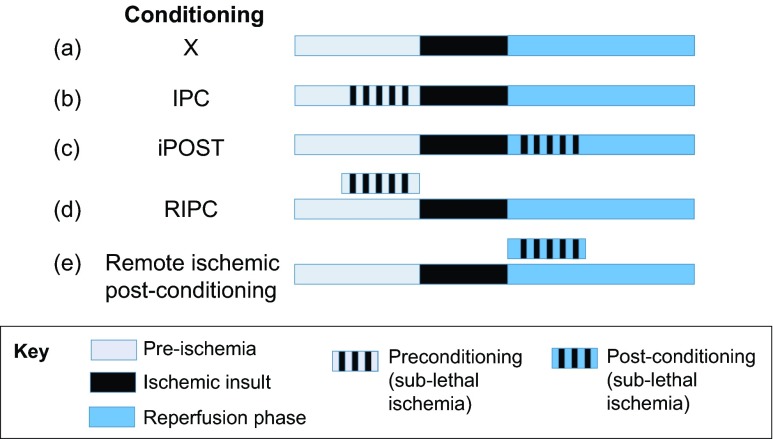
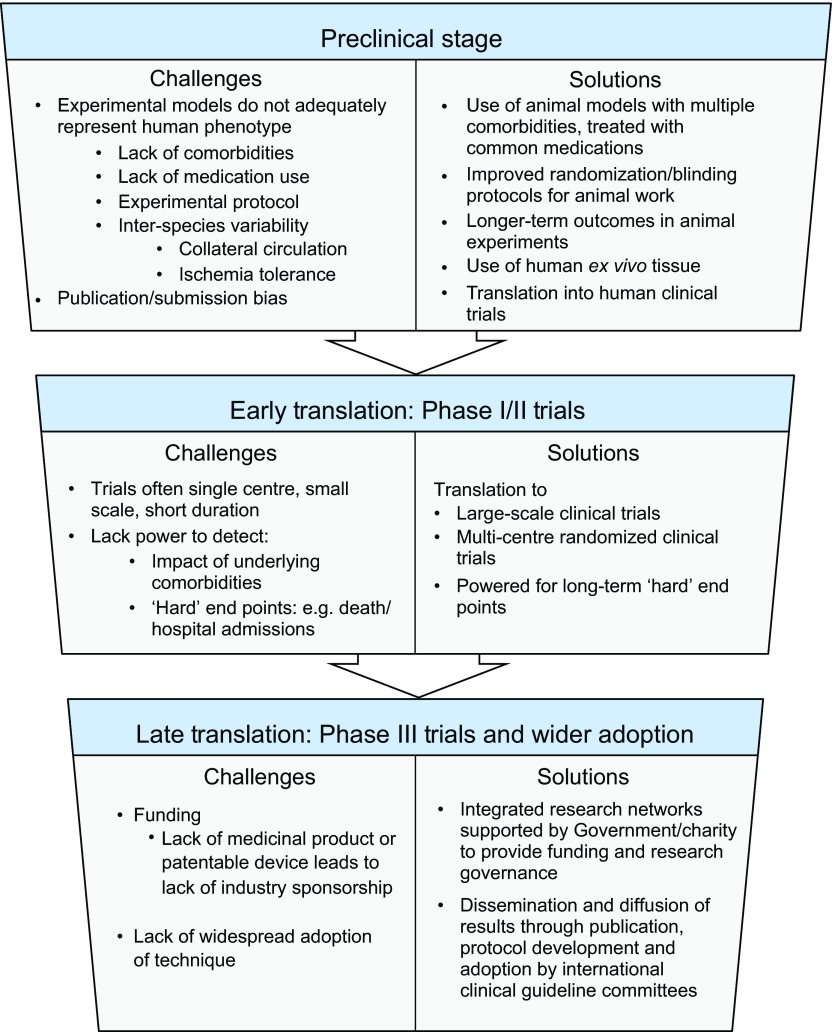
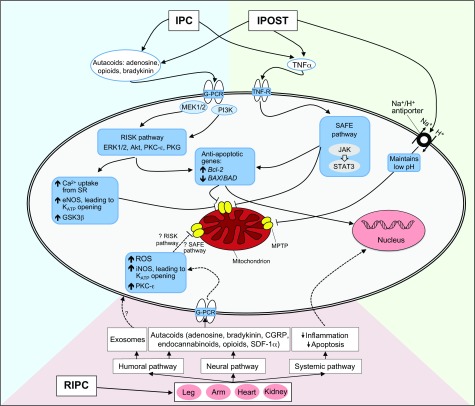
Following a period of ischemia (local restriction of blood supply to a tissue), the restoration of blood supply to the affected area causes significant tissue damage. This is known as ischemia-reperfusion injury (IRI) and is a central pathological mechanism contributing to many common disease states. The medical complications caused by IRI in individuals with cerebrovascular or heart disease are a leading cause of death in developed countries. IRI is also of crucial importance in fields as diverse as solid organ transplantation, acute kidney injury and following major surgery, where post-operative organ dysfunction is a major cause of morbidity and mortality. Given its clinical impact, novel interventions are urgently needed to minimize the effects of IRI, not least to save lives but also to reduce healthcare costs. In this Review, we examine the experimental technique of ischemic conditioning, which entails exposing organs or tissues to brief sub-lethal episodes of ischemia and reperfusion, before, during or after a lethal ischemic insult. This approach has been found to confer profound tissue protection against IRI. We discuss the translation of ischemic conditioning strategies from bench to bedside, and highlight where transition into human clinical studies has been less successful than in animal models, reviewing potential reasons for this. We explore the challenges that preclude more extensive clinical translation of these strategies and emphasize the role that underlying comorbidities have in altering the efficacy of these strategies in improving patient outcomes.
在经历一段时间的缺血(组织局部供血受限)后,受影响区域的血液供应恢复会导致显著的组织损伤。这种现象被称为缺血再灌注损伤(IRI),它是导致许多常见疾病状态的核心病理机制。在患有脑血管或心脏病的个体中,IRI 引起的医疗并发症是发达国家死亡的主要原因之一。IRI 在其他领域也非常重要,如实体器官移植、急性肾损伤以及大手术后,术后器官功能障碍是发病率和死亡率的主要原因。鉴于其临床影响,迫切需要新的干预措施来最小化 IRI 的影响,这不仅是为了拯救生命,也是为了降低医疗保健成本。在这篇综述中,我们研究了缺血预处理这一实验技术,该技术包括在致命性缺血损伤之前、期间或之后,使器官或组织短暂经历亚致死性的缺血和再灌注。这种方法已被证明能对 IRI 产生显著的组织保护作用。我们讨论了将缺血预处理策略从实验室转化为临床的情况,并强调了在动物模型中比在人类临床研究中更成功的转化,同时回顾了潜在的原因。我们探讨了阻碍这些策略更广泛临床转化的挑战,并强调了潜在合并症在改变这些策略改善患者预后的疗效方面的作用。